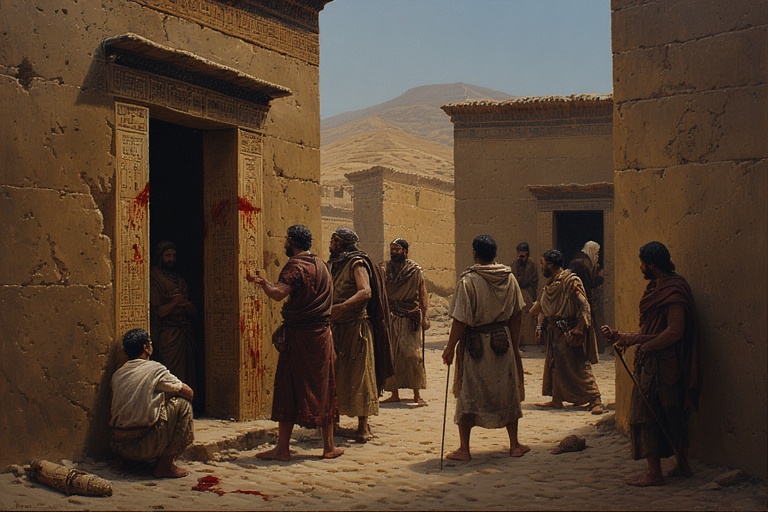
Yeshua’s Lament Over a Generation That Will Not Respond
Have you ever tried to talk sense into a stubborn child who just folds their arms and scowls no matter what you say? That’s the picture Yeshua gives us in Luke 7:32–35. But He’s not just calling out the generation in front of Him, He’s indicting every generation that refuses to respond to God, no matter how He reaches for them. Let’s listen carefully, because this is Him pulling the curtain back on exactly why some people never come to the truth.
He says:
“They are like little children sitting in the marketplace, calling to one another: ‘We played the flute for you, and you did not dance; we sang a dirge, and you did not weep.’”
That word for children, παιδίοις (paidiois), isn’t flattering. It’s not “sweet little babies.” It’s immature, bratty, selfish little tyrants throwing a fit in public. And where are they sitting? In the marketplace, ἀγορᾷ (agorā), the public square, the place where real business is done, justice is heard, elders speak, and truth is declared. But instead of doing anything meaningful, they’re shouting silly games across the stalls. “We played the flute!”, that’s αὐλέω (auleō), the wedding flute, meant for rejoicing. “We sang a dirge!”, θρηνέω (threneo), the mourning song for funerals. But no matter the song, happy or sad, these children just refuse to participate.
And right there, Yeshua is showing us the condition of the heart that cannot be moved by either repentance or rejoicing.
Because then He explains:
“John the Baptist came neither eating bread nor drinking wine, and you say, ‘He has a demon.’”
John came fasting, living in the desert, living like a man under Nazarite discipline, no bread, no wine, no fancy clothes, just wild honey and locusts and a message that could slice the sin off a hardened heart. And what did they say? “He must be demonized.” The Greek is Δαιμόνιον ἔχει (daimonion echei), He has a demon! Why? Because he didn’t follow the social rules, because he stayed too pure, because he didn’t show up for bread-and-wine fellowship.
But Yeshua doesn’t stop there. Next comes the gut-punch:
“The Son of Man came eating and drinking, and you say, ‘Look! A glutton and a drunkard, a friend of tax collectors and sinners!’”
Now Yeshua shows up. Not in the wilderness, but in homes. He eats bread, drinks wine, shares Sabbath meals with the brokenhearted and the outcasts. He touches the leper. He heals the Roman servant. He raises a widow’s son and breaks every cultural wall, but He does it in love. And what do they say? “He’s a glutton, a wine-drinker, a friend of the worst people in town.”
Let’s pause right there.
They couldn’t accept John because “he was too holy”. They couldn’t accept Yeshua because “He was too merciful”. They didn’t want truth. They wanted control. They wanted God only on their terms. And that’s not new. That’s not just ancient. That’s now. Because this generation does the same thing: criticize the ones who fast, ridicule the ones who feast, slander the ones who mourn for sin, and laugh at the ones who rejoice in the Spirit. And cringe at (and sue) those who fight for the right.
Yeshua finishes with this razor-edged proverb:
“But wisdom is justified by all her children.”
Let me tell you something. That word justified, ἐδικαιώθη (edikaiōthē), doesn’t mean “approved by popular vote.” It’s a legal term. It means “proven righteous in court.” Like Lady Wisdom from Proverbs 8, who stood beside the Lord when He laid the foundations of the earth, and is crying out in the streets even now: “Who will listen? Who will turn aside and learn from Me?”
Wisdom has children.
You know who they are?
- They’re the ones who repented when John preached by the Jordan.
- They’re the ones who wept when Yeshua healed their uncleanness.
- They’re the ones who danced when the Messiah turned water into wine and shouted halleluYah when the blind could see.
- They’re the ones who didn’t care what the religious elite said.
- They’re the ones who said: “Blessed is He who comes in the Name of the LORD.”
The children of Wisdom vindicate the Truth. Not by arguments. Not by doctrine wars. But by living proof, by changed lives, real repentance, joyful obedience, and the fruit of the Spirit. That’s how Wisdom wins the case.
So here’s the question He’s still asking today:
When the flute plays, will you dance?
When the mourning comes, will you weep?
When the fast is called, will you humble yourself?
When the banquet is opened, will you come and sit at His table?
Because He’s still playing both songs. Still sending both messages. And He’s still being rejected by those who want only their own version of God.
But the true children of Wisdom will rise up and say:
“I didn’t come to judge Him, He came to judge me. And He was right.”
✝️ ✝️ ✝️ ✝️ ✝️
About the image (made by chatgpt at my direction)
At the top right, above the arch labeled “Gate of Justice”, stands a veiled female figure glowing in light. This is Lady Wisdom, personified from Proverbs 8. She’s not interacting with the crowd; she’s watching silently, as if bearing witness in judgment, waiting for her children to justify her.
The Hebrew words at the bottom, near the two children, read:
חָכְמָה צֻדְּקָה מִבָּנֶיהָ
“Chokhmah tzudekah mibaneha”
“Wisdom is justified by her children.”
This is a faithful rendering of Luke 7:35, styled like a proverb, as Yeshua would’ve spoken it in Hebrew structure.