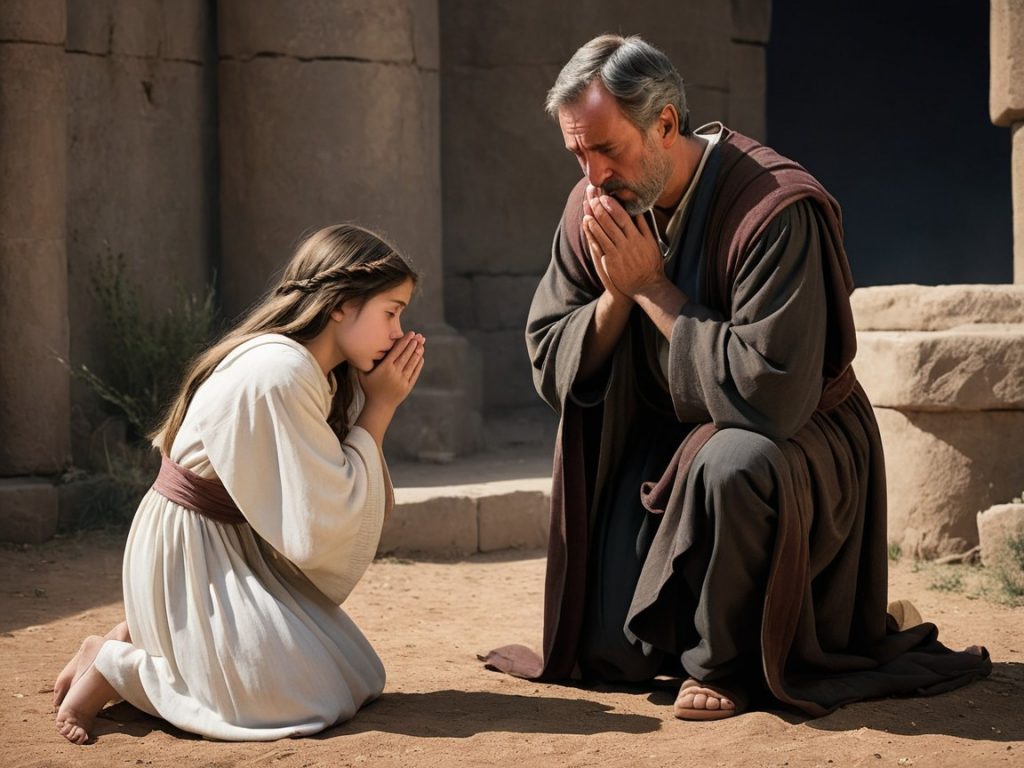
What does it truly mean to pray in faith? Not as some present-day slogans suggest, but as Scripture demonstrates, when people spoke to God and heaven responded, not due to volume or force, but because they trusted Him profoundly.
Faithful prayer always begins with God, who He is, what He has declared, and what He has done. This is what the people of Scripture held onto. They did not pray as if they could control God. They prayed because they trusted God’s emunah(אֱמוּנָה, faithfulness, steadfastness, loyalty). They prayed knowing that whether God answered with “yes,” “no,” or “wait,” He remained trustworthy.
Take Hannah. She was barren, heartbroken, and prayed “in bitterness of soul” (1 Samuel 1:10). The Hebrew word for bitterness here is ka’ah (קָעָה, deep anguish). Her lips moved without sound, and Eli mistook her for a drunk. Hannah said she had “poured out her soul” (nafshi shafati, נַפְשִׁי שָׁפַתִּי, to pour out freely, like water). Faith is laying everything bare before God. The word she uses for “affliction” (tsarah, צָרָה, trouble, distress) is the same God uses for Israel’s suffering in Egypt. That cry reaches God’s heart. Scripture records that He remembered her, not because she demanded, but because she trusted.
Abraham’s faith also rests on emunah. When God promised a son through Sarah, Abraham believed God’s word. Later, when asked to offer Isaac, he said, “God will provide” (Yireh, יִרְאֶה, He will see/provide). Faith acts, trusting God to be God even when the path is uncertain.
Moses prayed with deep intercession. After Israel sinned with the golden calf, God said He would destroy them, but Moses pleaded, “If You will forgive their sin, but if not, blot me out of Your book” (Exodus 32:32). The term seref (סָרֵף, to erase, blot out) shows Moses’ willingness to be blotted out rather than see God’s people destroyed. Faith in prayer can involve selfless intercession, trusting God’s mercy.
Elijah prayed on Mount Carmel, and fire fell from heaven. He said, “Let it be known this day that You are God in Israel, and that I am Your servant, and I have done these things at Your word” (1 Kings 18:36). “At Your word” translates be’Dabar’kha (בְּדָבָרְךָ, according to Your word/promise). His prayer had power because it aligned with God’s spoken truth. Later, Elijah prayed for rain. He sent his servant seven times, each time there was nothing. His hands remained steady. The Hebrew root for “steady” is aman (אָמַן, to be firm, to stand fast, to be reliable), which is also the root for emunah, meaning steadfast trust. When the servant finally saw a small cloud, Elijah knew the drought was ending. Faith perseveres.
Daniel prayed faithfully in exile. When a law forbade prayer to anyone but King Darius, Daniel “got down on his knees three times a day and prayed and gave thanks before his God” (Daniel 6:10). “Prayed” here comes from Aramaic tafa’al(תְּפָעַל, to intercede, pray earnestly). Daniel’s faith was steady loyalty (emunah) to God’s covenant. When thrown into the lions’ den, God sent an angel (mal’akh, מַלְאָךְ, messenger) to shut the lions’ mouths. Early in the morning, King Darius called, “Daniel, servant of the living God, has your God, whom you serve continually (tamid, תָּמִיד, always, continually) been able to deliver you?” Darius observed Daniel’s unwavering trust. He decreed that all should “fear” (yare’, יָרֵא, revere, respect) the God who “delivers” (yatsal, יָצַל, rescues, saves) His servants.
Shadrach, Meshach, and Abednego displayed faith when refusing to bow. They said, “Our God is able (yakhol, יָכוֹל, has power) to deliver us, but if not, we will not serve your gods.” Nebuchadnezzar observed four men walking unharmed, saying, “Blessed be the God of Shadrach, Meshach, and Abednego, who sent His angel (mal’akh) and delivered (yatsal) His servants who trusted (batakh, בָּטַח, confidence, trust) in Him.” After God humbled him, Nebuchadnezzar praised the Most High: His kingdom is everlasting (olam, עוֹלָם, eternal), His ways just (mishpatim, מִשְׁפָּטִים, judgments).
King Hezekiah prayed when told he would die, turning to the wall: “Remember how I have walked before You in truth (emunah) and with a whole heart” (2 Kings 20:3). Prayer reflects a life of faithful loyalty, not merely words.
Yeshua prayed in Gethsemane: “If possible, let this cup pass from Me, nevertheless, not My will, but Yours be done.” Greek pistis (πίστις, trust, faithfulness) underscores surrender to the Father with eulabeia (ευλάβεια, reverence, godly fear). Hebrews notes He was heard because of His reverence.
Paul prayed thrice for a “thorn in the flesh,” but God said, “My grace (charis) is sufficient, power is perfected in weakness.” Faith rests in God’s sufficiency, not circumstance.
The woman with the issue of blood believed touching Yeshua’s garment would heal her. He said, “Your faith (pistis) has made you well.” The Roman centurion’s trust: “Just say the word.” Yeshua noted this pistis exceeded all Israel’s, faith rooted in trust, not display.
Faith-filled prayer is not about shouting claims, but emunah and pistis, steadfast trust, surrender, loyalty. Moses’ hands stayed firm in Amalek’s battle, the Hebrew root for “steadfast” is from emunah. Habakkuk 2:4: “The righteous live by faith.” Paul quotes Romans 1:17: “The righteous will live by faith (pistis)”, rooted in trust even without full vision.
When Yeshua says, “Have faith in God” (Mark 11:22), He means trust Him, believe in His nature, not formulas. The persistent widow (Luke 18) demonstrates that faith persists rooted in trust, not demand.
Prayer that moves heaven is faith (emunah, pistis), steadfast trust, submission, loyalty. Quiet, raw, repeated prayer, no visible change, this is true faith. Faith trusts, it does not control.
✝️ ✝️ ✝️ ✝️ ✝️
If this message blessed you, please leave a comment. I would love to hear from you.
image done by chatgpt at my direction.
✝️ ✝️ ✝️ ✝️ ✝️