– Resurrection Power In Everyday Life
Resurrection in Scripture is not a phrase we say lightly, nor a feeling we try to manufacture. It is God’s own action, intervening in the natural order to restore what has been lost and bring life where none seems possible. When we speak of graves becoming gardens, we are speaking of God at work, not poetic imagery. A grave is the end of what we can do. A garden is the presence of God, life flourishing by His power alone. This movement from death to life is deliberate, sovereign, and awe-inspiring.
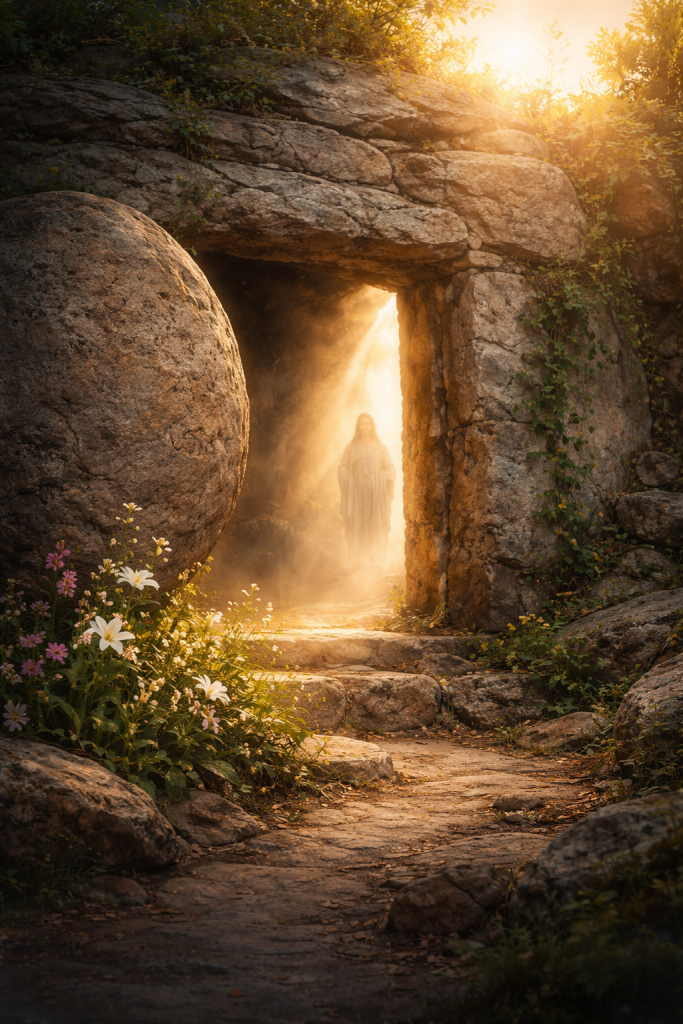
From the earliest chapters of the Bible, life and death are held in careful balance. God forms man from the dust and breathes into him the spirit of life. When the breath departs, man returns to the earth. In the Hebrew Scriptures, death is spoken of with seriousness and care. It is sleep, silence, resting in the earth, descending into Sheol. The words muth and shakab speak of lying down, of stillness, of waiting for God’s intervention. Death is not active or conscious; it is quiet, waiting, anticipating the call of God. That is why Jesus can tell the disciples plainly, “Our friend Lazarus has fallen asleep.” John 11:11. He is not dismissing death; He is naming it as it truly is from God’s perspective.
But Jesus does more than name it. He confronts it. Lazarus is not merely brought back to life as before; he is called out of death by the voice of God Himself. The voice that calls commands reality. Lazarus emerges alive but still bound by the grave clothes. Then Jesus instructs the people around him to remove those wrappings so he may walk freely. John 11:44. Life has been restored by God, yet the living participate, called to remove what remains of death, to step into the life God has given. This is the rhythm of resurrection: God gives life, and we respond with obedience, trust, and courage.
This theme appears again in the resurrection of Jesus. He does not simply return to previous life. He appears in locked rooms, wounds present, yet fully alive and free from death’s dominion. Paul explains this transformation: “Christ, being raised from the dead, will never die again; death no longer has dominion over Him.” Romans 6:9. Resurrection is not a reversal to the old, but the entrance into something entirely new, something divine.
Paul continues, saying that the Spirit who raised Jesus now dwells in those who belong to Him. Romans 8:11. The word ruach—spirit, breath, wind, power—is the same force that brought creation into being, that calls life from the tomb, now alive in us. Resurrection is not only for the future; it is present, active, and authoritative, though it unfolds in real time and often in ways we do not yet see.
When Paul speaks of the old self being crucified with Christ, Romans 6:6, he does not suggest our struggles are gone. He is describing a change in dominion. Sin no longer rules over us, though it may still resist. Resurrection power does not erase the battle; it guarantees the outcome. We do not fight for victory; we live in it, under its authority, by the Spirit who raised Jesus from the dead.
Understanding this helps protect us from false hope or shallow promises. God does raise the dead, but according to His wisdom, His timing, and His perfect knowledge of what is needed. Some healing and renewal happen in this life; other things are carried faithfully until resurrection itself is complete. Scripture does not apologize for this tension. Isaiah speaks of giving beauty for ashes and joy for mourning Isaiah 61:3, within the context of God’s full restoration through the Messiah. The promise is sure; the timing is sovereign.
Graves in our lives come in many forms. Some are blatant and visible, others hidden and quiet. Sin can feel like a tomb, taking hold of us, convincing us it will never be overcome. Yet Paul declares we are no longer slaves to sin. Slavery is a term of absolute control; freedom is not negotiated. God alone declares it. Resurrection power breaks chains and makes obedience possible, even where we felt powerless.
Sorrow is another grave. Loss and grief carve deep places in our hearts. Scripture does not dismiss our mourning. Jesus wept at Lazarus’ tomb, though He knew resurrection was coming. Tears are not disbelief; they are expressions of love in a broken world. Resurrection changes the meaning of pain, transforms suffering, and does not allow sorrow to have the final word.
Relationships can also become tombs. Betrayal, distance, bitterness can bury hope layer by layer. Paul reminds us that Jesus Himself is our peace, the one who destroyed the dividing wall of hostility. Ephesians 2:14–16. If God can reconcile us to Himself, He can also heal what is broken between us. This does not guarantee reconciliation in every situation, but it ensures forgiveness, freedom, and the power to obey are within reach.
Our minds, too, need resurrection. Paul calls us to be transformed through the renewing of our minds. Romans 12:2. The word metamorphoo describes a transformation from within that becomes visible in life over time. Fear, bitterness, anxiety, old patterns do not vanish instantly, but are replaced by truth, renewed thinking, and practice in obedience. This is careful, lived-out work, not instant emotional change.
Healing is a process. The man in Mark 8:24 who was healed in stages teaches us patience. God’s timing is perfect; partial sight is not failure when full sight is coming. Faith is not measured by how fast we see change, but by how steadfast we trust.
Community is part of resurrection life. God raises the dead, but the living are called to participate. Removing grave clothes from Lazarus is not merely a detail; it is a model. God gives life, but he invites us to act in obedience, helping one another fully embrace the new life He provides. Prayer, encouragement, presence—these are not extras; they are how resurrection moves through human hands.
Resurrection also gives hope for the future. Hope is not mere optimism; it is confidence in God’s faithfulness. Paul reminds us that God works all things together for good for those who love Him. Romans 8:28. Not all circumstances are pleasant, yet nothing is wasted. What looks like an ending may, in God’s hands, be fertile ground for life yet unseen.

Ultimately, resurrection is not something we chase. It is a Person we belong to. Jesus does not simply perform resurrection; He declares, “I am the resurrection and the life.” John 11:25. To be with Him is to be with life itself. His victory is ours, His future becomes our hope.
Graves become gardens not because we say so, but because God is faithful. Every seed in the ground looks like loss before life appears. God has written resurrection into creation. What He began in Christ, He will complete in us.
Resurrection is not reserved for the final trumpet alone. It is happening now, quietly, steadily, faithfully. Some gardens bloom quickly. Others take seasons. But every life raised by God will flourish in His time.
The invitation is the same: trust the One who calls the dead by name. Walk in the life He has given. Remove what no longer belongs to the grave. Step into the freedom He offers, and watch His work turn death into life, loss into beauty, and sorrow into joy.
If you liked this message please leave a positive comment! I would love to hear from you.
images done by my chatgpt at my direction