This teaching is intended for mature, responsible adults who are willing to consider some serious and sometimes uncomfortable subjects with an open mind, a little common sense (even though, in my book, sense is far from “common”), and a willingness to think things through.
✝️✝️✝️✝️✝️
There is a particular kind of arrogance that has infected human society from the beginning, and it can be summed up in five little words: “I can, but you can’t.” It is the attitude of the person who believes that whatever he wants is his to have, whatever he does is his business, whatever rules apply to everybody else somehow do not apply to him, and anybody who objects simply needs to know his place. It is the attitude of somebody who wants freedom for himself and restrictions for everybody else. He wants privacy while demanding access to everyone else’s business. He wants his money protected while helping himself to everybody else’s. He wants to speak while silencing anyone who disagrees with him. He wants to be respected while showing no respect. He wants accountability when somebody else does wrong but suddenly discovers all sorts of reasons why accountability is unfair when fingers are pointed at him. That is not merely hypocrisy in the abstract. It is one of the oldest expressions of human pride, and Scripture repeatedly shows us that God has very little patience with people who use power, wealth, position, or authority to create one set of rules for themselves and another for everyone beneath them.

We see the principle stated plainly in God’s Word: “Do not show partiality to the poor or favoritism to the great; judge your neighbor fairly,” Leviticus 19:15. That is a remarkable command because God does not merely tell us not to favor the rich. He tells us not to distort justice in either direction. Justice is supposed to be justice. The person with money does not get a different standard because he has money, and the person without money does not get a different standard because he has none. That principle cuts straight through the entire human hierarchy. It reaches the man at the top and the woman at the bottom. It reaches the executive, the employee, the politician, the taxpayer, the administrator, the donor, the recipient, the religious leader, the ordinary church member, and everybody else. God does not say, “It depends upon how important you are.” He says, “Judge your neighbor fairly.”
That is precisely what makes the “I can, but you can’t” mentality so offensive to God. It is an attempt to create partiality where God commands fairness. The person who has authority begins to believe authority means exemption. The person who has wealth begins to believe wealth means entitlement. The person who has influence begins to believe influence means immunity. The person who has a title begins to believe the title places him above criticism. The person who has enough connections begins to believe consequences are for people who do not know the right people. But a title does not change right into wrong. Money does not turn theft into honesty. Influence does not turn deception into truth. A position of authority does not turn exploitation into leadership. God is not impressed by the size of a person’s bank account, the number of people who answer his telephone calls, the building with his name on it, or the number of people who stand when he walks into a room. “The Lord is the God of gods and Lord of lords, the great God, mighty and awesome, who shows no partiality and accepts no bribes,” Deuteronomy 10:17. There is the standard. God cannot be bought, intimidated, impressed, or bribed.
And that brings us directly to the people who have very little power. There are always people at the bottom of somebody’s ladder, who were stepped on to get up to the next rung. They are the ones who cannot afford an attorney every time somebody wrongs them. They cannot hire an accountant to follow every penny. They cannot buy influence. They cannot call a press conference and make their complaint heard by thousands of people. They may not even have the resources to fight someone who has more money, more authority, or more connections than they do. Sometimes all they have is the truth. Scripture repeatedly tells us that God notices those people. “Do not exploit the poor because they are poor and do not crush the needy in court, for the Lord will take up their case,” Proverbs 22:22-23. That is not sentimental language. It is a warning. The fact that somebody is poor does not mean God has assigned him a lower value. In fact, God specifically warns the powerful not to take advantage of the vulnerable precisely because the vulnerable person may not be able to defend himself.
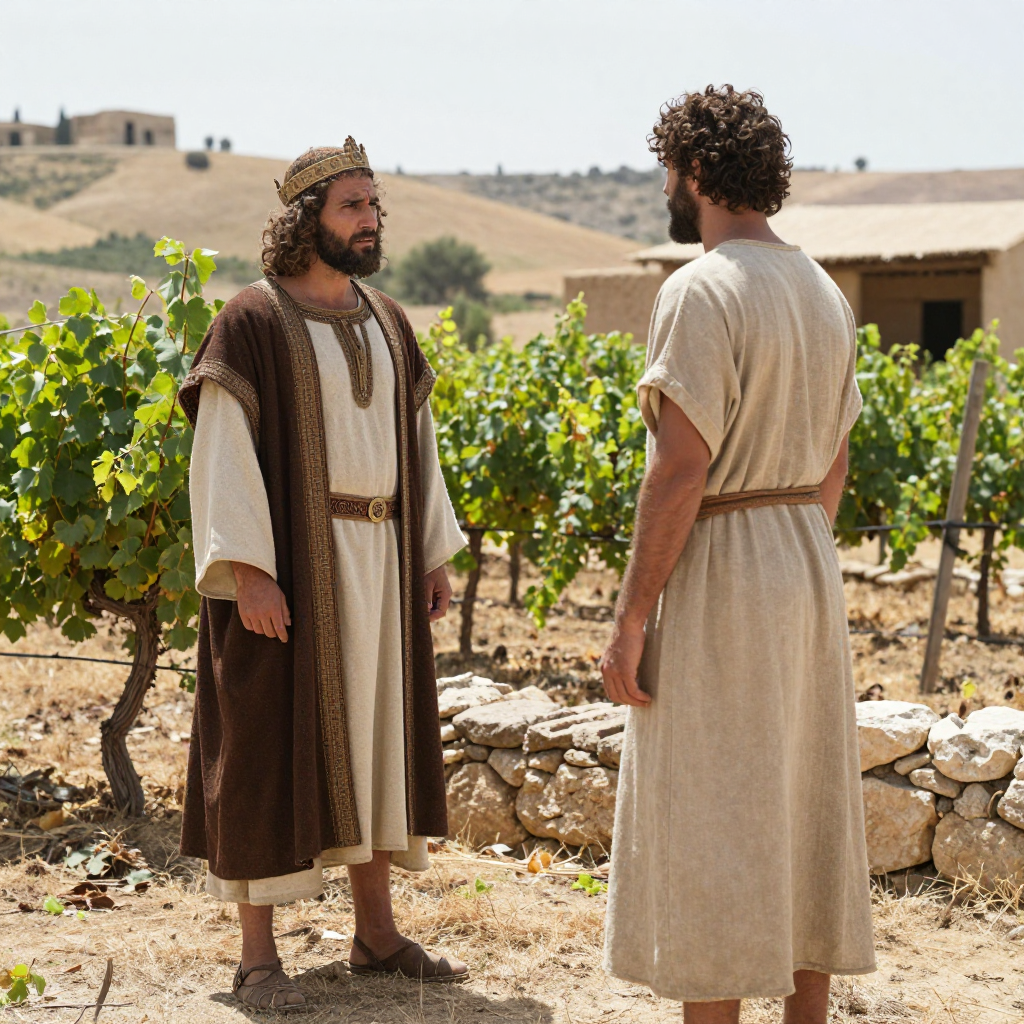
The Bible is full of people who thought their position gave them the right to take what belonged to somebody else. Ahab was a king. Naboth was an ordinary man with a vineyard. Ahab wanted the vineyard, Naboth refused to sell the inheritance of his ancestors, and the king went home sulking because the powerful man could not have what he wanted. Jezebel then arranged for Naboth to be falsely accused and killed, and Ahab took possession of the vineyard. Ahab had the position, the wealth, and the authority. Naboth had the property and the truth. From an earthly standpoint, that looked like the end of the matter. It wasn’t. God sent Elijah to confront Ahab and pronounce judgment upon him, 1 Kings 21:17-24. The king had apparently thought he had gotten away with it. But he had not gotten away with it in the sight of God. That is one of the most important truths in Scripture for ordinary people to remember: getting away with something in front of people does not mean getting away with it before God.
That same principle applies when money is involved. There is nothing particularly noble about taking money entrusted to you and deciding that because you are the person holding it, you have somehow become entitled to it. If somebody gives an organization money for a particular purpose and the person responsible for that money diverts it for personal use, that is not made righteous by the person’s title. If an administrator takes funds intended for other people and spends them on himself, his position does not make the money his. If somebody manipulates records, conceals transactions, falsifies information, or uses an organization’s resources as his personal bank account, the fact that he had access to the money does not establish ownership of it. Scripture says, “Whoever is faithful with very little will also be faithful with much, and whoever is unrighteous with very little will also be unrighteous with much,” Luke 16:10. Being entrusted with something is a test of character, not a declaration of ownership.
There is a reason Scripture repeatedly condemns dishonest scales and fraudulent dealings. “Dishonest scales are detestable to the Lord, but an accurate weight is His delight,” Proverbs 11:1. The ancient dishonest scale was simply a way of manipulating the transaction so that one person got more than he was entitled to while the other person received less than he had paid for. The technology changes, but the human heart does not. Today the dishonest scale may be a falsified accounting entry, a hidden fee, a fraudulent claim, a manipulated report, a deceptive contract, an organization being used as someone’s private piggy bank, or any number of other methods by which one person quietly transfers what belongs to others into his own possession. The principle remains the same: if you have to deceive somebody to get what you want, you do not own what you took simply because you succeeded in taking it. God knows, and WILL REPAY YOU.
And then there is the person who becomes furious when anyone dares to question him. This is another characteristic of the “I can, but you can’t” mentality. He believes he is entitled to examine everybody else’s conduct but regards examination of his own conduct as an attack. He demands transparency from everyone else while hiding behind secrecy himself. He wants everyone else to explain where the money went, where the decision came from, why the rule was made, and why the rule should be obeyed, but when somebody asks him the same questions, suddenly the question itself becomes offensive. Scripture has an answer for that hypocrisy. Jesus asked, “Why do you look at the speck in your brother’s eye, but don’t notice the log in your own eye?” Matthew 7:3. The problem is not that we notice wrongdoing. God expects us to recognize right and wrong. The problem is condemning another person’s sin while pretending our own does not count.
Paul made the same point when he challenged people who condemned others while doing the very things they condemned. “You, then, who teach another, don’t you teach yourself? You who preach against stealing, do you steal?” Romans 2:21. That question is devastating precisely because it strips away the religious language and reveals the hypocrisy underneath it. If stealing is wrong when somebody else does it, stealing does not become right when you do it. If lying is wrong when somebody else does it, lying does not become right when you need it. If corruption is wrong when somebody else’s hand is in the till, corruption does not become acceptable when your hand is in it. If abuse of authority is wrong when somebody else’s authority is being abused, it does not become righteous because you happen to hold the authority. The standard cannot change merely because the person standing under it has changed.

This is also where the modern cry for equality becomes interesting, because equality means very little if it is demanded only when it benefits the person demanding it. If men and women are going to be treated as equals under the law, then equality cannot mean one sex receives rights while the other receives obligations. If people demand bodily autonomy for themselves, they cannot reasonably insist that another person’s body exists merely for their use. If people demand freedom for themselves, they cannot automatically demand control over another person’s freedom. If people demand the right to make their own choices, they cannot simultaneously claim that everybody else must surrender the right to make choices they dislike. The issue is not which group somebody belongs to. The issue is whether the principle is being applied consistently. “I can, but you can’t” is not equality. It is “privilege” disguised as principle.
The same thing applies to religious systems and the people who use religion as a shield for human authority. A religious claim does not become true merely because somebody attaches God’s name to it. Jesus Himself repeatedly confronted religious leaders who had turned God’s commands into burdens for other people while finding ways around those commands themselves. He said they “tie up heavy loads that are hard to carry and put them on people’s shoulders, but they themselves aren’t willing to lift a finger to move them,” Matthew 23:4. That is precisely the kind of religious hypocrisy that ought to make every honest believer stop and examine what is actually being taught. If a man claims that God gives him authority over another human being, we have every right to examine the claim against what God Himself has revealed. A human being does not become God’s representative simply by announcing that he is one. There is NONE “Reverend” but God.
Scripture is particularly severe toward shepherds who use the flock for themselves. God spoke through Ezekiel against shepherds who fed themselves instead of feeding the flock. “You eat the fat, wear the wool, and butcher the fattened animals, but you don’t feed the flock,” Ezekiel 34:3. The shepherds had taken the position of caring for God’s people and turned it into an opportunity to benefit themselves. God did not say, “Well, they are leaders, so perhaps we should overlook it.” He condemned them. That ought to make anyone who has responsibility over other people extremely uncomfortable in a healthy way. Leadership is not a permission slip to consume the people being led.

Jesus also warned that those who hold positions of authority will answer for what they have done with that authority. In the parable of the faithful and wicked servants, the servant who abuses his position because he thinks the master is delayed is judged for it, Luke 12:42-48. The servant’s mistake was not merely that he behaved badly. He behaved badly because he believed he had time, opportunity, and freedom to do whatever he wanted while the master was absent. That is the mentality behind much human corruption: “Nobody is watching.” But Scripture’s answer is that somebody is watching.
God is watching.
That is why James speaks so bluntly about people who become wealthy by exploiting others. “Look! The wages you failed to pay the workers who mowed your fields are crying out against you,” James 5:4. Notice the imagery. The people who were cheated may have been powerless against the wealthy person, but their unpaid wages were not powerless before God. Their cries reached Him. Their situation was not invisible simply because the person hurting them had more money.
This is why the “little people” should never confuse silence with invisibility. A person may be ignored by an institution and still be seen by God. A complaint may be dismissed by someone with authority and still be heard by God. A person may be told that nothing can be done and still know that God is capable of doing something. Scripture says, “The Lord is a refuge for the oppressed, a refuge in times of trouble,” Psalm 9:9. That does not promise that every earthly injustice will immediately be corrected. It does promise that injustice does not escape God’s notice merely because the victim lacks the power to correct it himself.
And this is where the whole thing eventually comes back around to the person at the top. If you have money, God expects you to use it honestly. If you have authority, God expects you to exercise it justly. If you have influence, God expects you to use it responsibly. If you have been entrusted with somebody else’s property, you are accountable for what you do with it. If people depend upon you, you do not get to treat them as disposable simply because you have the power to replace them. Jesus said, “From everyone who has been given much, much will be required,” Luke 12:48. That is a principle the world desperately needs to remember because our culture often treats greater privilege as though it should produce fewer obligations. God’s Word says the opposite: greater responsibility accompanies greater privilege.
The ultimate problem with “I can, but you can’t” is that it assumes there is no higher authority. The person who says it may never actually say those words aloud, but his behavior says them for him. “I can take it because I have the power. You cannot take it because you do not.” “I can break the rule because I am important. You cannot because you are not.” “I can demand obedience because I am in charge. You cannot question me because I am in charge.” “I can enjoy freedom while restricting yours.” “I can demand honesty while concealing my own actions.” The whole system depends upon one assumption: I am above the standard.
But nobody is above God’s standard. The poor are not above it, the rich are not above it, ordinary people are not above it, and neither are the “elite”, religious leaders, rulers, men, women, or organizations. Position does not create an exemption from righteousness, and wealth does not purchase immunity from judgment. Paul states the principle plainly: “For there is no partiality with God,” Romans 2:11. The wealthy person does not receive a private version of God’s justice, nor does the powerful person, the religious leader, or the person who has spent years convincing himself that he is untouchable. God does not have one standard for the people at the bottom and another for the people at the top. God’s standard remains His standard regardless of who is standing beneath it.
That is also why the person who has been wronged cannot allow the behavior of an oppressor to become the pattern for his own behavior. The answer to arrogance is not more arrogance, and the answer to oppression is not becoming an oppressor when the opportunity finally comes. The person who has been cheated does not become righteous by deciding that he will cheat somebody else when he gets the chance. God does not ask us to correct injustice by reproducing it. He tells us what He requires: “to act justly, to love faithfulness, and to walk humbly with your God,” Micah 6:8. That applies to the person with nothing and to the person with everything. It applies to the person who has been mistreated and to the person who has the power to mistreat others. Humility matters because every human being, regardless of position, remains accountable to God, whether they like it or not.
The person at the top needs humility just as much as the person at the bottom, and perhaps he needs to remember it more often because power can easily convince a person that he deserves whatever he can obtain. Wealth can create the illusion that consequences are negotiable. Authority can make someone forget that the people beneath him are human beings rather than possessions. Success can make a person assume that because he has prospered, God must approve of everything he does. But prosperity is not proof of righteousness, just as poverty is not proof of wickedness. A person can be wealthy and dishonest, or poor and honorable. A person can possess authority and abuse it, or possess very little authority and still act with remarkable integrity. God looks beyond the position and examines the person.
That is exactly what we saw with Ahab and Naboth. The vineyard still belonged to Naboth even though Ahab was king. The wages still belonged to the workers even when their employer possessed greater wealth and power. The widow still mattered when she had little ability to protect herself. The poor person still possessed dignity when others regarded him as insignificant. None of those truths changed just because someone more powerful wanted something that belonged to somebody else. God’s standard did not bend to accommodate the person with greater authority, greater wealth, or greater influence, and it still does not bend today.
This is what the people who live by the philosophy of “I can, but you can’t” ultimately fail to understand. A person may have enough authority to make other people comply, enough money to make problems disappear, enough influence to discourage people from speaking, or enough connections to avoid consequences for a time. He may even become so accustomed to getting his way that he begins to believe his ability to do something proves that he has the right to do it. But having the power to do something and having the moral right to do it are two entirely different things. Human beings can manipulate other human beings, but they cannot manipulate God. They can hide information from people, but they cannot hide it from Him. They can alter records, deny accusations, intimidate witnesses, or construct whatever explanation makes them look innocent, but God already knows what happened.
God sees the “little people”, and He sees the powerful people. He sees the money and where it came from. He sees what was done with it. He sees the manipulation, the hypocrisy, the double standard, and the private decisions that never make it into the public record. He sees the person who was told to remain silent, and He sees the person who used his authority to silence him. He sees the person who was taken advantage of and the person who took advantage of him. Human beings may not always be able to establish the whole truth, but God does not need somebody to explain the evidence to Him. Nothing has to be uncovered for God to know that it happened.

And when Scripture speaks of God’s final judgment, it gives us no reason to believe that there will be one accounting system for the people at the top and another for the people at the bottom. Jesus said that nothing is concealed that will not be revealed, and nothing hidden that will not be made known, Luke 12:2. The day will come when human titles, positions, reputations, wealth, influence, and carefully constructed public images will have no ability to alter what is true. The person who believed he could get away with something because nobody important was watching will discover that God was watching all along. There will be no special privilege before Him, no secret exemption, and no “I can, but you can’t.” There will simply be truth, righteousness, and the judgment of the One who cannot be deceived.
That is why the question every human being ultimately needs to ask is not, “What can I get away with?” It is not even, “What can I make other people allow me to do?” The question is, “What is right before God?” Everything else is temporary. Money can disappear. Positions can be lost. Organizations can collapse. Reputations can change. Human beings can be intimidated, deceived, bought, or silenced. God cannot. When everything else has been stripped away, His standard remains, and that is the standard by which every one of us will ultimately have to answer.
Coincidental? They are not.
✝️✝️✝️✝️✝️
Prayer
Holy Father, I worship You because You are righteous, just, and impartial. You cannot be bought, bribed, intimidated, or impressed by human position, wealth, power, or influence. You see what human beings see, and You also see what they cannot see. You know the truth when people hide it, You know the motives of the heart, and You never change Your standard simply because someone has the power to demand it.
I thank You that You see the people who are overlooked, ignored, mistreated, or pushed aside. You see those who may not have the money, influence, or authority to defend themselves, and You do not consider them insignificant. Help me never to become like the people who believe that having power gives them permission to do whatever they want. Keep me from hypocrisy, dishonesty, pride, and the temptation to demand one standard for someone else while making excuses for myself.
Father God, give me the humility to remember that everything I have is ultimately accountable to You. If You give me influence, help me use it responsibly. If You give me authority, help me exercise it justly. If You entrust something to me, help me treat that trust as a responsibility rather than an opportunity for selfish gain. Teach me to recognize the difference between what I have the power to do and what is actually right before You.
Help me also to respond rightly when I am treated unjustly. Do not allow another person’s wrongdoing to become the pattern for my own behavior. Keep me from becoming bitter, vengeful, or willing to do wrong simply because someone else has done wrong to me. Teach me to act justly, love faithfulness, and walk humbly with You.
Above everything else, Father, keep my heart mindful that Your standard does not change. Human beings may be able to hide things from one another, but nothing is hidden from You. May I live honestly before You, knowing that You see me, You know me, and You will always judge rightly. I worship You because You are the righteous Judge, and there is no injustice in You. In Yeshua’s Name I pray, Amen and Amen.
✝️✝️✝️✝️✝️
Don’t take my word for it. Like the Bereans in Acts 17:11, search the Scriptures daily to see whether these things are so. Open your Bible, study God’s Word for yourself, and ask the Holy Spirit to guide you into all truth. Don’t simply accept my conclusions. If what I’ve written agrees with Scripture, hold fast to it. If it doesn’t, let God’s Word be your final authority.
If you liked this message, please leave a positive comment. I would love to hear from you!
© AMKCH 2026
image done by imagefree.net at my direction.
If any of these people looks like you or someone you know, that is purely coincidental. They are not.
✝️✝️✝️✝️✝️
.
SEO’S
I can, but you can’t, biblical justice, equality, hypocrisy, abuse of power, corruption, God’s justice, accountability, privilege, dishonest dealings, religious authority, leadership, righteousness, little people, human pride, God sees all