– The Jordan, the Reed Sea, and the Waters of New Life
When we talk about crossing over in Scripture, we are not talking about a simple change of location. We are talking about moments where God intervenes so completely that a people are never the same afterward. Two of those moments rise above the rest in the story of God’s people. The crossing of the Reed Sea and the crossing of the Jordan River. Both involve water. Both involve fear. Both require trust. Yet they are not the same crossing, and they do not accomplish the same work in the heart of the people.
The Reed Sea stands at the beginning. Israel had been in Egypt for generations, shaped by bondage, routine, fear, and survival. Slavery was not only something they lived under, it was something that lived inside them. When God sent Moses and began to move with signs and power, freedom was promised, but promise does not remove fear overnight. Even after leaving Egypt, they found themselves trapped. Behind them was Pharaoh and his army. In front of them was water as far as the eye could see. There was no road, no bridge, no escape.
The Hebrew word used for sea is yam, meaning a vast body of water, something overwhelming, something untamable. In Scripture, large waters often represent chaos, danger, and forces beyond human control. The yam before them was not just geography. It was the final wall between slavery and freedom. It represented everything they could not overcome on their own. Fear rose quickly. Complaints followed. Doubt surfaced. That is always what happens when people face freedom without yet understanding trust.
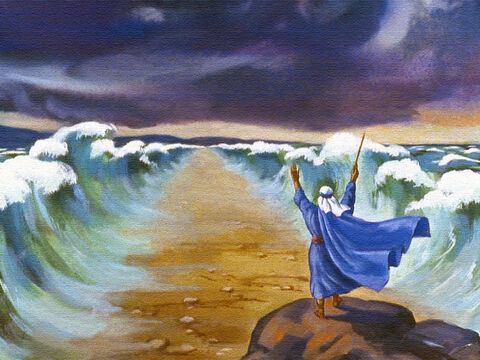
When Moses raised his staff and the waters parted, God did more than create a path. He created a line that could not be uncrossed. Israel walked through on dry ground, not muddy ground, not sinking ground. The ground itself testified that this was not human effort. This was God making a way where none existed. When they reached the other side and the waters closed behind them, Egypt was gone forever. There was no going back. Salvation had a finality to it.
The word Scripture uses in this moment for deliverance is yeshua. Rescue. Salvation. Being pulled out from what would destroy you. This was not about entering promise yet. This was about being removed from death. The Reed Sea crossing was the death of the old life. Slavery drowned behind them. Their former masters could not follow. God did not negotiate freedom. He severed bondage.
This is why the apostles later connect this crossing to baptism. Paul says the people were baptized into Moses in the cloud and in the sea. Baptism is not a performance. It is a burial. Something ends there. When Israel came up on the other side, they were free, but they were not finished.
Freedom does not immediately produce maturity. After the Reed Sea came the wilderness. A place where freedom had to be learned. A place where trust was tested daily. Food did not come from storehouses but from heaven. Water did not come from wells but from a rock. Guidance did not come from maps but from God’s presence in cloud and fire. The wilderness revealed what slavery had shaped inside them. Complaining. Fear. Longing for the familiar even when it was cruel.
God did not abandon them there. The wilderness was not punishment. It was preparation. He was teaching them how to live as a people who belonged to Him and not to Pharaoh. He was teaching them to listen, to follow, to obey, and to rely. The Reed Sea broke chains. The wilderness worked on hearts.
Then came the Jordan.
The Jordan River is not about escaping bondage. It is about entering inheritance. The Hebrew name Yarden comes from a root meaning to descend. The river flows downward, and symbolically it represents humility, surrender, and transition. The Jordan marked the boundary between wandering and settling, between promise spoken and promise possessed.
This generation standing at the Jordan was not the same generation that crossed the Reed Sea. Moses was gone. Leadership had changed. Joshua now stood before the people. His name, Yehoshua, is built on the same root as yeshua. Salvation does not stop at rescue. Salvation leads. Salvation brings forward. Salvation completes what rescue begins.
Unlike the Reed Sea, the Jordan did not part before obedience. The priests carrying the ark had to step into the water while it was still flowing. Only then did the river stop. Faith was required before evidence appeared. This is crucial. At the Reed Sea, God removed Israel from danger they could not survive. At the Jordan, God required Israel to move forward into what they were promised.
The Jordan crossing was not dramatic noise and walls of water towering on both sides. It was quiet authority. The waters stood upstream, held back by God, while the people crossed. This was not about fear being chased. This was about trust being exercised.
Scripture tells us they took twelve stones from the middle of the riverbed and carried them out as a memorial. These stones mattered. They were not decoration. They were testimony. Each stone said God stopped what could not be stopped. God made a way where no way existed. God is faithful to complete what He promises.
Spiritually, the Jordan represents a deeper walk. Not initial salvation, but possession. Not rescue, but responsibility. Not leaving Egypt, but learning how to live in the land God gives. This is where obedience matters. Courage matters. Faith becomes active.
For believers, these two crossings speak loudly. The Reed Sea mirrors salvation. We are delivered from sin and death. The old life is buried. The enemy no longer has authority. Baptism reflects that truth outwardly. Something ends there.
But salvation is not the end of the journey. There is wilderness learning. There is growth. There is correction. There is dependence. Then comes the Jordan moments in life. Moments where God calls us to step into promises already given. Moments where fear returns, not because bondage is present, but because responsibility is real.
Many believers stay in the wilderness longer than necessary because the Jordan requires action. It requires stepping forward while the water is still moving. It requires trusting that God will stop the flow once obedience begins. Both crossings involve water because water represents death and life together. Passing through water means something old does not come with you. Something new must begin. God uses water not to harm His people but to transform them.
Crossing over is not a one time event. It is the rhythm of faith. Each season brings another threshold. Each calling brings another river. Each promise brings a moment where fear and trust face each other again.
The same God who parted the Reed Sea holds back the Jordan. The same God who saves also leads. The same God who rescues also establishes. He does not abandon His people halfway. Crossing over is not about bravery. It is about trust. It is about believing that God is already present on the other side of obedience. When we step forward, He meets us there.
This is not just history. It is instruction. God still calls His people to cross. To leave what is familiar. To walk into what is promised. To trust Him with both rescue and inheritance.
The waters still part. Not always visibly. Not always dramatically. But always faithfully.
And every time we cross, we are changed.
image gotten free from freebibleimages
.
.