
The Cost of Untrained Children and Absent Responsibility
There is a growing concern that cannot be ignored anymore, because it is no longer just “youth behavior” or “a phase of rebellion.” What we are seeing in too many places is the result of a deeper breakdown in training, discipline, and parental responsibility. When teenagers are setting fires, taking over streets, or openly disregarding curfews, the issue is not simply the child, it is the environment that shaped, or failed to shape, that child.
Children are not self-governing by design. They are not born with restraint, foresight, nor respect for consequence. These are qualities that are built over time through consistent training, correction, and supervision. When that process is absent or inconsistent, something else takes its place: impulse, peer pressure and influence, and whatever the surrounding culture happens to reward (today, it’s “anything goes”). And once impulse becomes habit, it doesn’t remain small or contained. It expands outward into behavior that affects homes, neighborhoods, and even entire communities.
This is why the responsibility of parents cannot be treated lightly or casually. Parenting is not simply providing food, shelter, or occasional attention to a child. It is the shaping of a human being’s internal boundaries. It is the daily work of teaching what is acceptable, what is harmful, what is safe, and what carries consequences. When that work is neglected, or handed off to older siblings, television, social media, or the street itself, the child is still being formed and taught, but by whatever is most present, not necessarily what is right.
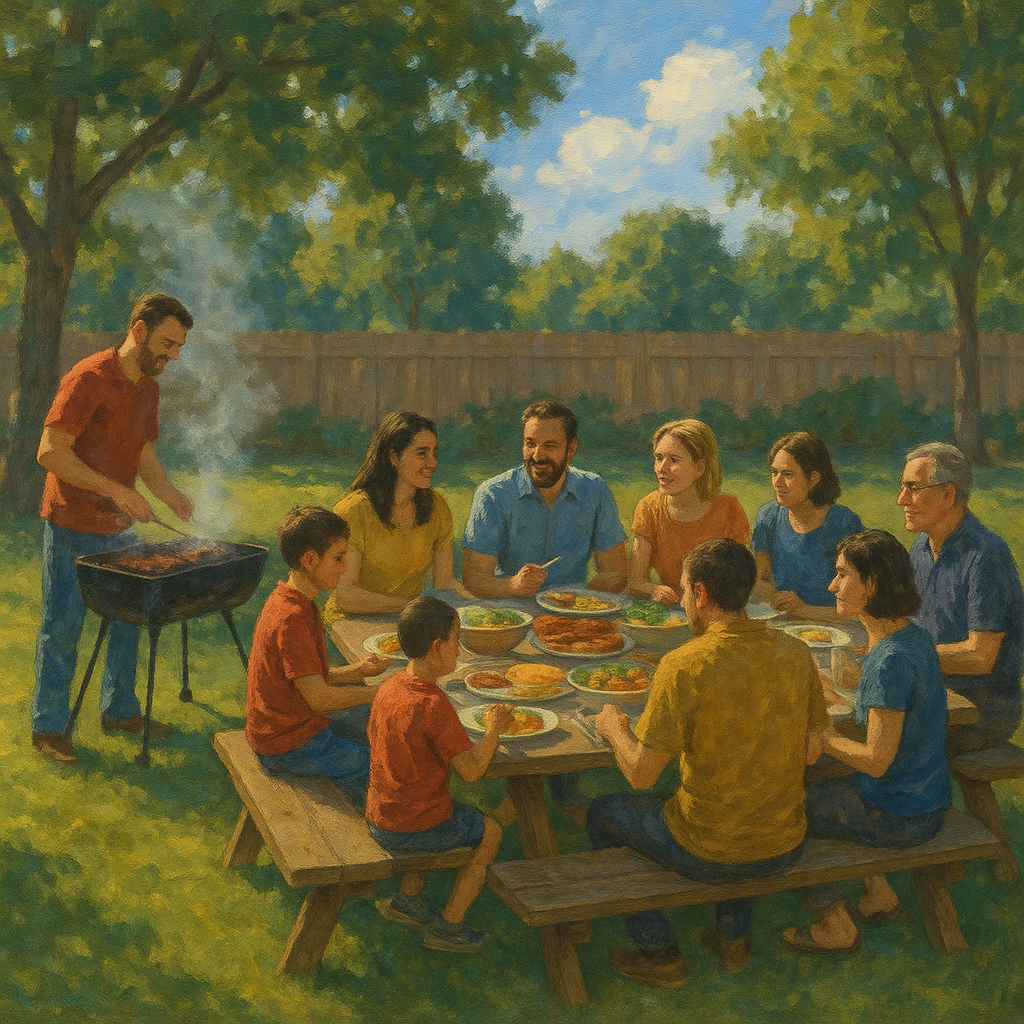
There is also a deeper reality that once functioned more naturally in society, even if it is now seriously weakened in practice: the idea that it takes a “village” to raise a child. Just a few decades ago, in earlier community structures, children were not formed in isolation. Neighbors corrected behavior, elders spoke into situations, and public life itself reinforced boundaries. A child’s development was not only the responsibility of the home, but was also surrounded by a wider network of accountability and guidance. The expectation was that if a child acted out in public, responsible adults within that shared space could address it, reinforce correction, and uphold standards of behavior together rather than leaving it entirely to one household alone.
What has changed is not the truth of that principle, but the willingness, confidence, and freedom to live it out. In many places today, people hesitate to intervene or speak to a child’s behavior, even when they see clear problems, because the social and legal boundaries around involvement have become uncertain or restricted. The result is that the burden has fallen almost entirely back onto individual households, while the surrounding support structure has been seriously weakened by those parents who selfishly don’t want anyone else supporting them in helping in the discipline of their children.
There is also a very real modern shift happening on top of this: when correction is attempted from outside the home, it is often met with hostility rather than reflection. In many cases, children have been conditioned, directly or indirectly, to mirror the same disregard for correction that exists in the home itself. So when a neighbor or responsible adult tries to step in where an when a child is acting out and there are no parents or guardians around, the response is not recognition or humility, but dismissal or even aggression. In some cases, this is reinforced further by social media narratives that automatically frame the child as the “victim” in every situation, regardless of behavior. That constant messaging can reinforce a mindset where consequences are rejected and accountability is viewed as unfair. Over time, this weakens not only respect for community correction, but respect for authority itself, until the child operates with the assumption that no one has the right to correct them at all. A sobering example of this pattern can be seen in the sons of Eli (1 Samuel 2:12-36), where unchecked behavior, lack of correction, and disregard for instruction led to increasing corruption rather than repentance or restraint.
A practical reality also has to be faced here: curfews are not only broken in public where everyone can see it. They are often violated quietly at night when the household is asleep and a child decides to slip out anyway. In those moments, the response cannot be ignored or delayed once it is discovered. Safety must come first, making sure the child is found and returned without harm is the immediate priority. But once they are home, the situation must be addressed directly and calmly. It cannot be treated as something minor, because that teaches that rules are optional. At the same time, it cannot be handled through uncontrolled anger, because that turns responsibility into conflict instead of correction. The violation has to be named clearly, trust has to be addressed, and consequences must be applied in a way that directly restricts the freedom that was misused. Just as important, follow-through must be consistent, because without it the boundary loses meaning and the behavior will repeat.
There is also a growing recognition in civil society that when serious disorder repeatedly involves minors, accountability cannot stop with the child alone. Many governments and communities are increasingly holding parents legally responsible when children are caught engaging in destructive or dangerous behavior. This reflects a hard truth: when parental responsibility is absent, the consequences spill outward into the public. In principle, this aligns with a basic moral reality, responsibility belongs where children are supposed to be raised. If a child is not being guided at home, the effects eventually become everyone’s burden, and society (is supposed to) responds by pressing that responsibility back toward the household where it originated.
God’s Word speaks clearly to this principle, not as a suggestion but as a foundational truth about human development. “Train up a child in the way he should go, and when he is old, he will not depart from it” (Proverbs 22:6). Training implies intention. It implies effort. It implies correction when necessary. It is not passive. It is not accidental. It is deliberate shaping over time so that character becomes stable before independence arrives.
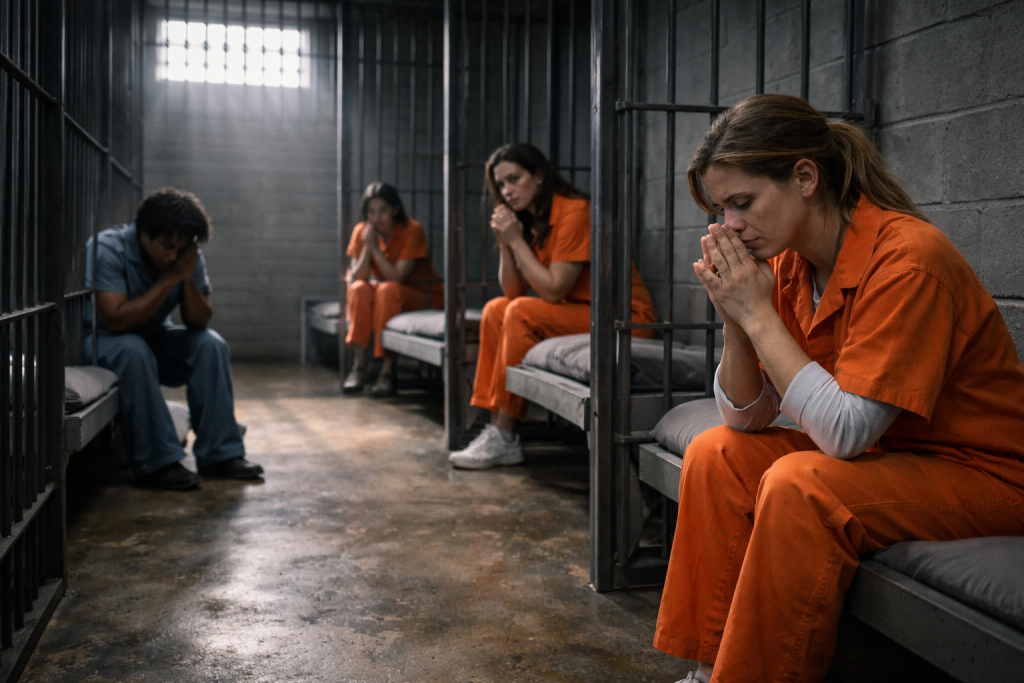
There is also a sobering principle in Scripture that explains why unchecked behavior becomes more entrenched over time:“Because sentence against an evil work is not executed speedily, therefore the heart of the sons of men is fully set in them to do evil.” Ecclesiastes 8:11. When consequences are delayed or absent, behavior does not naturally self-correct, instead, it hardens. It becomes as consistent in bad behavior, as it would when a child is trained properly for the good. This is why timely discipline is not cruelty, but mercy.
There is also a sobering reminder found in There is also a sobering reminder found in “A child left to himself brings his mother to shame” (Proverbs 29:15). This is not speaking in anger; it is describing outcome. A child without guidance does not remain neutral. They develop patterns, and those patterns eventually show themselves publicly. What begins as small lapses in discipline can grow into behavior that brings harm, embarrassment, or even danger, not only to themselves but to others around them.
In many communities, what is being observed is not simply “kids being kids,” but children placed in situations far beyond their maturity level while still being denied the structure needed to handle it. Older children are raising younger ones without guidance. Teenagers are given freedom without accountability. Very young adolescents are operating vehicles like motorcycles or engaging in other risky behavior without proper supervision. All of these point to the same underlying issue: an imbalance between responsibility and training. When responsibility is given without training, the result is not maturity, it is instability.
Society has also established boundaries such as curfews for a reason. These are not arbitrary restrictions; they are attempts to preserve safety when individual judgment is not yet reliable. When those boundaries are repeatedly ignored without correction, it shows a weakening of authority at multiple levels, first the home, then the community, and sometimes even cultural expectation, then the government. And when authority weakens, disorder does not hesitate to fill the space left behind.
This is why the issue ultimately returns to the home. Not because society has no role, and not because systems are perfect, but because training begins earliest and most powerfully within the family structure. Parents carry the responsibility not just to love their children, but to prepare them for life in a way that includes discipline, boundaries, and accountability. Love without guidance becomes confusion. Freedom without structure becomes risk. And unchecked behavior in youth does not stay contained to youth, it grows into adult consequences that are far more difficult to correct.
The goal of discipline is not control for its own sake. It is protection. It is preparation. It is the shaping of a life so that when a child steps into independence, they are not stepping into chaos internally. Because what is not trained early will eventually be trained by something or someone else. That instruction is often far less merciful than a parent willing to correct in time. It does not wait. It does not soften.
And it does not care what was meant to happen instead.
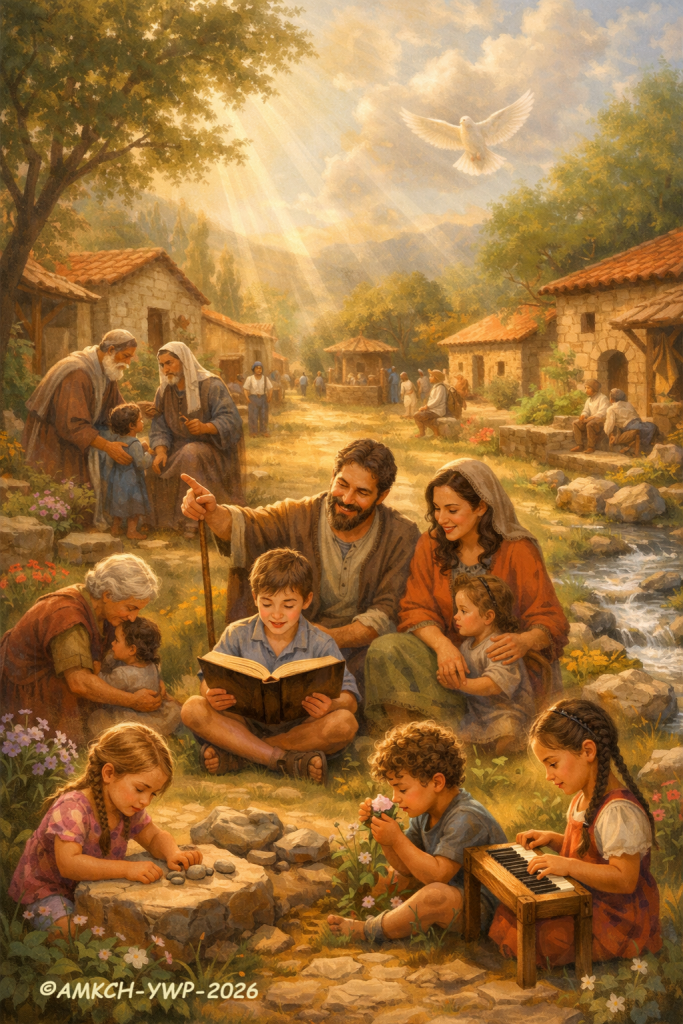
The question before every generation is not whether children will be shaped, because they will be. The question is who or what will shape them. No child grows in a vacuum. If parents and responsible adults do not establish truth, boundaries, correction, and guidance early, something else will eventually occupy that space. Culture will teach. Peers will teach. Circumstances will teach. Hard consequences will teach. The difference is that those teachers often have no concern for the child’s well-being or future. Discipline given with wisdom and love may feel difficult in the moment, but it is far kinder than allowing life itself to become the instructor. Training a child in the way he should go,is not merely an obligation to the present; it is an investment into the future of the child, the home, and the society they will one day help shape.
✝️✝️✝️✝️✝️
Prayer for you and yours to say:
Father God,
You are holy, You are righteous, You are the source of wisdom and order and truth. Before anything else is said, I honor You. My life, my home, my thoughts, and every correction and instruction I ask for. All of it belongs under Your authority. I worship You first, not as a step in a prayer, but as the foundation of it.
Now, Lord, from that place of worship, I come asking for Your help.
Teach me to walk in Your ways when it comes to responsibility, discipline, and guiding others. Give me a heart that reflects Your balance, truth and mercy together, strength and patience together, correction and love together.
Help me not to be careless with what You’ve placed in my care, but to treat it as a sacred trust. Where I must guide, give me courage to speak and act rightly even when it is difficult. Where I must correct, give me wisdom that is fair, timely, and shaped by love rather than frustration. Where I must restrain harm, give me clarity to see what is truly happening and self-control to respond without panic or delay. And where I am tempted to react instead of lead, steady me within so I do not move from impulse, but from wisdom that builds order, peace, and understanding.
Let my home not be shaped by confusion or neglect, but by Your order and Your peace that settles hearts and steadies decisions. Let the boundaries within it be wise, not harsh; firm, not cruel; consistent, not random, so that safety and trust can grow together without fear or instability. Protect those who are still learning and growing, guarding them from paths that would harm them before they are ready to carry the weight of their own choices. And where correction is needed, let it not become destruction or discouragement, but a doorway into understanding, maturity, and growth, so that even hard lessons produce life, not damage, and lead them closer to wisdom rather than away from it.
Father, I ask for You to restore what has been weakened in families and communities. Give strength back to those who carry responsibility, and humility to receive correction when it is needed.
Let Your Word be the guide in all of this, not as something I merely agree with, but as the living foundation of how I act, decide, and respond each day. Especially where it says, “Train up a child in the way he should go, and he shall not depart from it,” let me remember that shaping a life takes intention, patience, and faithful follow-through over time. Where it says, “Because sentence against an evil work is not executed speedily,” remind me that delay in correction can strengthen wrong patterns instead of stopping them, and give me wisdom to act in time rather than too late. And where it says, “A child left to himself brings his mother to shame,” let that sober me into responsibility, not fear, helping me stay present, attentive, and engaged. Let these truths move beyond thought and into action, shaping how I love, guide, correct, and build what You’ve placed in my care.
And above all, let love never be separated from truth, and truth never be separated from love. Help me to hold them together in every word I speak and every decision I make, so that truth is never used to wound, and love is never used to excuse what leads to harm. Keep my heart steady where firmness is needed, and tender where compassion is required, so that what flows from me reflects both Your righteousness and Your mercy in balance.
I honor You first, above all else, and I bring every part of this before You under Your authority. In the holy name of Your Son, Yeshua, I ask and entrust all of this into Your hands. Amen.
Amen and Amen.
✝️✝️✝️✝️✝️
If you liked this message, please leave a positive comment. I would love to hear from you!
✝️✝️✝️✝️✝️
© AMKCH 2026
image done by my chatgpt or at my direction.
If any of these people looks like you or someone you know, that is purely coincidental. They are not.
✝️✝️✝️✝️✝️
.
.