The Torah Was Never the End of the Story
Part One
The Torah Was Never Just Rules: How commandments reveal God’s nature, expose sin, and create expectation
This teaching is not a short read, and it was never meant to be. It moves through Scripture step by step, building a single continuous thread from beginning to end, and because of that, it carries weight that unfolds gradually rather than quickly.
It is best read in parts rather than all at once. Each section stands on its own, but each one also connects to what comes before and what follows after. For that reason, it may be helpful to pause between parts and allow each portion to settle before continuing.
Take it slowly, in more than one sitting if needed. Let the themes build as you go, rather than rushing through the full arc in one moment.
✝️✝️✝️✝️✝️
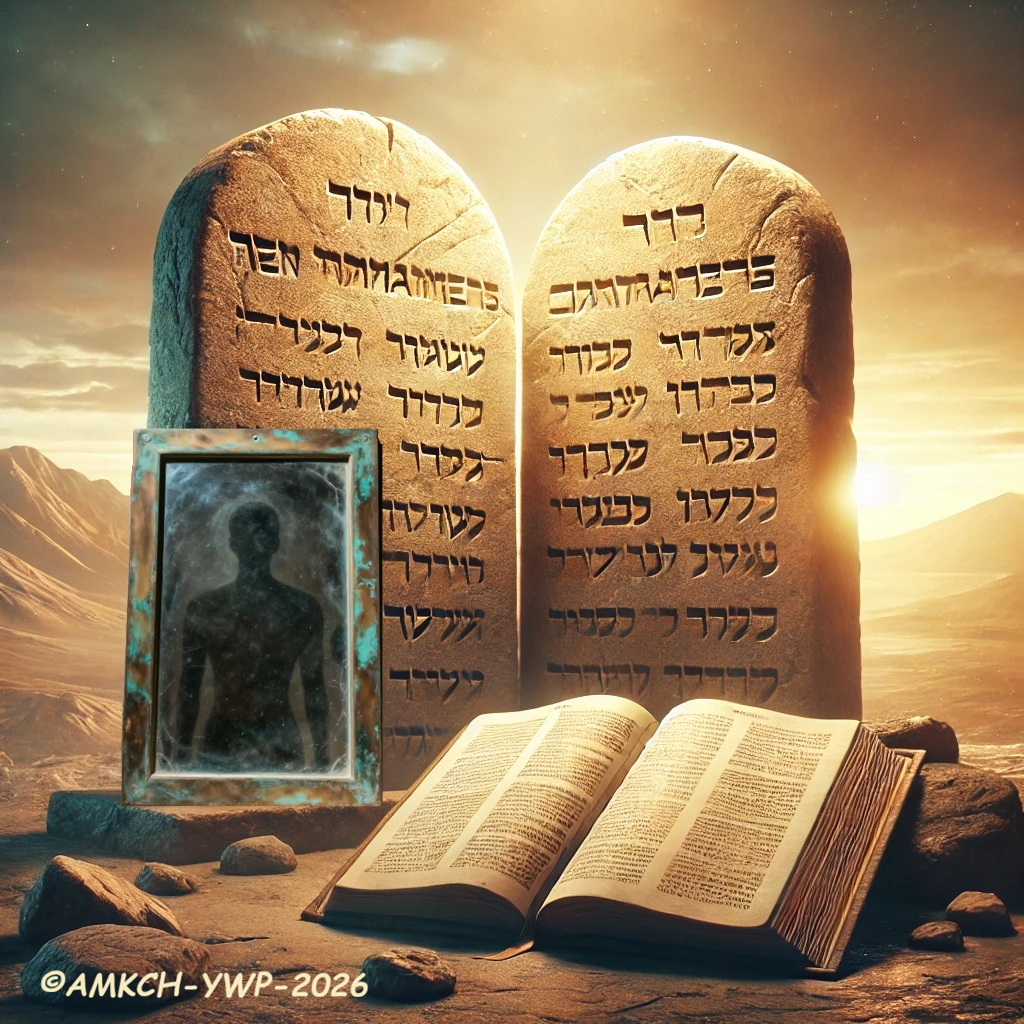
There are many who look at the Torah and see nothing more than a list of commands, restrictions, rituals, and burdens placed upon an ancient people. To them, it is little more than a record of regulations that belonged to another age. They see commandments about food, garments, sacrifices, cleansing, Sabbaths, boundaries, and judgments, and assume the whole purpose was simply behavior control. Yet that reading is shallow, because the Torah was never merely about rules. It was revealing the mind of God, exposing the condition of man, and preparing the world for the coming of Messiah.
When the Most High gave His law to Israel, He was not handing down random demands. Every commandment reflected something of His own holy nature. The commandments against false witness reveal that God is truth. The commandments against murder reveal that God is the giver of life. The commandments against theft reveal that God is just and honors rightful order. The commandments concerning sexual purity reveal that God is clean, faithful, and not the author of corruption. The commandments concerning worship reveal that God alone is worthy of devotion. The Torah was not simply telling man how to live.It was showing man what God is like.
This is one reason the law could never be treated lightly. To break the commandments was not merely to break rules. It was to rebel against the character of the One who gave them. Sin was never just misconduct. Sin was and still is disorder against divine order. It is man stepping outside the boundaries of God’s wisdom and holiness. The Torah made this plain in ways conscience alone often does not. Many people imagine themselves righteous until the light of God’s Word shines on them.
Let me put it to you this way: the commandments functioned like a mirror. A mirror does not clean the face. It reveals the dirt on it. In the same way, the Torah showed what was already there within the heart of man. Covetousness, pride, violence, deceit, lust, stubbornness, idolatry, greed, hardness of heart, all of these become clearer when set beside the holiness of God. What many call “goodness” often survives only in darkness. Once light enters the room, truth becomes visible.
This is why even Israel, the nation chosen to receive the law, repeatedly failed under it. They had prophets, priests, kings, miracles, covenant promises, discipline, mercy, warnings, and divine preservation. Yet the history of Israel is also the history of human inability. The issue was never that the law was flawed. The issue was that man was flawed. With that, we can understand that a perfect law given to an imperfect people will reveal imperfection again and again.
This truth reaches deeper than many realize. If commandments alone could heal the human heart, then Israel would have become a nation of flawless saints. If external instruction alone could cure inward rebellion, then centuries of divine revelation would have solved the matter completely. Yet the same Scriptures that give the law also record failure under the law. This was not an accident in the story. It was part of the lesson.
The Torah itself hints that something greater would be needed. Moses didn’t talk only of commands, but of a future work of God upon the heart. In Deuteronomy 10:16, Israel is told to circumcise the foreskin of the heart and be stiff-necked no more. Yet later in Deuteronomy 30:6, it is the LORD Himself who promises to circumcise the heart of His people so they may love Him fully. This is profound. The command reveals responsibility, but the promise reveals necessity. Man is told what must happen, yet God declares He Himself must do it.
There is wisdom here many miss. The Torah teaches that the deepest human problem is not ignorance alone. It is not lack of information or poor education. It is not social structure. And it’s not merely outward conduct. The deepest problem is inward nature. Something in man resists God even when truth is plainly spoken. Therefore something more than commandment is required. The heart itself has to be changed.
This is where the road begins to lead toward Messiah. If the law reveals holiness but cannot create holiness within fallen flesh, then someone must come who can do what tablets of stone could never accomplish. If the law exposes sin but cannot remove the sinful nature, then someone must come who can cleanse deeper than ritual washings. If the law commands love of God but the human heart remains divided, then someone must come who can renew the inner man. There is only One.
The Torah also creates longing through its very severity. Blessings are promised for obedience. Curses are warned for rebellion. Life and death are set before the people. Yet who can stand blameless in every matter? Who can claim perfect covenant faithfulness in thought, word, and deed? The more seriously a person takes the commandments, the more they feel the weight of this question.
Some imagine the answer is simply to try harder. But Scripture repeatedly shows that effort without transformation returns to the same wall. Men can polish behavior while keeping idols in the heart. They can honor God with lips while remaining far from Him within. They can perform religion while loving darkness. The Torah unmasks this hypocrisy by demanding truth not only in action, but in motive and loyalty.
Even the structure of the commandments points beyond themselves. Why have laws for priests if man can approach God freely in his current condition? Why sacrifices if guilt is trivial? Why cleansing rituals if impurity is only symbolic nonsense? Why repeated offerings if sin is solved once by ordinary effort? Why a Day of Atonement if man can repair himself? Every one of these institutions whispers the same truth: humanity is estranged and needs reconciliation.
The Torah, then, was never a dead staircase of rules men climbed into righteousness by their own strength. It was a holy revelation showing who God is, who man is, and what man lacks. It taught obedience, yes, but it also exposed inability. It established justice, yet awakened mercy. It demanded purity, yet revealed impurity. It commanded love, yet uncovered cold hearts. It set the standard high enough that no honest soul could boast before it.
And when a man or woman finally sees this clearly, the question rises almost on its own. If this is the standard, who can stand? If this is the disease, where is the cure? If this is the darkness, where is the light? If the Torah is true, then help must come from beyond man.
That is why the Torah was never merely about rules. It was laying the foundation stones for the arrival of the One who would fulfill righteousness, bear sin, cleanse the unclean, write the law upon the heart, and bring man back into peace with God. “I will put my law in their inward parts, and write it in their hearts” (Jeremiah 31:33). Long before many recognized His name, the road was already being built.
✝️✝️✝️✝️✝️
Part Two
The Blood, The Altar, And The Need For Atonement
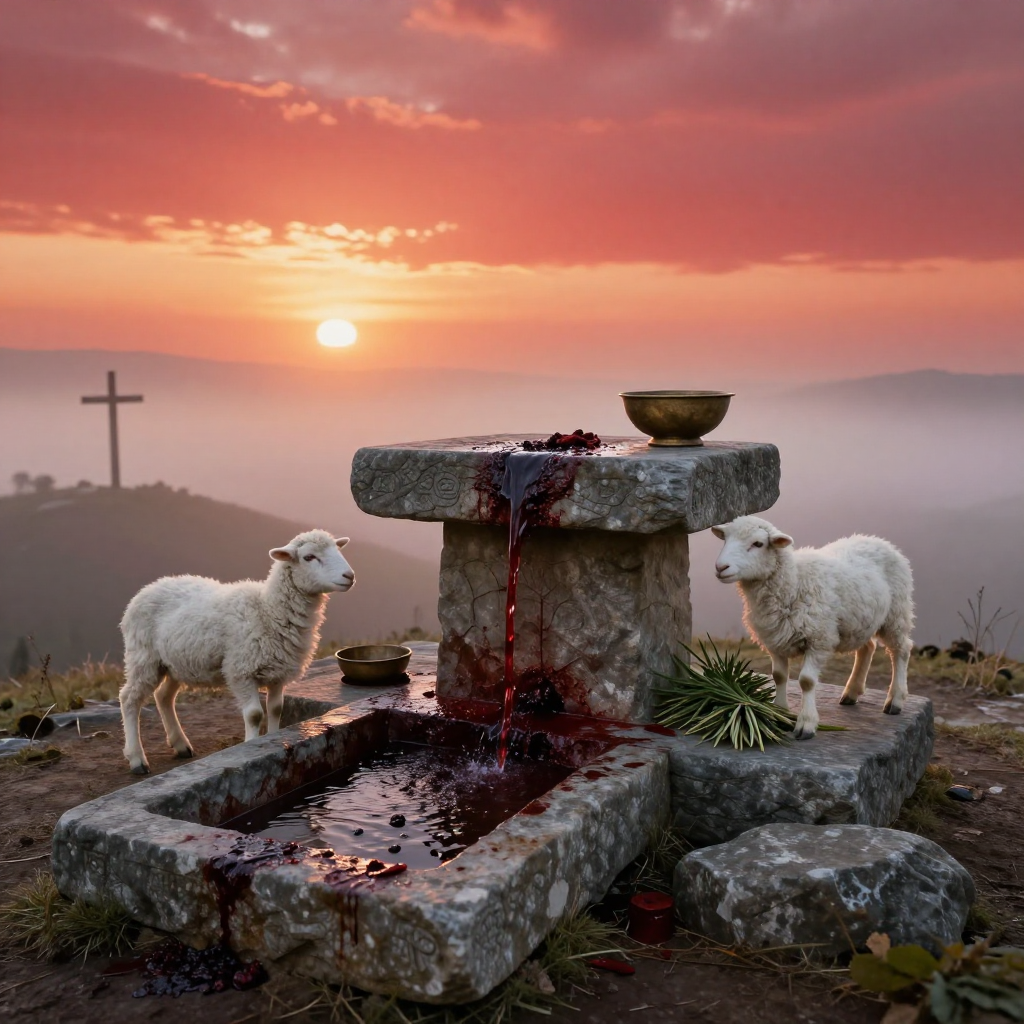
Sacrifices, substitution, priesthood, cleansing, access to God
Many people begin reading the book of Leviticus and quickly lose interest. They see sacrifices, blood, priests (kohen, priest, minister before God), fat portions, washings, fire, ashes, skin conditions, offerings (korban, offering, that which is brought near) for sin, offerings for thanksgiving, and laws that seem far removed from modern life. To the casual eye it can appear repetitive and strange. Yet beneath those pages is one of the deepest revelations in all of Scripture. Leviticus is not clutter. It is theology in motion. It teaches, through visible acts, what sin does, what holiness requires, and why mankind needs atonement (kippur, covering, reconciliation, removal of guilt).
The first truth established by the altar is that sin is costly. Human nature often treats wrongdoing lightly. Men excuse it, rename it, justify it, compare themselves with others, or hide it under religious language. But in the presence of God, sin is not small. It wounds fellowship, distorts justice, corrupts the soul, and brings death into what God made for life. The sacrificial system forced this reality into view. Every animal brought forward, every drop of blood shed, every body consumed upon the altar declared that rebellion carries weight.
This is why blood stands so prominently in the Torah. Blood was not used because of spectacle, but because life is in the blood. Leviticus 17:11 teaches that the life of the flesh is in the blood, and that it was given upon the altar to make atonement for the soul. Leviticus 17:11 “For the life of the flesh is in the blood: and I have given it to you upon the altar to make an atonement for your souls: for it is the blood that maketh an atonement for the soul.” This is profound. Life was offered because sin had introduced death. The answer was not words alone, nor sentiment, nor vague regret. The language of atonement required life given in place of life forfeited.
Here we meet the principle of substitution. An innocent creature was presented in the place of the guilty worshiper. Hands were laid upon the offering, identifying the sinner with what was to die. The guilty did not walk away because guilt was imaginary. The guilty walked away because another bore the consequence in symbolic form. This was mercy operating within justice.
Yet even here the Torah teaches something deeper. If the blood of animals had fully removed sin in the deepest and final sense, then why were sacrifices repeated continually? Why morning and evening offerings? Why annual atonement? Why new sacrifices after fresh transgressions? The repetition itself becomes part of the lesson. These offerings truly mattered within covenant life, but they also pointed beyond themselves. They addressed real guilt in an appointed system while simultaneously revealing the need for something greater and more complete.
The priesthood also speaks loudly. Why priests at all? Why not have every man simply walk into the Holy Place and present himself before God? Because humanity in its fallen state cannot casually stride into divine holiness as though nothing has happened between heaven and earth. Priests represented mediation. Someone stood between the people and the sanctuary, handling sacred things on their behalf. This taught that estranged mankind needs an appointed go-between.

The garments of the priesthood, the washings, the consecration rites, the anointing oil, the careful regulations, all showed that drawing near to God was serious and holy. Nadab and Abihu learned this when they offered strange fire before the LORD. Leviticus 10:1-2 “And Nadab and Abihu, the sons of Aaron, took either of them his censer, and put fire therein, and put incense thereon, and offered strange fire before the LORD, which he commanded them not. And there went out fire from the LORD, and devoured them, and they died before the LORD.” Holiness is not to be treated as common. God is merciful beyond measure, but He is never ordinary.
Then there was the Day of Atonement, one of the most solemn pictures in Torah. Once each year the high priest entered the Most Holy Place with blood. One goat was slain, and another, the scapegoat (azazel, removal, dismissal, sending away), symbolically carried the sins of the people away into the wilderness. Leviticus 16:15-16 “Then shall he kill the goat of the sin offering, that is for the people, and bring his blood within the veil… and so shall he make an atonement for the holy place… and he shall sprinkle it upon the mercy seat.” Here are two truths joined together: sin judged, and sin removed. Justice satisfied, burden carried away. Even the imagery itself cries out for fulfillment.
The altar therefore was not merely a place of death. It was a place where mercy met judgment under God’s appointed means. Fire consumed what was offered, yet the worshiper received peace. Something was accepted so that someone might be received. That pattern runs deep through all Scripture.
The clean and unclean laws surrounding sacrifice also matter. Worshipers often needed cleansing before approaching holy things. This taught that sin is not the only issue. Defilement, corruption, mortality, and disorder cling to human life in a fallen world. Man does not merely commit wrong acts. He lives in a condition needing purification. That is why washing, waiting periods, and restoration rites appear so often. They are earthly shadows of a deeper cleansing humanity requires.
When viewed this way, Leviticus becomes alive. Every lamb, bull, goat, dove, grain offering, incense cloud, priestly action, and altar flame forms a vocabulary. Without this vocabulary later redemption language would be thin and confusing. With it, the meaning becomes rich. Sacrifice explains surrender. Blood explains life given. Priesthood explains mediation. Cleansing explains restoration. Burnt offering explains total consecration. Peace offering explains fellowship regained.
The human heart still wrestles against these truths. Many would rather believe sin requires no reckoning, guilt needs no answer, and God asks nothing of us. Others believe they can pay their own debt through moral effort, religious performance, or balancing good against evil. Yet the Torah cuts through both errors. Sin is real, holiness is real, mercy is real, and reconciliation must come by God’s provision, not man’s invention.
This is why the sacrificial system creates expectation. If repeated offerings continue year after year, then hearts begin to ask whether a greater atonement will ever come. If priests themselves are mortal and imperfect, one begins to wonder whether a greater priest will arise. If cleansing must be repeated outwardly, one longs for inward cleansing that remains. If guilt returns again and again, one hopes for peace that reaches the conscience itself. It also points forward to the reality described later: Hebrews 9:22 “And almost all things are by the law purged with blood; and without shedding of blood is no remission.” and the repeating shadow pattern: Hebrews 10:1 “For the law having a shadow of good things to come, and not the very image of the things, can never with those sacrifices which they offered year by year continually make the comers thereunto perfect.”
The Torah planted these questions long before many understood where they would lead. The altar was never the end of the story. It was a signpost. The blood upon it testified that sin demands death, yet mercy makes a way. The priest standing there testified that man needs mediation. The repeated sacrifices testified that the final answer was still ahead.
So when Messiah comes into the story, He does not appear in a vacuum. He steps into categories already established by God Himself. Atonement, substitution, priesthood, cleansing, reconciliation, access, acceptance, peace, all were written into the life of Israel centuries beforehand.
He does not introduce a foreign system. He fulfills an already existing language that had been spoken through altar, blood, and priesthood for generations. The Torah had already trained the imagination of Israel to understand what He would do before He ever arrived. Every sacrifice had already defined the idea of a substitute. Every drop of blood had already declared that life must be given for life. Every priest had already demonstrated that access to God requires mediation. Every cleansing ritual had already announced that impurity cannot simply be ignored, it must be dealt with. These were not isolated ceremonies. They were categories of meaning.
This is why the writings later say that Messiah functions as both sacrifice and priest. The language is not invented in the New Covenant writings, it is drawn directly from Torah logic. He is described as the one who enters once and for all into the true heavenly reality that the earthly tabernacle only pointed toward, fulfilling what the shadow could only hint at. Hebrews 9:11-12 “But Christ being come an high priest of good things to come… by his own blood he entered in once into the holy place, having obtained eternal redemption for us.” The entire priestly system was already teaching that access to God requires representation, and He steps into that role as the final and complete High Priest.
The concept of atonement itself also shifts from repeated covering to final resolution. The Hebrew idea of kippur (covering, reconciliation, removal of guilt) becomes fully expressed rather than repeatedly enacted. What the Day of Atonement rehearsed annually is presented as completed reality. The scapegoat imagery of sin being carried away finds its fulfillment in One who does not merely symbolize removal but actually bears it. The prophetic language already hinted at this kind of substitution, where the innocent suffers in place of the guilty, but now it is no longer symbolic repetition. It is fulfillment.
Even priesthood itself changes category. In the Torah, priests are sons of Aaron, limited by mortality and personal weakness. But Messiah is described in a different order, tied to the figure of Melchizedek (Malki-Tzedek, king of righteousness), a priesthood not dependent on genealogy or continual replacement. Hebrews 7:17 “Thou art a priest for ever after the order of Melchisedec.” This is significant because it shows that God already embedded within Scripture the idea of a priesthood that would not decay or pass away, pointing beyond the Levitical system itself.
Cleansing language also finds completion in Him. The repeated washings, purification rites, and ritual cleansings all pointed to the deeper issue that impurity is not merely external but internal. The prophetic hope always moved toward inward transformation, not just outward adjustment. This is why later Scripture speaks of cleansing of conscience rather than only cleansing of the body. The outer rituals were real, but they were training shadows of a deeper purification God intended.
Reconciliation, access, acceptance, and peace all converge in this fulfillment. What once required separation, veil, and priestly mediation becomes described as open access through His work. The tearing of the veil language in the Gospel narrative reflects that the barrier system itself has reached its appointed fulfillment point. What was once restricted to one man once a year is now presented as opened through a completed act of atonement.
So Messiah is not inserted randomly into the story. He is the answer to the structure already built. The altar had already defined the problem. The blood had already defined the cost. The priesthood had already defined the need for mediation. The sacrifices had already defined repetition and incompleteness. All of it was preparing a framework that only makes full sense when He arrives and steps into every category at once, not as symbol, but as substance.
In that sense, the Torah is not simply background. It is expectation shaped into history.
Leviticus, then, is not a graveyard of obsolete rituals. It is a chamber full of lamps. Many pass through quickly because they dislike the shadows on the walls. But those who linger begin to see what the light was always revealing. Humanity needs more than advice. It needs atonement (kippur, covering, reconciliation, removal of guilt).
This is not merely moral instruction. It is the unveiling of a divine requirement woven into creation itself. The patterns of sacrifice, priesthood, blood, and cleansing are not random ancient customs. They are structured testimonies pointing beyond themselves. They declare that sin is not solved by awareness alone, nor by improved behavior, nor by greater self-effort. Those things may adjust outward conduct, but they cannot resolve the deeper rupture between holiness and corruption.
Atonement, therefore, is not presented as optional language in Leviticus. It is the central necessity behind every altar flame. The Hebrew root kaphar (to cover, to make reconciliation, to pacify through covering) carries the idea that something must stand between judgment and the one under judgment. Blood becomes the visible testimony that life has been given where life was forfeit. This is why the text repeatedly returns to the phrase that atonement is made “for the soul,” because the issue is not surface correction but life-level restoration.
Even the priestly system reinforces this reality. The kohen (one who ministers, stands before God on behalf of others) does not exist to simplify religion but to acknowledge that direct access is not assumed in a fallen condition. Every movement into the sanctuary, every careful washing, every ordered garment speaks the same message in physical form: approach to holiness requires provision, not presumption.
This is why Leviticus feels heavy to modern readers. It is intentionally so. It slows the reader down to feel the weight of consequence. It refuses to let sin remain abstract. It insists that reconciliation is costly, structured, and divinely appointed. And yet, within that weight is also mercy. Because the very existence of sacrifice means God has made a way for fellowship to continue rather than be severed permanently.
So when viewed through its own internal logic, Leviticus is not an endpoint but a tension. It holds together two realities at once: the seriousness of judgment and the provision of mercy. It raises the question it cannot fully resolve within itself. And that unresolved tension is precisely what keeps the narrative alive, expecting fulfillment rather than closure.
That is why those who linger in it do not walk away with despair, but with anticipation. The lamps are not there to decorate darkness. They are there to signal that light is coming from beyond the room itself.
✝️✝️✝️✝️✝️
Part Three
The Appointed Times Were Prophetic Rehearsals
Passover, Firstfruits, Atonement, Tabernacles, Jubilee, Sabbath
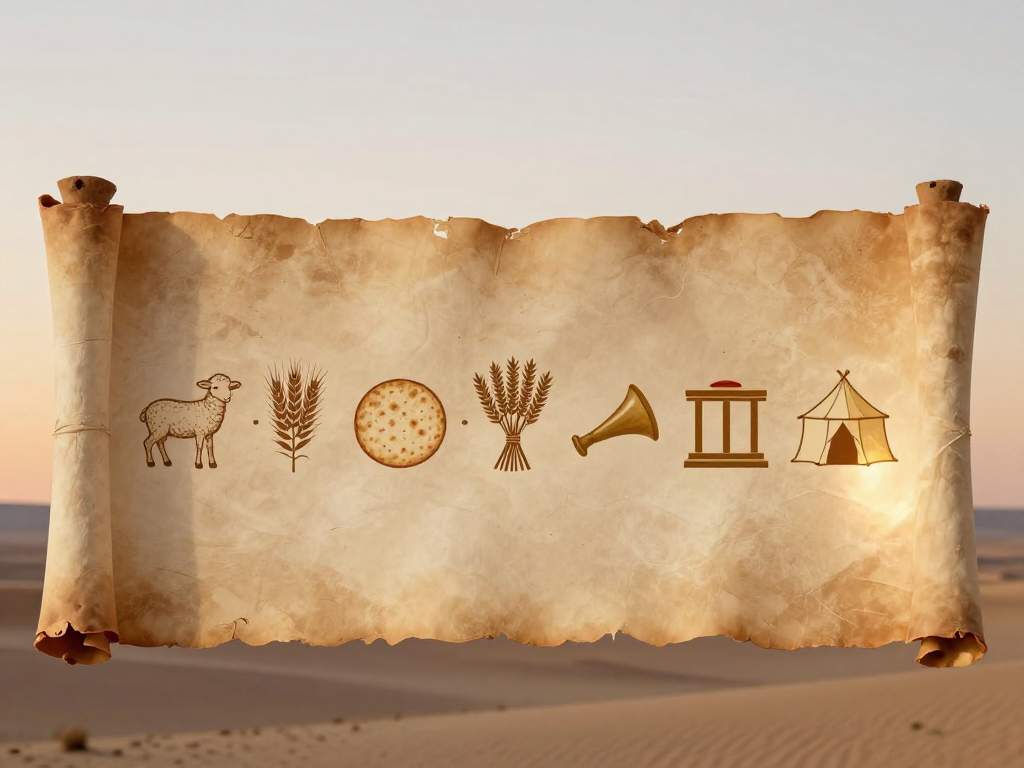
At first glance, the festivals of the Torah look like national observances, seasonal celebrations, and memorial days woven into Israel’s calendar. Passover, Unleavened Bread, Firstfruits, Weeks, Trumpets, Atonement, and Tabernacles appear as structured rhythms of worship and remembrance. Yet beneath their surface lies something far more intentional. These appointed times are not random holy days. They are prophetic patterns set into time itself, rehearsals of redemption written into the yearly cycle.
The Hebrew word used for these feasts, מוֹעֲדִים (moedim, appointed times, fixed divine meeting points), carries the sense of appointed gatherings, fixed moments set by God rather than invented by man. That alone shifts the meaning. Israel was not choosing when to remember God’s works. God was choosing when His works would be remembered. Time itself becomes structured around divine intention, as seen already in creation order where the sun and moon are given “for signs and appointed times”Genesis 1:14 “And let them be for signs, and for seasons, and for days, and years.” The word “seasons” there is the same moed idea, showing this pattern is embedded from the beginning.
Passover stands at the beginning of this cycle, and it already carries a weight that reaches beyond Egypt. On the surface it remembers deliverance from slavery, the night when judgment passed over the homes marked by blood, Exodus 12:13 “And the blood shall be to you for a token upon the houses where ye are: and when I see the blood, I will pass over you.” Yet the details matter. A lamb without blemish, תָּמִים (tamim, whole, complete, without defect). Blood applied as protection. Death passing through the land. A people spared not by strength, but by covering. Even here the language is already shaped by substitution and redemption, because life is preserved through another life given.
Unleavened Bread follows immediately, removing what is corrupted, inflated, and allowed to rise. Leaven becomes a picture of hidden influence spreading through dough, a quiet symbol of corruption working through a whole lump. This is why the command is so strict, Exodus 12:15 “Seven days shall ye eat unleavened bread; even the first day ye shall put away leaven out of your houses.” Leaven, שְׂאֹר (se’or, fermenting agent, symbol of corruption that spreads unseen), represents what begins small but spreads through everything it touches. Its removal speaks of purity, separation, and a life no longer mixed with the old bondage. Deliverance is not only escape, but cleansing.
Then comes Firstfruits, the offering of the first portion of the harvest. It is a declaration that what is beginning belongs to God, and that what is given first represents what will follow. Leviticus 23:10 “When ye be come into the land… then ye shall bring a sheaf of the firstfruits of your harvest unto the priest.” Firstfruits, בִּכּוּרִים (bikkurim, first ripened portion, pledge of coming fullness), is faith expressed through timing. The first sheaf is lifted before the rest of the field is gathered, acknowledging that increase is not self-generated but received from the One who gives the harvest.
Weeks, or Shavuot, brings completion of that early harvest cycle. It connects firstfruits to fullness, linking beginning to fulfillment, seed to abundance, and revelation to covenant life. Deuteronomy 16:9-10 “Seven weeks shalt thou number… and thou shalt keep the feast of weeks unto the LORD thy God.” In later Scripture memory, this moment becomes associated with the giving of instruction, תורה (Torah, instruction, divine teaching, guiding word), and the forming of a people shaped not just by escape but by voice.
Then the calendar turns toward Trumpets. A sudden sound breaks ordinary rhythm. It is not gradual. It is an awakening signal. Leviticus 23:24 “In the seventh month… a memorial of blowing of trumpets, an holy convocation.” Trumpets, תְּרוּעָה (teruah, alarm blast, shout, awakening cry), often marks divine interruption, calling attention upward and forward at the same time. Something is coming. Attention is required. Sleep cannot remain unchallenged.
After this comes the Day of Atonement, the most solemn moment in the entire cycle. Here silence replaces celebration. Fasting replaces feasting. The high priest enters into the most sacred place with blood, and the people are confronted with the seriousness of sin at a national level. Leviticus 16:30 “For on that day shall the priest make an atonement for you, to cleanse you, that ye may be clean from all your sins before the LORD.” Atonement, כִּפֻּר (kippur, covering, reconciliation, removal of guilt), shows that sin is not ignored or absorbed into time, but dealt with through appointed covering before God.
Finally, Tabernacles arrives with joy. Dwelling in temporary shelters, remembering wilderness dependence, and celebrating provision, the people are reminded that God does not only forgive but also dwells among them. Leviticus 23:42-43 “Ye shall dwell in booths seven days… that your generations may know that I made the children of Israel to dwell in booths.” Tabernacles, סֻכּוֹת (Sukkot, temporary dwellings, fragile coverings of presence), points to something deeper than survival—it points to presence.
When viewed together, the pattern becomes difficult to ignore. These appointed times do not simply mark history. They structure expectation. They move in sequence. Deliverance, cleansing, offering of first, fullness, awakening, atonement, and dwelling presence. It reads less like cultural tradition and more like a script written into time before the events themselves unfold.
Even the spacing between them matters. They are not clustered into a single moment but spread across the year, shaping anticipation and memory simultaneously. Israel lives inside a calendar that keeps reminding them that redemption is both remembered and still awaited.
This is where the prophetic weight begins to press forward. If these feasts are merely historical commemoration, their repetition would be enough. But if they are also rehearsal, then repetition is expectation. Each year becomes a reminder that the story is not finished. Something corresponding to these patterns must still be fulfilled in deeper form.
Passover raises the question of a greater deliverance. Atonement raises the question of a final cleansing. Trumpets raises the question of a decisive awakening. Tabernacles raises the question of permanent dwelling. The calendar itself begins to feel unfinished, as though pointing beyond itself to a reality that has not yet fully arrived.
The human heart, reading honestly, begins to sense that these rhythms are too structured to be accidental. They feel less like invention and more like preparation. As if history is being taught in advance through ritual, so that when fulfillment comes, it will not be unrecognizable.
And so the feasts stand not only as remembrance of what God has done, but as anticipation of what He intends to complete. They are shadows that move forward with time, quietly insisting that the story is still unfolding.
✝️✝️✝️✝️✝️
Part Four
The Offices No Man Could Fill
Prophet, Priest, King converging in Messiah

Across the pages of Scripture, three great offices rise again and again like pillars holding up the spiritual life of Israel. The prophet (navi, one who is called, one who speaks forth what is received), the priest (kohen, one who stands before God in mediation), and the king (melek, one who rules, governs, exercises authority). Each one carries real authority, real responsibility, and real divine appointment. Yet when you follow them through history, a strange pattern emerges. Every office is real and necessary And every office is ultimately incomplete in the hands of human beings.
The prophet stands as the voice of God to the people. He does not speak his own imagination or political preference. He is called to carry a word that often interrupts comfort and challenges direction. Deuteronomy 18:18 “I will raise them up a Prophet from among their brethren, like unto you, and will put my words in his mouth; and he shall speak unto them all that I shall command him.” At times the prophet comforts, but more often he confronts. He pulls hidden things into the light. He warns before judgment. He calls back a wandering nation. Yet even the greatest prophets are still men. Moses is faithful, yet he cannot change the hearts of the people he leads. Elijah is powerful, yet he grows weary and afraid. Isaiah sees heavenly visions, yet still speaks to a people who do not fully hear. The prophetic voice is true, but it does not permanently transform the ones who hear it. He is just a man.
The priest stands in a different place. Where the prophet speaks from God to man,the priest stands between man and God. He carries the responsibility of sacrifice, intercession, cleansing, and mediation. He handles the blood, the altar, the offerings, and the rituals of atonement. He represents the people before God and the holiness of God before the people. Yet even here, weakness remains. The priests must offer sacrifices for themselves before they can offer for others. They inherit their role by lineage, not by perfection. They serve faithfully, but they also die, sin, and are replaced. Their work is continual because the problem (sin) they are addressing is continual. Hebrews 5:3 “And by reason hereof he ought, as for the people, so also for himself, to offer for sins.”
Then there is the king. The king represents rule, order, justice, and national identity under God. When the king is righteous, the nation finds stability. When the king is corrupt, the nation fractures. David becomes the pattern of a heart aligned with God, yet even David falls into grave sin. Solomon is given wisdom beyond measure, yet his heart is later divided. The monarchy reveals both the potential and the fragility of human leadership. No king of Israel, not even the best of them, fully establishes lasting righteousness. Every throne eventually passes to another, and every kingdom eventually experiences decline.
When these three offices are viewed together, a deeper question begins to form. What would it look like for one person to perfectly embody all three roles at once? What if there were someone who could speak God’s word without distorting It, stand as a perfect mediator between God and man without needing sacrifice for himself, and rule with perfect justice without corruption or failure?

In ordinary human history, these roles are separated by necessity. A prophet is not usually a king. A priest is not usually a ruler. A king is not typically the one who offers atonement. The separation itself suggests limitation. People can reflect pieces of God’s authority, but they can’t carry it fully without it breaking under them.
Yet the Scriptures do not leave these offices isolated. Instead, they begin to overlap in expectation. The prophetic voice begins to speak of a coming ruler who will reign in righteousness. Jeremiah 23:5 “Behold, the days come, saith the LORD, that I will raise unto David a righteous Branch, and a King shall reign and prosper, and shall execute judgment and justice in the earth.” The priestly system begins to hint at a greater atonement than repeated sacrifices can provide. The royal line of David carries promises that stretch beyond any ordinary king. These threads slowly come together, pointing toward one figure who is greater than all the offices combined.
There are moments where this coming together becomes clearer. A King is promised who carries God’s authority, not just human rule. One is pictured who rules like a king but also cares like a shepherd, guiding and protecting his people. Scripture also speaks of someone chosen in a unique way and set apart for God’s purpose; the mashiach (consecrated by God for a specific divine mission, anointed one). The way these descriptions are given begins to go beyond normal human leadership, as if ordinary categories are no longer enough to contain what is being described.
Even the priesthood itself carries hints of something greater. Psalm 110:4 “The LORD has sworn, and will not repent, You art a priest for ever after the order of Melchizedek.” A priest who does not merely offer sacrifices but somehow embodies a deeper and more permanent order of mediation. A priestly role that seems to reach beyond lineage alone. A pattern that does not fully settle in the Levitical system.
And the prophetic expectation intensifies this convergence. Prophets speak of a coming figure who will not only declare truth but bring restoration. Not only warn, but heal. Not only expose sin, but resolve it. Isaiah 61:1 “The Spirit of the Lord GOD is upon me; because the LORD hath anointed me to preach good tidings unto the meek…” The role of speaking truth begins to move toward the role of transforming reality.
The kingly expectation completes the tension. A ruler is coming whose kingdom will not behave like the fragile kingdoms of men. His reign is described in terms of justice that does not decay, peace that does not collapse, and authority that reaches beyond national boundaries. Isaiah 9:7 “Of the increase of his government and peace there shall be no end… upon the throne of David, and upon his kingdom.”
When all three offices are placed side by side, the pattern becomes difficult to dismiss. Israel’s history produces many prophets, many priests, and many kings. But none of them fully completes what the office itself requires. Each one points beyond itself by its very imperfection.
The prophet reveals the need for a perfect Word. The priest reveals the need for a perfect mediator and atonement. The king reveals the need for a perfect ruler. And all three together reveal the need for a single figure who does not borrow authority, inherit weakness, or repeat failure.
✝️✝️✝️✝️✝️
Part Five
The Hidden Cry of the Human Heart
Circumcision of heart, inner law, covenant failure, need for renewal.
Underneath all the commandments, sacrifices, feasts, and covenants, there is something quieter but far more revealing. It is the condition of the human heart itself. Scripture does not treat humanity as merely uninformed or lacking information. It treats humanity as internally divided, meaning there is something happening inside the person that instruction alone does not resolve. There is knowledge of good, yet resistance to good. There is awareness of truth, yet reluctance to obey it. There is moments of reverence toward God, yet a steady drift in everyday life away from Him. This is not surface behavior only. It is something deeper, where desire itself is pulled in more than one direction at the same time.
The Torah begins to acknowledge this reality in ways that are easy to miss if only reading for commands. It does not remain on the level of outward instruction alone. It begins to press into the inner life of a person. This is where the language shifts from hands, actions, and external obedience, into heart, spirit, and inward condition. And this is where the idea of circumcision of the heart appears. Physical circumcision (berith milah, covenant cutting, outward sign of belonging to God’s covenant people) marked identity on the body, but the Scriptures begin pointing to something deeper than identity markers. Something unseen but essential must also be dealt with. The heart itself, the inner center of will and desire, must be cut away from resistance and brought back into alignment with God.
Deuteronomy 10:16 “Circumcise therefore the foreskin of your heart, and be no more stiffnecked.”
That word stiffnecked is not abstract. It carries a physical image of a neck that refuses to turn even when direction is clear. A person sees, understands, even recognizes truth, but still does not yield. It is resistance, not ignorance. Awareness, not ignorance.
This is not poetic expression. It is diagnosis of the human condition. A person can carry covenant identity outwardly, participate in holy things, hear instruction, and still remain distant inwardly. Israel’s history repeatedly demonstrates this reality. They receive revelation at Sinai, they witness miracles in the wilderness, they enter covenant, they hear the commandments, and yet the same pattern keeps reappearing. Rebellion, idolatry, injustice, forgetting. Then restoration, then drift again. The issue is never lack of exposure to truth. The issue is something within that resists what it already knows is right.
This is why the command in Deuteronomy 10:16 calls for circumcision of the heart. But the tension does not stop there. It develops further later in the same covenant context when the language changes from command into promise.
Deuteronomy 30:6 “And the LORD thy God will circumcise your heart, and the heart of your seed, to love the LORD your God with all thine heart and with all your soul, that you may live.”
This shift is significant. The problem remains the same, but the solution is no longer placed in human effort alone. The heart still needs to change, but now the text says God Himself will do the work. This introduces something important: the command reveals responsibility, but the promise reveals limitation. The command shows what should be, but the promise shows what only God can accomplish within the human condition.
This brings forward a truth that runs quietly through the entire covenant structure. External law can restrain behavior, but it cannot recreate desire. It can define boundaries, but it cannot heal what produces desire in the first place. It can expose sin clearly, but it cannot remove the internal source from which sin continues to flow. Even when obedience happens, it often feels fragile, because something inside still pulls in another direction.
This is why the prophets begin to speak more directly about the inner condition of the heart. They describe a people who draw near with their lips, but whose hearts remain distant. They describe something inside that has become unresponsive over time. Not just disobedient, but unresponsive.
Ezekiel 36:26 “A new heart also will I give you, and a new spirit will I put within you: and I will take away the stony heart out of your flesh, and I will give you an heart of flesh.”
A heart of stone is not simply a cold heart. It is a heart that no longer reacts properly to truth. It does not move easily, does not respond easily, does not bend under conviction. A heart of flesh is the opposite. It is alive again inwardly, able to respond, able to be moved, able to feel the weight of truth rather than resist it automatically.
This is where covenant failure becomes more than historical repetition. It becomes evidence. Not evidence that God’s instruction is weak, but evidence that the human condition is deeper than external correction can reach. The pattern keeps repeating itself across generations. Revelation comes, response happens, then drift returns again. Deliverance is experienced, then forgetfulness follows. Renewal comes, then decline returns. The cycle is consistent enough that it begins to reveal something structural in human nature. It fails. Continually.
Even repentance, though real and sincere in moments, often does not remain permanent. There is genuine turning, genuine sorrow, genuine reform, but over time the same internal struggle reappears. Something within the person is still not fully healed.
The sacrificial system addresses guilt, but guilt returns again. The law defines righteousness, but knowing righteousness does not guarantee desire for it. The feasts remind Israel of God’s works, but memory alone does not secure faithfulness. Everything given is holy, true, and purposeful, yet none of it reaches the deepest internal source where resistance originates.
So a deeper longing begins to surface across Scripture. Not for more commands, not for stronger warnings, but for something within the human being itself to be changed. A desire that is no longer divided. A will that is no longer constantly resisting what it was created to love.
Jeremiah gives us the words to that longing: Jeremiah 31:33 “But this shall be the covenant that I will make with the house of Israel… I will put my law in their inward parts, and write it in their hearts.”
To write something in the heart is more than instruction placed outside a person. It is transformation into identity itself, where what God says is no longer external pressure but internal reality.
And that is where everything quietly points.
If the problem were only external, instruction would be enough. But if the problem is internal, then what is required is not more instruction but a deeper transformation of the heart itself.
Something that does not only guide obedience… but produces it from within.
✝️✝️✝️✝️✝️
Part Six
From Genesis to Malachi, The Thread Unbroken
Seed, Branch, Son, Servant, Shepherd, King.
When you read the Scriptures from start to finish, something steady keeps showing up. It is not always announced loudly, and it is not always understood in the moment it appears, but it never disappears. From the first pages of Genesis to the closing words of Malachi, there is… you could say, a red thread, that refuses to break. It moves through generations, covenants, kings, prophets, failures, restorations, and long seasons of silence. Yet it continues forward, always pointing, always stretching, always expecting.
In Genesis, it begins as a seed. Not just biological descent, but a promise itself taking root in history. A seed of the woman who will crush the serpent’s head (Genesis 3:15, “He will strike your head, and you will strike his heel”). A seed promised to Abraham through whom all nations of the earth will be blessed (Genesis 12:3, “All peoples on earth will be blessed through you”). A seed carried through Isaac, not Ishmael. A seed narrowed through Jacob, not Esau. A seed spoken over Judah that includes rulership and continuity (Genesis 49:10, “The scepter will not depart from Judah… until he to whom it belongs comes”). The language is simple at first, almost hidden inside family lines and ordinary births, yet it carries weight far beyond its setting. Something is moving forward through history itself.
As the story continues, the seed becomes more defined. In the prophets, it becomes a branch. A shoot coming from the stump of Jesse (Isaiah 11:1, “A shoot will come up from the stump of Jesse; from his roots a Branch will bear fruit”). What looks cut down is not finished. Life is still present in what appears dead. The image shifts from promise to restoration, from hidden beginning to visible emergence. Something royal is being rebuilt from what looks destroyed, and yet it does not rise in strength first, but in smallness that carries life inside it.
Alongside this, the language of sonship begins to surface in ways that stretch ordinary categories. Israel is called God’s son (Exodus 4:22, “Israel is my firstborn son”). Kings are addressed in language that reaches beyond human political rule (Psalm 2:7, “You are my Son; today I have become your Father”). The term מָשִׁיחַ (mashiach, meaning anointed one, consecrated one set apart by God for appointed rule) begins to gather expectation around figures who carry divine appointment rather than mere inheritance. The language is present, but still unfolding.
Then the servant emerges, and the tone deepens. Not servant as inferiority, but servant as chosen instrument. In Isaiah, the עֶבֶד יְהוָה (ʿeved YHWH, eved Yahweh, meaning servant of the LORD, one commissioned for divine mission) carries both humility and weight. He listens. He obeys. He suffers. He bears. He is rejected, yet remains faithful. He does not act for self-exaltation. He carries what others cannot carry alone. Isaiah 53 speaks into this with unsettling clarity (Isaiah 53:5, “He was pierced because of our rebellion, crushed because of our iniquities; the punishment that brought us peace was on him, and by his wounds we are healed”). The servant is low in appearance, yet vast in effect.
When all the threads are placed together, something begins to settle that is larger than any expectation. It becomes necessity. Not psychological necessity, but structural necessity within the text itself. Torah, prophets, priesthood, sacrifices, feasts, kingship, and the human heart all move in one direction. When followed honestly, they do not merely suggest Messiah. They move toward Him.
The first layer of necessity comes from the law itself. The commandments reveal holiness, but they also expose failure. They do not merely describe righteousness; they measure humanity against it. And what they reveal is consistent across generations. No one fulfills it completely. Not because the law is flawed, but because the human condition is fractured. Psalm 14:3 reflects this reality; “All have turned away, all alike have become corrupt; there is no one who does good, not even one”. The standard remains holy, but humanity remains unable to sustain it.
If that is true, then something absolutely has to address the gap between divine holiness and human inability. Either holiness is reduced, which would contradict God’s own nature revealed in the law, or humanity itself must be transformed in its ability to live before God. The Torah already points in that direction, speaking about inner change and a transformed heart rather than just outward behavior.
The second layer of necessity comes from atonement. Sin is never treated as misunderstanding. It is treated as guilt that must be dealt with. The sacrificial system demonstrates substitution and life given in place of life lost. Leviticus 17:11 states this directly: “The life of a creature is in the blood, and I have given it to you to make atonement for yourselves on the altar”. Yet the repetition of sacrifices exposes their incompleteness. Year after year, day after day, the pattern continues. If the system were final in itself, it would not need to be repeated. The repeating pattern is not a failure; it is part of the system’s own design, pointing forward to something more lasting
The third layer of necessity comes from the offices themselves. Prophet, priest, and king are all established by God, yet none reach fullness in a single human life. Prophets speak truth but do not heal the inward condition they expose. Priests mediate sacrifice but remain part of the same mortal condition they serve. Kings govern nations but cannot produce lasting righteousness within those nations. Each office is real, each is necessary, yet each is incomplete in human hands.
When placed together, the implication is unavoidable. If God established these roles, but no individual fully carries them, then fulfillment must come through one who unites what history separates. Not fragmented authority, but integrated fulfillment.
The fourth layer comes from the feasts. These appointed times are not only remembrance but structured prophecy in time. Passover, Firstfruits, Trumpets, Atonement, and Tabernacles form a sequence that repeats without final closure.
Passover (פֶּסַח, pesach, to pass over, to spare through covering protection) comes from Exodus 12. It is the night when judgment moves through Egypt, yet homes marked by blood are protected and spared. Exodus 12:13 “When I see the blood, I will pass over you, and no plague will come upon you to destroy you.” The meaning is more than escape from slavery. It is life preserved through substitution, where deliverance happens through covering rather than human strength or ability.
And here is where the weight of it settles. Deliverance is not presented as human escape, but as life spared through covering.
Firstfruits (רֵאשִׁית, reshith, the beginning portion, the first and representative part of what is to come) is described in Leviticus 23:10–11. Leviticus 23:10 “Bring a sheaf of the firstfruits of your harvest to the priest.” It is the act of presenting the beginning of the harvest before anything else is gathered. The idea is trust and ownership—that what begins the harvest belongs to God, and what follows is carried by His provision. It turns the start of increase into an act of dependence and faith.
This is not only about timing. It is about ownership of what is coming before it even arrives in fullness.
Trumpets (יוֹם תְּרוּעָה, yom teruah, a day of blasting sound, an awakening call that interrupts normal life) appears in Leviticus 23:24 as a holy assembly marked by the blowing of trumpets. Leviticus 23:24 “a memorial of blowing of trumpets, a holy convocation” The sound is not background or ceremonial decoration. It breaks routine. It gathers attention. It signals alertness, as if something is coming that requires readiness rather than delay. Throughout Scripture, trumpet sound often marks movement or divine intervention, not quiet reflection but awakening.
This is where stillness is interrupted. Not for noise itself, but for awareness.
Atonement (יוֹם כִּפּוּר, yom kippur, the day of covering, cleansing, and reconciliation through substitutionary sacrifice) is described in Leviticus 16:30 “On this day atonement will be made for you to cleanse you; then before the LORD you will be clean from all your sins.” This is the most solemn and most important moment in the calendar, where the high priest enters the Most Holy Place with blood, and the entire nation is confronted with the seriousness of sin and the need for cleansing that goes beyond outward correction into full reconciliation.
Here everything slows. Nothing is casual. Nothing is light. The entire nation is placed under the weight of holiness.
Tabernacles (סֻכּוֹת, sukkot, temporary shelters, dwellings or tents, that remind of dependence and journey) is given in Leviticus 23:42–43 “Live in temporary shelters… so your descendants will know that I made the Israelites live in temporary shelters when I brought them out of Egypt.” It is remembrance of wilderness dependence, where survival was not self-generated but totally and completely provided. At the same time, it carries the deeper sense of God dwelling with His people, not from a distance but in shared presence and provision.
And here the tone shifts again. From weight, to remembrance, to presence. Not survival alone, but shared dwelling.
Deliverance, offering, awakening, atonement, and dwelling presence move in rhythm, year after year. If they were only symbolic, repetition would not carry meaning. But because they are grounded in God’s appointed order in Leviticus 23, repetition becomes anticipation. Each cycle quietly carries the sense that what is being acted out has not yet reached its full completion.
This is not a calendar that repeats emptily. It is a calendar that remembers forward.
The fifth layer is the human heart. Even with law, sacrifice, covenant identity, prophetic instruction, and national memory, something within remains unresolved. The struggle is not only outward behavior. It is inward division. Desire itself is unstable. Love does not remain fixed. Loyalty shifts. Repentance returns, yet failure returns with it. Jeremiah captures this inward need when speaking of law written internally rather than externally (Jeremiah 31:33, “I will put my law in their minds and write it on their hearts”).
This is not ignorance. It is instability inside the will itself.
When all of these layers are considered together, the conclusion is not imposed from outside the text. It rises from within it. If God is holy, sin must be addressed. If sin is real, atonement must be sufficient. If atonement is repeated, it signals incompletion. If leadership is divinely appointed but humanly limited, then fulfillment must exceed human capacity. If time is structured around patterns of redemption, then history is moving toward completion. If the heart is divided, then transformation must come from beyond human ability.
At that point, Messiah is no longer an added concept placed onto the system. He becomes the convergence already implied by it. The one who fulfills what law exposes, what sacrifice anticipates, what prophecy declares, what kingship points toward, what priesthood mediates, what feasts rehearse, and what the human heart longs for but cannot produce.
He does not arrive as interruption. He arrives as resolution. Not replacing what came before, but completing what was always unfinished within it.
And within the logic already embedded in Torah and Tanakh itself, Messiah is not introduced as possibility. He appears as necessity fulfilled.
✝️✝️✝️✝️✝️
Part Seven
Why Messiah Had to Come
Not optional, but necessary within the logic of Torah itself
The shepherd appears as well, both in human leadership and divine imagery. In Scripture, shepherds are not sentimental figures, they are responsible for guiding, protecting, and feeding the flock. The Hebrew word רֹעֶה (ro’eh, “shepherd, feeder, caretaker”) carries both authority and responsibility at the same time. Yet again and again, human shepherds fail. They neglect, scatter, or exploit the sheep. This failure becomes a contrast. It creates expectation for a shepherd who does not abandon the flock, who does not serve himself, who knows the sheep and leads them with perfect care.
This is where the language of Scripture begins to press us forward: Ezekiel 34:2 “Woe to the shepherds of Israel who only take care of themselves! Should not shepherds take care of the flock?” The indictment itself becomes prophetic expectation. If human shepherds fail, then the image itself is unfinished until it is fulfilled in someone who does not fail. Even the divine imagery intensifies this: Psalm 23:1 “The LORD is my shepherd; I shall not want.” Here the role of shepherd is no longer merely human responsibility but divine identity. The shepherd image carries both intimacy and authority, both guidance and protection.
Then comes the king. The line of David carries forward a promise that does not settle easily in any single ruler. David himself is called a man after God’s heart, yet even he falls. Solomon is given wisdom and glory, yet his heart becomes divided. The kingdom itself fractures. Yet the promise does not vanish. Instead, it deepens. A king is coming whose throne will not fail, whose rule will not decay, whose justice will not bend. The Hebrew concept מָשִׁיחַ(mashiach, “anointed one, consecrated ruler set apart for divine purpose”) begins to stretch far beyond any single historical figure that ever lived.
The promise intensifies in wording: 2 Samuel 7:13 “He is the one who will build a house for my Name, and I will establish the throne of his kingdom forever.” This language begins to describe something larger than any one person or moment in history can fully contain. These titles do not remain separate threads. They begin to overlap. The seed becomes branch. The branch is connected to sonship. The son carries servant-like obedience. The servant is described in royal and shepherd-like terms. The shepherd is linked with kingship. Each image enriches the others rather than replacing them. The expectation becomes layered rather than linear.
Even the failures of Israel’s history serve this unfolding thread. Exile does not cancel the promise. Judgment does not erase the covenant. Scattering does not dissolve identity. Instead, each breaking point becomes a place where hope is refined. The prophets rise in moments of crisis, not to end the story, but to continue it. They speak of restoration, return, rebuilding, and renewal. Yet even their words point beyond immediate recovery to something more complete.
This is where prophetic expectation sharpens: Jeremiah 31:33 “I will put my law in their minds and write it on their hearts.” The issue is no longer only external correction, but internal transformation. As the centuries move forward, the pattern does not weaken. It concentrates. Fewer voices, but sharper expectation. Fewer kings who satisfy the promise, but more longing for the true one. Fewer moments of national strength, but deeper awareness of internal need.
By the time Malachi closes the written prophetic record, expectation is still alive: Malachi 3:1 “I will send my messenger, who will prepare the way before me. Then suddenly the Lord you are seeking will come to his temple.” The Hebrew word מַלְאָכִי (mal’akhi, “my messenger”) signals transition, not conclusion. Something is still ahead.
And then silence follows. Not absence of purpose, but absence of new prophetic voice. Yet even silence does not erase the thread. It simply stretches it tighter. Waiting itself becomes part of the story. Looking back across the entire span, the continuity is difficult to dismiss. The seed promised in Genesis does not disappear. The branch in the prophets does not contradict it. The son language does not replace it. The servant does not cancel it. The shepherd does not conflict with it. The king does not stand apart from it. All of them appear to be facets of one expectation rather than competing ideas.
The Scriptures do not read like scattered religious thoughts. They read like a single narrative developing through time, shaped by promise, refined through history, and carried through human weakness without losing direction. From beginning to end, the thread remains unbroken. It does not arrive early. It does not vanish under delay. It continues, consistent in direction, until the story itself is ready for fulfillment.
So the expectation builds quietly through the centuries. Not in a single verse, but in a cumulative sense of incompleteness. The offices remain essential, but they remain open-ended. They are real, but they are not final. They are true, but they are not whole. And that is where the mind begins to understand why later writings speak, not of three separate fulfillments, but of one coming figure who carries them together. Not by human arrangement, but by divine appointment. Not by partial reflection, but by complete embodiment.
The offices were never meant to stand alone forever. They were always moving toward convergence.
✝️✝️✝️✝️✝️
Part Eight
New Beginnings
The Convergence Becomes Fulfilled
When the thread is followed all the way through Scripture, it does not collapse into an ending. It opens. What began as promise in Genesis, what moved through law, sacrifice, feasts, offices, prophecy, exile, restoration, and silence, does not resolve into closure or conclusion. It arrives at something more like a threshold that has been forming the entire time without announcing itself. The sense that has been building through every section is no longer only anticipation of something coming, but recognition that everything has already been leaning toward a single point of entry, as if history itself has been quietly shaped toward a doorway rather than a finish line.
The Scriptures, when read as a whole, do not behave like a straight line that ends at a final sentence. They behave more like a long unfolding structure that narrows as it moves forward, gathering everything it carries into a smaller and smaller space until it finally faces one direction. Every major movement remains distinct, yet all of them begin to lose the sense of independence they once seemed to have. The seed, the branch, the son, the servant, the shepherd, the king, the priest, the prophet—all of them remain real categories within the text, but none of them feel complete in isolation. Each one carries weight that exceeds its own boundaries, as if it was never intended to stand alone as the final answer, but only to point toward something that could hold them all at once without contradiction.
Even the long history of Israel, with all of its movement through covenant faithfulness, failure, judgment, mercy, restoration, and repetition, does not read like disconnected episodes. It reads like continuation under pressure. Every turning point still carries forward what came before it. Every failure still sits inside a larger promise that does not dissolve under strain. Judgment does not cancel covenant. Weakness does not erase calling. Delay does not remove direction. Instead, every stage seems to intensify the question rather than remove it, as if each generation is not starting over but stepping deeper into something already in motion.
What becomes more striking as the writings draw toward their close is not what is added, but what remains unfinished. The prophetic voice does not resolve every expectation it has raised. The promises spoken over kingship, priesthood, restoration, and internal transformation are not fully realized within the historical frame of the writings themselves. And yet nothing feels abandoned. Nothing feels discarded. Instead, everything feels held in a state of tension that is deliberate rather than accidental, as though the structure is intentionally left open at the top.
By the time the prophetic record reaches its final voice, nothing has been resolved in appearance, yet nothing has lost its direction. The silence that follows does not feel like absence of meaning or withdrawal of purpose. It feels more like a pause that has been shaped by what came before it. A silence that still carries weight. A silence that still holds expectation. Not empty space, but space that has been prepared.
In that silence, something begins to become unavoidable in the reading itself. The question is no longer only what has been promised, but what kind of reality could possibly bring all of these promises into one coherent fulfillment without breaking any of them. Not by forcing them together, and not by ignoring their differences, but by bringing them into a unity that does not collapse under the weight of their combined meaning. At that point, the text begins to feel less like it is building toward a conclusion and more like it is preparing for entry.
This is where the shepherd, the king, the servant, and the priest stop feeling like separate categories. The shepherd in Scripture is no longer only a human role but a divine pattern of care and leadership that Israel repeatedly fails to sustain. The king in David’s line carries promise that outgrows every throne it touches. The servant in Isaiah carries suffering and obedience that no ordinary leader fulfills. The priest carries mediation and atonement that remains ongoing, never final. Each one is real, each one is necessary, yet each one is incomplete in human hands.
The deeper the pattern is followed, the more it becomes clear that these are not competing roles but converging ones. The failure is not in the design of the offices themselves, but in the limitation of the ones who carry them. Human beings can reflect aspects of divine authority, but they cannot carry its fullness without breaking under it. And so the offices remain true, but open-ended. They point forward even as they function in the present.
The law itself carries the same tension. It reveals righteousness, but also reveals inability. It defines holiness, but also exposes the gap between holiness and human life. The sacrificial system addresses sin, yet its repetition reveals that it is not the final resolution. The feasts rehearse redemption through rhythm and time, yet they continue without final closure. Deliverance, cleansing, offering, awakening, atonement, and dwelling presence move in sequence year after year, each cycle repeating not as emptiness but as structured expectation. Even the repetition itself becomes a kind of evidence that something more permanent is still ahead.
The human heart confirms the same reality from within. Even with instruction, covenant identity, prophetic voice, and national memory, something inside remains divided. Desire does not remain stable. Love does not remain whole. Loyalty drifts. Repentance returns, yet failure returns with it. The problem is not absence of truth, but inability to fully become what truth calls for. And so the Scriptures begin to speak not only of outward correction, but inward transformation, a heart written upon rather than only instructed from the outside.
When all of this is held together, the convergence becomes unavoidable. The expectation is no longer scattered across many figures or many themes. It begins to gather into one center. Not as an invention imposed on the text, but as something the text itself has been shaping from the beginning.
And here, within that convergence, Yeshua is not introduced as an interruption to the pattern, but as its fulfillment point. The seed promised in Genesis, the branch from Jesse, the servant of Isaiah, the shepherd of Psalm 23, the king from David’s line, the mediator foreshadowed in the sacrificial system, and the one toward whom covenant tension has been moving—all begin to make sense in a unified way when seen from this point of arrival.
The law finds its answer not in reduced holiness, but in fulfilled righteousness. The sacrifices find their answer not in repetition, but in completion. The feasts find their answer not in endless rehearsal, but in realized meaning. The offices find their answer not in separation, but in unity. The heart finds its answer not in greater instruction, but in transformation that comes from beyond human ability.
And so what has been building does not end in concept. It enters history. Not as replacement of what came before, but as fulfillment of what was always incomplete within it. The thread does not break. It becomes visible in a single life that gathers all the lines together without contradiction.
Without this fulfillment, the structure remains pointing forward without resolution. With it, the entire narrative becomes coherent from beginning to end. Not forced, not added, but completed.
And that is why this is not the end of the story. It is the beginning of its fulfillment.
✝️✝️✝️✝️✝️
Conclusion To This Series
The Thread That Refused To Break
When all of it is finally seen together, something becomes difficult to unsee. The Scriptures do not move like disconnected writings held together by later interpretation. They move like a single unfolding testimony carried across generations, shaped through different voices, yet consistently pointing in one direction without losing coherence. What begins as seed in Genesis does not dissolve as the story develops. It expands and narrows. Yes. But it also deepens and reappears in different forms, but it never changes direction.
The law reveals holiness, but also exposes inability. The sacrifices address sin, yet point beyond themselves through repetition. The feasts embed redemption into time, yet continue without final closure. The offices of prophet, priest, king, and shepherd stand as real expressions of divine appointment, yet none of them reach completion within human limitation. The prophets speak into history, yet consistently point beyond what history itself can resolve. Even the human heart, with all its instruction and covenant exposure, remains internally divided, revealing that the problem is not only external behavior but inward condition. And yet none of this reads like failure of design. It reads like design that refuses to be mistaken for completion before the appointed time.
Even the repeating patterns are not pointless or empty. The sacrifices happening again and again, the yearly feasts, and Israel’s repeated cycle of falling, being restored, and falling again are not just repetition for its own sake. They are more like a steady reminder that something is still not complete. Every time the same pattern shows up again, it doesn’t lose meaning; it actually strengthens it, as if the repetition itself is holding the question open on purpose, waiting for a final answer that can fully resolve it. Nothing in it is wasted or thrown away, but nothing is fully finished either. Everything is still pointing forward, still unresolved in its own category, still waiting for completion that has not yet arrived.
And so when the prophetic record comes to a close and there is silence, it does not feel like the story has been abandoned. It feels more like everything has been held in place, still pointing forward even without new words being spoken. The silence is not empty. It carries weight. Everything already said continues to build inside it rather than fading away. The sense of expectation does not weaken; it actually grows stronger, as if the story is now being held in a waiting position, still moving toward something that has not yet appeared.
When all of the patterns are finally seen together, it does not feel like something added from the outside. It feels like something that was already there, slowly becoming visible. The seed, the branch, the son, the servant, the shepherd, the king, the priest, and all the prophetic expectation do not end up as separate ideas that need to be merged. They naturally begin pointing in the same direction. The unity is not forced onto the text. It is recognized within it, as if these themes were never meant to stand alone in the first place.
At that point, the whole story stops feeling like separate teachings placed side by side. It begins to feel like one movement unfolding through time, building, developing, and carrying itself forward through every generation. Nothing in it feels random or accidental. Even delays are still part of the direction. Even what looks unfinished is still positioned with purpose, still leaning toward something ahead.
And this is why the conclusion is not really an ending in the usual sense. It is recognition. It is the realization that what looked like many threads was always one thread, what looked like separate movements was always one direction, and what looked incomplete was always part of something still in motion rather than something broken.
The thread was never many threads. It was always one. It did not simply survive history. It carried history. And it did not reach meaning at the end. It was always moving toward fulfillment.
✝️✝️✝️✝️✝️
Prayer
Father, You are holy above all. Before anything is spoken, before any understanding is formed, You are the One who was, and is, and is to come. You are truth itself, light without shadow, and every good thing flows from Your presence.
Lord God of Abraham, Isaac, and Jacob, I worship You. You alone are God. You speak and creation stands. You establish truth across generations, and nothing You form is ever broken or forgotten.
Thank You for revealing Yourself through Your Word. Not as distant or hidden, but as living, active, and intentional. Thank You for the law that reveals Your holiness, for the sacrifices that speak of mercy, for the appointed times that carry meaning beyond human sight, and for the covenant thread that moves steadily through Scripture without losing direction.
I acknowledge before You that understanding is limited, but Your truth is whole. What appears as fragments to us is complete in You. What feels unfinished in time is already known in Your counsel. Where the heart is divided, You alone can make it whole.
Write Your instruction within us, not only as teaching we read, but as life that transforms what we are. Let Your truth move from hearing into being. Heal what is fractured, cleanse what is unclean, and restore what has drifted.
And thank You for the fulfillment of what the Scriptures point toward, the One who brings completion to what the patterns only revealed in shadow. Let every part of this teaching remain anchored in You alone, without confusion, without pride, and without anything that pulls it away from truth.
Let it serve Your purpose. Let it bring clarity where there has been confusion, repentance where the heart needs turning, and hope where people have grown weary. And let it always point back to You as the source of all truth and life.
All honor belongs to You, now and forever.
✝️✝️✝️✝️✝️
If you liked this message, please leave a positive comment. I would love to hear from you!
© AMKCH 2026
image done by imagefree at my direction.
If any of these people looks like you or someone you know,
that is purely coincidental. They are not.