Like Yeshua Led His Disciples. How salvation is misunderstood and how leaders wrongly handle those who look forward to salvation in Yeshua.
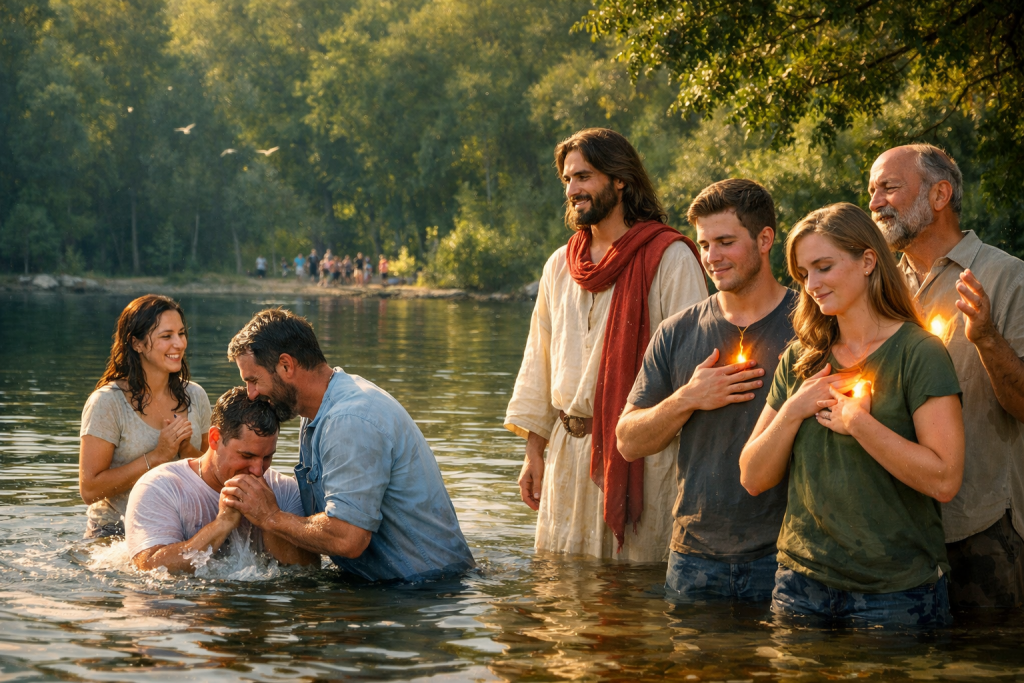
There’s something a lot of people hold onto without even realizing how fragile it is, and it usually comes down to a single moment in their past where they said some words, often called a “sinner’s prayer.” Somebody told them to repeat it, they did, and later on that moment became like a mental receipt. A kind of “I’m good now, that’s settled” point in time. No mention at all on what they should do now.
But when you actually step into the Scriptures, when you listen to Yeshua and all the people who walked with Him, it does not unfold like that. Not once do you find salvation reduced to a single moment of spoken words that sits there unchanged for the rest of a person’s life. What you find instead is something alive, something that moves, something that reshapes a person from the inside out.
That’s why the language matters. The word used so often for salvation is sōzō (to rescue, heal, make whole). That’s not just “you’re declared okay and done.” That’s wholeness being worked into a person’s life. Wholeness doesn’t happen all at once in a single moment; it starts there, and it keeps growing and unfolding over time. It continues. It unfolds. It shows itself over time.
And when Yeshua called people, He didn’t center them around repeating anything. He simply said, “follow Me.” But He didn’t mean that in a vague way, like just admire Him from a distance or agree with what He said. He meant something very practical and very real, watch what I do and do that, listen to what I say and say that.
He actually taught people to live the way He lived, to respond the way He responded, to walk in the same direction He was walking. It wasn’t just about hearing His words, it was about following His pattern. “If anyone would come after Me, let him deny himself, take up his cross daily, and follow Me.” Luke 9:23
That word “daily” matters because it keeps pulling this out of the category of a one-time moment. This isn’t something you point back to in the past and say “that’s when it happened.” This is something that keeps happening in real life, every day, in real choices. It’s not a completed transaction. It’s a lived direction. And it’s not just believing about Him, it’s learning to actually walk like Him.
And then there’s the word “believe,” which in Greek is pisteuō (to trust, to entrust oneself, to rely completely on). That’s not just agreeing that something is true. That’s handing your life over into it. That’s weight-transfer. That’s trust in action.
So when Scripture says, “Believe on the Lord Yeshua Messiah and you will be saved.” in Acts 16:31, it’s not talking about just agreeing with a statement. It’s talking about entrusting your entire life to Him. And when someone actually does that, something starts to shift. Not because they suddenly become perfect, but because Yeshua is now at the center of their life, and He begins changing them from the inside out.
And that gets even clearer when you look at the Hebrew understanding of the heart. The word is lēv (inner being, will, mind, decision-center). When Scripture talks about giving your heart to God, it’s not talking about emotions. It’s talking about the place where decisions are made. The place that actually directs a life.
Can you see the issue? In other words, it’s possible for someone to say words about God, while never actually surrendering that inner place, the lev, the heart. It’s possible to speak about Him and still run your own direction. And that’s exactly why Yeshua said something so direct that it should make anyone pause:
“Not everyone who says to Me, ‘Lord, Lord,’ will enter the kingdom of HEAVEN, but the one who does the will of My Father.” Matthew 7:21
He’s not questioning whether they used the right words. They did. The issue is that words were never meant to stand alone. There is supposed to be a life underneath them that actually moves in God’s direction.
James 2:17 says it even more bluntly: “Faith by itself, if it does not have works, is dead.”
That word “dead” is nekros (lifeless, without breath). In other words, something can look like faith from the outside, but have no life in it. No movement. No change. No breath. And that’s where Scripture keeps pulling everything back to something simple but real: if something is alive, it shows it. Not in perfection, but in direction.
That’s what true repentance is. The word is metanoia(a change of mind that results in a change of direction). It’s not just feeling bad. It’s turning away from it. Something shifts inside a person and their direction starts to change, even if slowly, even if imperfectly.
That’s why John said, “Bear fruit in keeping with repentance.” Matthew 3:8. Fruit takes time to grow, but it does show life is there.
And Paul puts it like this: “If anyone is in Messiah, he is a new creation. The old has passed away; behold, the new has come” 2 Corinthians 5:17. Not upgraded. Not improved. Brand New.
Something inside a person actually changes when God is at work in them. And because it’s real life, it doesn’t stay hidden. It begins to show up in how they think, how they choose, what they can no longer comfortably stay in, and what starts to feel different than it used to. That doesn’t mean instant perfection. It means direction shift. There’s conviction now where there wasn’t before. There’s tension with sin where there used to be ease. There’s a pull toward God that wasn’t there before. And over time, that grows. Which is why Paul also says, “Examine yourselves to see whether you are in the faith. Test yourselves.” 2 Corinthians 13:5
Not to create fear, but to bring honesty into the picture into your understanding. Because it is possible for someone to hold onto a moment and never actually step into the life that moment was supposed to begin.
And that’s really the center of it. A prayer can be real. It can even be the beginning of someone truly crying out to God. But if it’s real, it doesn’t stay locked in that one moment. It continues. It grows. It begins to show up in the way a person lives. Because when God is actually present in a life, something alive is present. And life doesn’t stay still.
✝️✝️✝️✝️✝️
There’s something else that needs to be said here, especially when people are helping someone “come to God” for the first time. The person teaching has a responsibility too. It’s not just about guiding someone through words or leading them in a prayer and a baptism moment like it’s a checklist.
Sometimes people start adding pressure on the new convert, that Yeshua Himself never put there. They’ll say things like, “if you don’t say it this exact way, or if you don’t feel something right now, or if you don’t speak in some kind of spiritual language, then maybe it didn’t really happen.” And that kind of pressure can confuse and burden someone who is actually just beginning to turn toward God, causing them to turn away from Him instead. Wrong move.
Yeshua never did that. He never forced people into formulas. He called them to follow Him. And the ones teaching others are supposed to be doing the same thing, following Him in how they lead, how they speak, and how they handle people who are just starting out. They should question their own walk before thinking to help someone else to Salvation.
There is no place in His teaching where someone’s salvation is measured by performance, emotional display, or how someone else interprets their moment. And there is certainly no instruction to make someone feel disqualified because they didn’t produce something “extra” on demand.
Those leading others are not to be standing above them like they’re better or know more than the new believer. They are walking the same road. Still learning. Still following. Still under the same call of Yeshua: “follow Me”. That means how we guide people to Yeshua should look like Him too, steady, truthful, patient, not manipulative, not adding weight He never added.
Because if the goal is truly to bring someone into a real relationship with God, then the way we lead them has to reflect the same patience, clarity, and truth that Yeshua used with people when He called them.
✝️✝️✝️✝️✝️
Prayer for the New Believer:
Holy Father, I come to You, not with perfect words, but with an honest heart. I don’t want just information about You, I want real life with You. If there are places in me that are still holding on to my own way, I’m asking You to show me, and help me let them go. Send someone YOU approve of to help me understand your salvation.
Teach me what it really means to follow You, not just in words, but in how I live each day. Shape my choices, my thoughts, and my direction so they line up with You. Give me a heart that doesn’t just hear truth, but walks in it.
I don’t want something shallow or temporary. I want what is real, even if it changes me. Lead me into that kind of life with You.
In Yeshua’s Holy name, Amen.
✝️✝️✝️✝️✝️
Prayer for the one leading the New Believer:
Holy Father, You are worthy of all our praise. I honor You above all things.
Help me to lead others the way Yeshua leads. Keep me from adding pressure You never put there, and from speaking in a way that confuses or burdens those who are just beginning to follow You.
Give me patience, humility, and clarity. Help me remember I am still Your follower too. Let my guidance be steady, honest, and aligned with Your heart.
In Yeshua’s Holy name, Amen.
✝️✝️✝️✝️✝️
If you liked this message, please leave a positive comment. I would love to hear from you!
© AMKCH 2026
image done by my chatgpt at my direction. If any of these people looks like you or someone you know, that is purely coincidental. They are not.
✝️✝️✝️✝️✝️
.