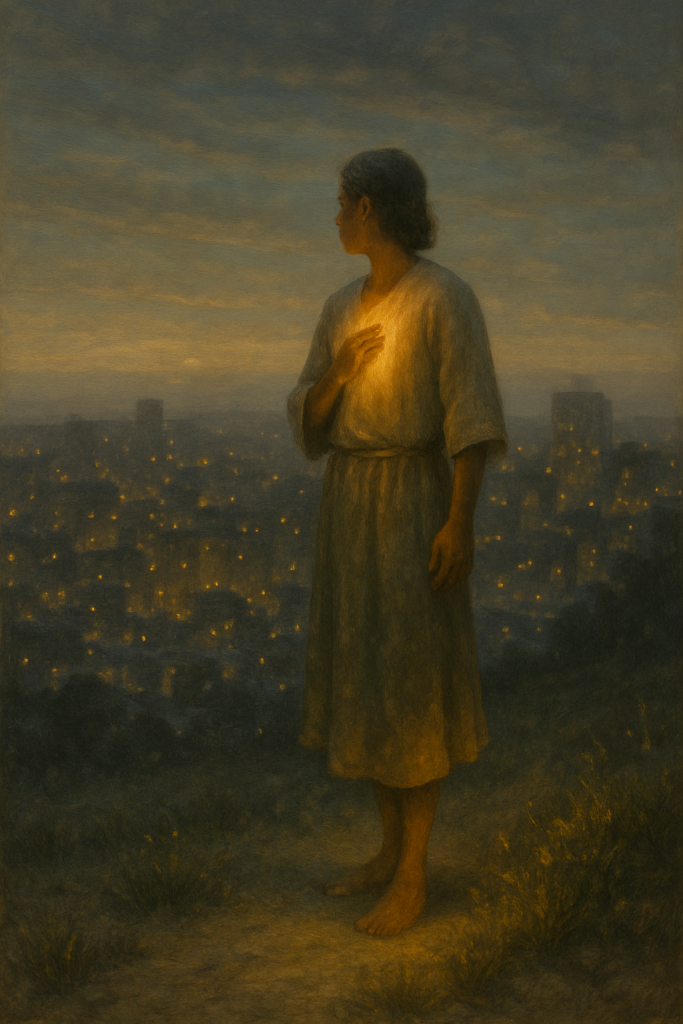
You cannot see them with your eyes, but they live inside your heart (lev), the Hebrew word for the heart, the seat of thought, will, and moral direction, or kardia in Greek, the center of intention and devotion. These are not statues, not objects carved from gold, not external temptations. They are invisible, subtle, but powerful. Ezekiel 14:3 says, “Son of man, these men have set up their idols (pesel) in their hearts (lev) and put wicked stumbling blocks before their faces; shall I let them inquire of Me?” Pesel is not merely a physical idol; it is anything we enthrone in place of God, anything we obey or trust more than Him.
You might think your lev is safe. You pray, you study, you serve, but the heart is cunning. Jeremiah 17:9 says, “The heart (lev) is deceitful above all things, and desperately sick; who can understand it?” That deceit is subtle. It disguises itself as good. Comfort, ambition (epithymia), approval (epithymiai ton ophthalmōn), knowledge, even spiritual service can sit on the throne and whisper that they are your security, your happiness, your life. That is why Yeshua warned in Matthew 15:18-19: “But the things that come out of the mouth come from the heart (kardia), and these defile a person. For out of the heart come evil thoughts (logismoi poneroi), murder, adultery, sexual immorality (porneia), theft, false testimony, slander.” Whatever controls the heart controls the life.
And this is where the thief comes in. In John 10:10, Yeshua says, “The thief comes only to steal (kleptein), kill (apokteinō), and destroy (apollymi); I have come that they might have life (zoē) and have it more abundantly (perisseuō).” The hidden pesels, the desires enthroned above God, are tools of the thief. Money, comfort, pride, approval… all promise fulfillment, safety, or identity, but they steal peace, kill joy, and destroy the soul’s alignment with God. Yet Yeshua offers life overflowing, abundant (perisseuō), Spirit-led, full of joy, clarity, and devotion. Every surrendered idol (pesel), every throne returned to Him, opens the door to this abundant life.
Idols operate in three subtle ways. First, they promise protection or comfort. Money whispers, “I will keep you safe.” Relationships say, “You are loved because of me.” Knowledge declares, “You can survive on your own.” Second, they demand attention and devotion. Pride does not announce itself as pride; it wears humility as a mask. Third, they steal joy. The heart cannot delight fully in God if it is divided. In Matthew 6:21, Yeshua puts it plainly, “For where your treasure is, there your heart (kardia) will be also.” Treasure is more than gold. It is trust, delight, focus, and allegiance.
Paul exposes the hidden dynamics inColossians 3:5: “Put to death therefore what is earthly in you: sexual immorality (porneia), impurity (akatharsia), passion (epithymia), evil desire (kakia epithymia), and covetousness (pleonexia), which is idolatry (eidololatria).” Every desire, every longing that displaces God is an idol. The human heart can love something good, even sacred, more than God, and that love becomes an idol (pesel). 1 John 2:15-16 warns, “Do not love the world or the things in the world. For all that is in the world, the desires of the flesh (epithymiai sarkos), the desires of the eyes (epithymiai ton ophthalmōn), and the pride of life (hyperephania tēs zōēs), is not from the Father but is from the world.”
Here is the beauty. God does not leave the heart captive. Ezekiel 36:26 promises, “I will give you a new heart (lev chadash) and put a new spirit (ruach chadashah) within you; I will remove the heart of stone (lev eben) from your flesh and give you a heart of flesh (lev basar).” The throne is reclaimed. Psalm 51:10 says, “Create in me a clean heart (lev tahor), O God, and renew a right spirit (ruach yashar) within me.” God does not only remove the idol; He replaces it with Himself, filling the heart with life, clarity, and desire aligned to Him.
Every moment becomes an opportunity to examine the heart. When you wake, your lev reaches for treasure. What is the first craving, the first thought, the first instinct? In the day, ambition whispers, pride manipulates, approval seduces. Even at night, fear or comfort can steal devotion. Psalm 37:4 exhorts, “Delight yourself in the LORD (nephesh tzaddik), and He will give you the desires (ta epithymia) of your heart (lev).” When God is enthroned, the whispers of hidden pesel are silenced, and desires align with His will.
The journey is not brief. It is continuous. Each thought, each decision, each longing is an invitation to surrender, to examine, to hand over the throne to God. Confess the hidden idol. Name it. Let God enthrone Himself. Over time, what seemed subtle, hidden, untouchable, loses its power. Life, joy, and true devotion flow from a heart that is alive, awake, and aligned. And here, John 10:10 reminds us again: the thief will try to take these moments, but Yeshua offers life overflowing (zoē perisseuō), abundant enough to reclaim every stolen heartbeat, every lost moment, every quiet whisper in the heart (lev).

HOW TO DETHRONE IDOLS FROM THE HEART
Getting the throne of your heart (lev) off your own hands is rarely instant. The heart (lev) loves control; it trusts its own comfort, ambition (epithymia), pride (hyperephania tēs zōēs), or approval (epithymiai ton ophthalmōn) more than God. To dethrone these invisible rulers, the first step is awareness. You must catch them in action. Pay attention to what you first crave in the morning, what thoughts sneak in during the day, what whispers seduce your devotion. Notice it, name it, speak it out: “This desire, this comfort, this need for approval, I recognize you, and I will not let you sit on my throne, Gods’ throne.”
The next step is confession. Bring it to God honestly, acknowledging it as a pesel (idol) that has taken what only belongs to Him. Confession is more than regret; it is verbal surrender. Say it aloud, pray it, write it down, lift it as an offering. As Psalm 51:10 says, “Create in me a clean heart (lev tahor), O God, and renew a right spirit (ruach yashar) within me.” Speaking breaks the silent grip of the idol.
Then comes replacement. God does not leave the space empty. He fills it with Himself. This is where the promise of Ezekiel 36:26 shines: “I will give you a new heart (lev chadash) and put a new spirit (ruach chadashah) within you; I will remove the heart of stone (lev eben) from your flesh and give you a heart of flesh (lev basar).” You must actively invite Him to sit on the throne every time an idol rises. Ask God for His joy, His peace, His truth, His guidance to occupy the place the thief has tried to steal (John 10:10).
Next is practice and persistence. Idols are persistent, and the heart is clever. Each day, you will find the same desires trying to sit again. But with each awareness, confession, and invitation, the throne shifts. Moment by moment, decision by decision, the heart learns a new rhythm: watch, name, surrender, enthrone God, rejoice in His abundant life (zoē perisseuō). Over time, the whispers of pride, fear, comfort, and approval lose their pull, because the heart has tasted God’s fullness and recognizes no other can satisfy.
Finally, reflection and reinforcement anchor the change. Each night, review your day. Where did an idol rise? How did you respond? Where did God’s Spirit guide your heart to delight in Him instead? Reflection is not condemnation; it is a mirror that shows the throne has shifted a little more each day. Romans 12:2 reminds us,“Do not be conformed to this world, but be transformed (metamorphousthe) by the renewal of your mind (anakainōsei tou noos).” The renewal begins at the throne of the heart, and the more intentional the practice, the more life (zoē perisseuō) flows.
✝️✝️✝️✝️✝️
Morning. You wake. The first thing your lev reaches for is treasure. What do you think about? Your TV for weather or news? Your phone? Messages? Social approval (epithymiai ton ophthalmōn) or your safety (pleonexia)? These are the first whispers of idols. Even in the quiet of waking, something competes for the throne. Matthew 6:21 reminds us, “For where your treasure is, there your heart (kardia) will be also.” The throne of the heart is determined by what you first crave, what you first trust. God is calling the heart to awaken to Him first, that life abundant (zoē perisseuō) might take root at the very start of the day.
You get up and move into the day. Your lev is bombarded. Ambition (epithymia) beckons at work. Pride (hyperephania tēs zōēs) wants recognition. Approval from colleagues or friends quietly tempts your heart to bend and perform. These are invisible idols, pesel seated on the throne, shaping choices and words. Yeshua’s warning in Matthew 15:18-19 echoes in your mind, “But the things that come out of the mouth come from the heart (kardia), and these defile a person. For out of the heart come evil thoughts (logismoi poneroi), murder, adultery, sexual immorality (porneia), theft, false testimony, slander.” Every small action flows from the throne.
Even seemingly good impulses can be idols. Love for family, desire to succeed, or zeal for ministry can sit in the throne room and whisper, “I am enough. I am security.” Paul exposes this in Colossians 3:5: “Put to death therefore what is earthly in you: sexual immorality (porneia), impurity (akatharsia), passion (epithymia), evil desire (kakia epithymia), and covetousness (pleonexia), which is idolatry (eidololatria).” Anything trusted more than God is a hidden pesel.
Mid-morning, you sit to work, pray, or study. Your lev whispers, “I need this approval. I need this recognition. I need to feel safe.” Approval, comfort, control, these are subtle thieves. 1 John 2:15-16 reminds us, “Do not love the world or the things in the world. If anyone loves the world, the love of the Father is not in him. For all that is in the world, the desires of the flesh (epithymiai sarkos), the desires of the eyes (epithymiai ton ophthalmōn), and the pride of life (hyperephania tēs zōēs),is not from the Father but is from the world.” The throne is contested with every decision, every glance, every craving.
Lunch. Your lev reaches for comfort and pleasure. That craving for food, rest, or amusement may seem innocent, but the hidden pesel lies in the demand it makes: “I am necessary. I am first.” Even pleasure can subtly rule. The heart divided cannot fully delight in God. Psalm 37:4 says, “Delight yourself in the LORD (nephesh tzaddik), and He will give you the desires (ta epithymia) of your heart (lev).” God invites the heart to enthrone Him first, so every desire is aligned with Him, not with fleeting satisfaction. And yet, the thief still waits, trying to steal, kill, and destroy these moments of devotion, while Yeshua calls the heart back into abundant life (zoē perisseuō).
Afternoon. Ambition reappears. Pride whispers, “You must be seen. You must succeed.” The heart is tempted to trust in reputation or talent rather than God. Jeremiah 17:9 echoes: “The heart (lev) is deceitful above all things, and desperately sick; who can understand it?” Without awareness, the lev bends to these silent rulers.
Evening. The heart longs for rest, comfort, relationships, and affirmation. The subtle pesels speak, “I am necessary. I am life.” Sometimes the idols hide even in spiritual activity: prayer becomes routine, ministry becomes a ladder, service becomes self-validation. God calls for a living lev, a heart awake to Him. Ezekiel 36:26 promises, “I will give you a new heart (lev chadash) and put a new spirit (ruach chadashah) within you; I will remove the heart of stone (lev eben) from your flesh and give you a heart of flesh (lev basar).” God does not just remove the idol; He enthrones Himself. Psalm 51:10: “Create in me a clean heart (lev tahor), O God, and renew a right spirit (ruach yashar) within me.”
Night. The heart reflects. What controlled your choices today? Where did the pesel whisper and rule? Confession, naming the idol, surrendering the throne,it is daily work. God’s enthronement is living, breathing, and transformative. Romans 12:2 reminds us, “Do not be conformed to this world, but be transformed (metamorphousthe) by the renewal of your mind (anakainōsei tou noos).” Transformation begins at the throne of the heart because that is the battlefield where life is made or lost. And in this reflection, the words of Yeshua in John 10:10 echo again: though the thief comes to steal, kill, and destroy, He offers abundant life (zoē perisseuō) even in the midst of struggle, even in the daily contest for the throne of the heart. ✝️✝️✝️✝️✝️
Prayer: Heavenly Father, Creator of all, I come before You with a heart laid bare. Search me, O God, and reveal every hidden idol, every subtle pesel that has taken the throne of my lev. Strip away what is not of You and enthrone Yourself fully in my lev. Give me the strength to recognize the whispers of pride (hyperephania tēs zōēs), comfort, ambition (epithymia), or approval (epithymiai ton ophthalmōn) that seek to rule, and replace them with Your truth, Your life (zoē), and Your abundant joy (perisseuō). Let my lev be alive, awake, and aligned with Your will.
Teach me to delight in You above all, to trust You fully, and to walk each day under Your guidance, free from the deceitful entrapments of the world. Fill me with Your ruach chadashah, a new spirit, a clean heart (lev tahor), and desires (ta epithymia) that mirror Yours. May every thought, every action, every word flow from a heart surrendered to You, reflecting Your love and wisdom.
Lord, I choose Your abundant life (zoē perisseuō), Your overflowing joy, and I ask that Your presence guard my lev against every subtle thief (kleptein), every destroyer (apollymi), every silent adversary that seeks to steal, kill (apokteinō), and destroy. Establish Your throne, O God, and let no pesel remain in the chamber of my heart. In Yeshua’s Holy name, Amen Amen.
✝️ ✝️ ✝️ ✝️ ✝️
If this message blessed you, please leave a comment. I would love to hear from you.
image done by chatgpt at my direction.
✝️ ✝️ ✝️ ✝️ ✝️
.
that was not only food for thought, it was a full seven course meal… ty
SK, I am so blessed that you were able to get a full course meal from this message. Thank you for your comment.