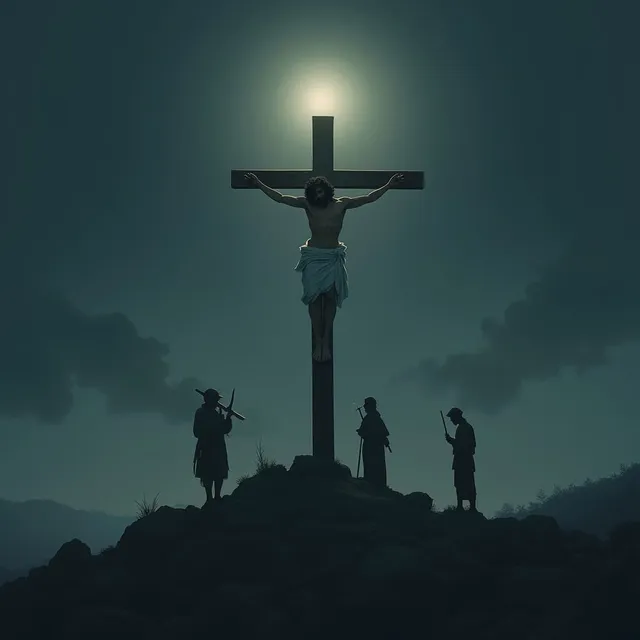
It’s so easy! There is so much evidence to the truth!!!
In John 20, we see a powerful and deeply moving account of the resurrection of Jesus Christ, a moment that stands as the central turning point of the entire gospel message. This chapter is not simply history recorded; it is revelation unfolding. John writes with purpose, and every detail carries weight. The resurrection is not an idea, not a symbol, but an event that changed everything.
The chapter opens with Mary Magdalene, and it is important that John names her. She comes to the tomb early, on the first day of the week, while it is still dark. The Greek word for dark here is skotia σκοτία meaning darkness, obscurity, absence of light. John has used this word before, not only for physical darkness but spiritual uncertainty. Mary arrives in the darkness of morning and in the darkness of grief. When she sees that the stone has been taken away, shock and confusion take hold of her. She does not yet think resurrection. She thinks loss. She runs to Simon Peter and to the other disciple, the one Jesus loved, most likely John himself.
The two men immediately run to the tomb. John arrives first but does not go in. Peter follows and enters the tomb, and what they see matters. The linen cloths are lying there. The Greek word for linen cloths is othonia ὀθόνια, referring to burial wrappings. But the body is gone. At first, they do not understand. Scripture tells us plainly that they did not yet know the Scripture, that He must rise from the dead. Their assumption is that the body has been taken.
Then John enters. He sees not just the cloths, but how they are arranged. This is no grave robbery. No one unwraps a body carefully and leaves the wrappings behind. John tells us something profound in just a few words: he saw and believed. The Greek word for saw is horao ὁράω meaning to perceive with understanding, not merely to look. And believed is pisteuo πιστεύω meaning to trust, to rely upon, to place confidence in. John does not say he understood everything. He says he believed. Faith is ignited before full comprehension ever arrives.
This moment is crucial. Resurrection was not yet a category in their thinking. They were not expecting it. And yet, standing before an empty tomb arranged with divine order, belief begins to take root. Death has been defeated, even if they cannot yet articulate how.
Mary, however, remains outside the tomb weeping. Her grief keeps her there. The Greek word used for weeping is klaio κλαίω meaning loud, open lamentation. This is not quiet sorrow. This is the sound of a broken heart. She bends down to look into the tomb again, and now she sees two angels sitting where the body of Jesus had been. One at the head, one at the feet. This mirrors the mercy seat on the Ark of the Covenant, with the cherubim at either end. John does not explain it, but the imagery is unmistakable. The place of death has become the place of atonement fulfilled.
The angels ask her why she is crying. She answers honestly. She believes her Lord has been taken. She then turns and sees Jesus standing there, but she does not recognize Him. John does not say her eyesight failed. Grief can veil recognition. Jesus asks her why she is weeping and whom she is seeking. When He speaks her name, everything changes. “Mary.” The Good Shepherd calls His sheep by name. At that moment, recognition floods in. The sorrow breaks. The risen Lord stands before her.
When Jesus tells her not to cling to Him, He is not rejecting her. The Greek word is hapto ἅπτω meaning to grasp tightly, to cling. He is telling her the relationship is changing. He is ascending to the Father. She is given a mission. She is to go and tell. The resurrection is not meant to be held privately. It must be proclaimed.
Mary becomes the first witness of the risen Christ and the first messenger of resurrection truth. She goes to the disciples and declares, “I have seen the Lord.” This is testimony. The Greek word for seen again is horao, perception with understanding. Her grief has been transformed into witness.
Later that same day, Jesus appears to the disciples. They are gathered behind locked doors, fearful of the religious authorities. Fear is natural when hope seems crushed. Suddenly Jesus stands among them and says, “Peace be unto you.” The Greek word for peace is eirene εἰρήνη, meaning wholeness, restoration, completeness. This is not merely a greeting. It is a declaration. He shows them His hands and His side. The wounds remain. Resurrection does not erase the cost. It redeems it.
The disciples rejoice. Joy replaces fear. Jesus speaks peace again and commissions them. As the Father sent Him, so He sends them. Then He breathes on them. This is deliberate language. The Greek word for breathed is emphusao ἐμφυσάω, the same word used in the Greek translation of Genesis when God breathed life into Adam. New creation has begun. He tells them to receive the Holy Spirit. Resurrection life requires divine power.
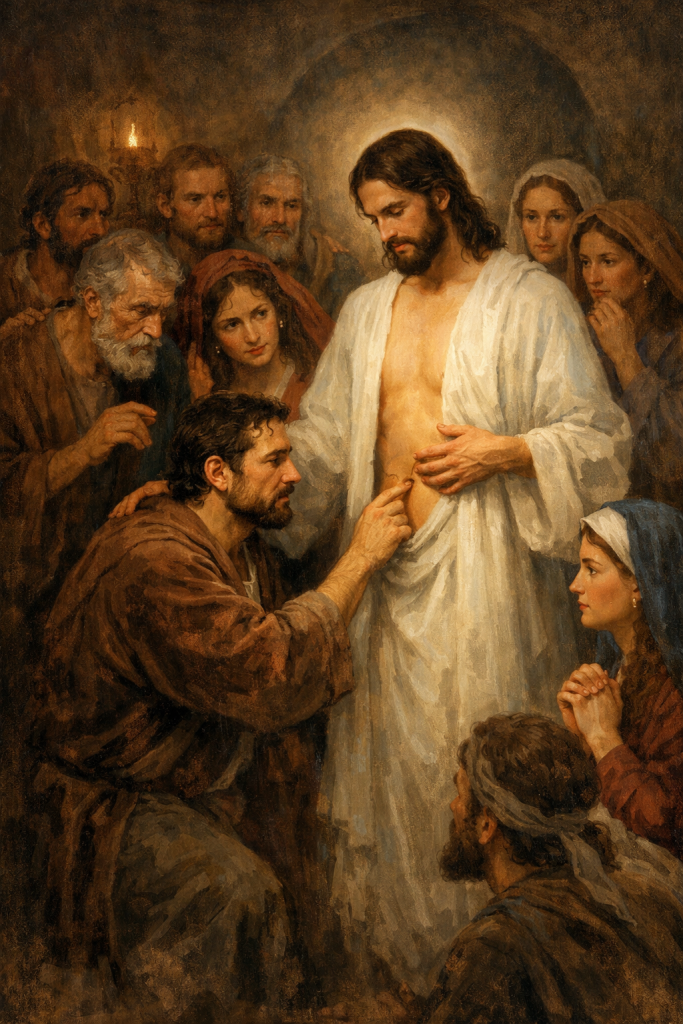
Thomas is not present. When the others tell him they have seen the Lord, he cannot accept it. His demand is honest. He wants evidence. He wants to see and touch. A week later, Jesus appears again. This time Thomas is there. Jesus knows exactly what Thomas said. He invites him to examine the wounds. There is no rebuke, only invitation. “Be not faithless, but believing.” Again the word is pisteuo. Faith is not the absence of questions. It is the willingness to trust when answers are given.
Thomas responds with one of the strongest declarations in the Gospel of John: “My Lord and my God.” This is worship. Jesus accepts it. Then Jesus speaks words meant for every believer who would come after. Blessed are those who have not seen and yet have believed. Faith now moves beyond eyewitness to testimony. Beyond sight to trust.
John then tells us why he wrote his Gospel at all. These things are written so that we might believe that Jesus is the Christ, the Son of God, and that believing we might have life through His name. The word for life here is zoe ζωή, not mere existence, but divine, eternal, God-infused life. This life begins now and continues forever.
John 20 is about resurrection, but it is also about grace, belief, mission, and transformation. It shows us that Jesus meets us in grief, in fear, and even in doubt. He speaks peace. He calls us by name. He sends us out.
For us today, this chapter asks the same question it asked then. Do we believe? Not just intellectually, but with trust. The resurrection is not only proof that Jesus is who He said He was. It is the power by which lives are changed. Because He lives, death is defeated. Because He lives, sin is broken. Because He lives, we have zoe.
The message of John 20 is hope. It is transformation. It is the power of the risen Christ still at work. It calls us to believe, to share, and to live in the light of His resurrection. All we need to do is believe.
Heavenly Father, ✝️✝️✝️✝️✝️
We come before You in awe and gratitude for the resurrection of Your Son, Jesus Christ. Thank You that the tomb is empty and death has been conquered. Lord, help us to see and believe, even when our eyes cannot comprehend, and our hearts are clouded with doubt or grief.
We pray for the faith of Mary Magdalene, that we might recognize Your voice calling us by name in our sorrow. We ask for the peace of the risen Christ, eirene, to fill our hearts as it filled the hearts of the disciples behind the locked doors. Give us courage to bear witness, like Mary, to the world, and to share the good news of Your love and victory over sin and death.
Lord Jesus, help us to follow Your example of grace toward Thomas—blessing those who struggle with doubt, and drawing us into deeper trust. Breathe Your Spirit upon us, that we might walk in the life (zoe) You offer, living each day in the light of Your resurrection.
Father, may this teaching take root in our hearts. Let it transform our fears into faith, our sorrow into joy, and our understanding into trust. May we believe without seeing, and in believing, find the abundant life You promised.
We ask this in the name of the risen Lord, Jesus Christ, our Savior and our God.
Amen.
If this message has blessed you, please leave a comment. I would love to hear from you!
In Christ ✝️✝️✝️✝️✝️
images done by chatgpt AI at my explicit direction; then we discovered that explicit wounds are prohibited to AI’s.