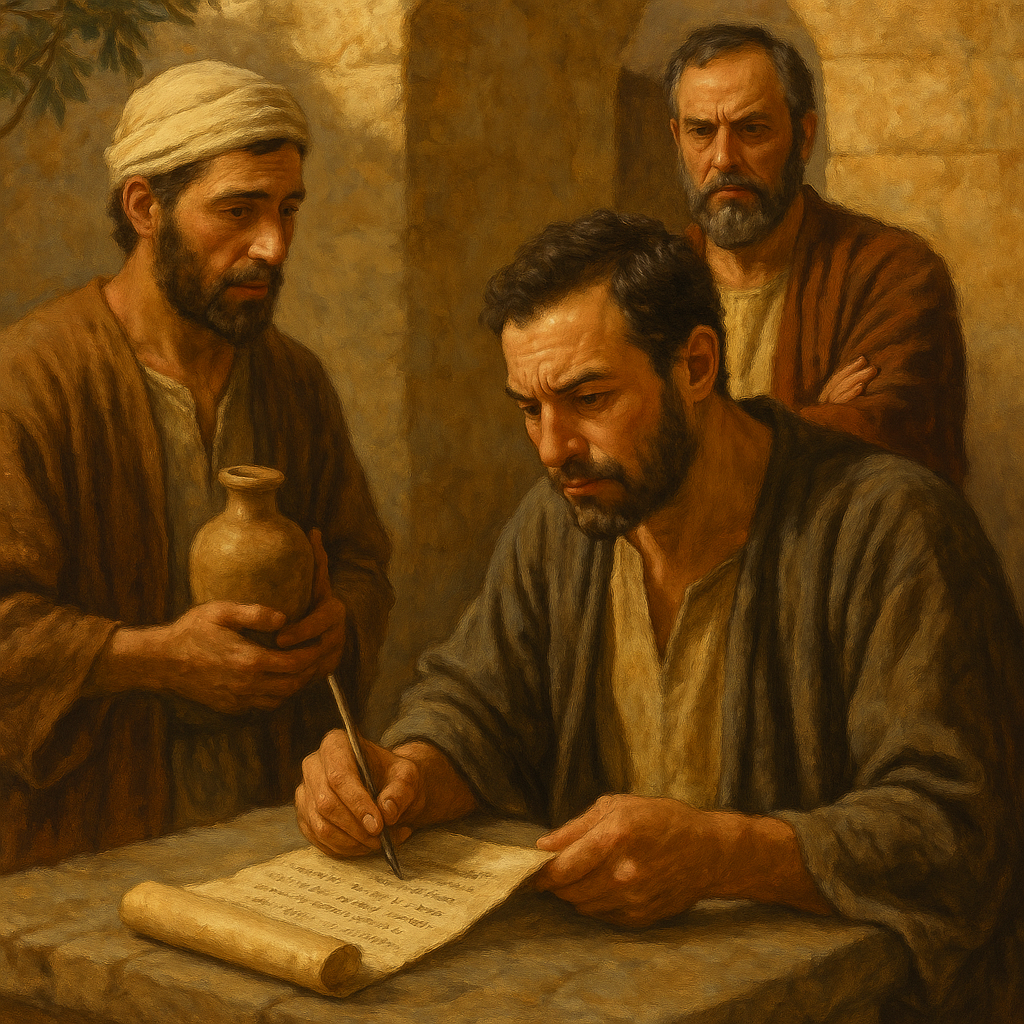
Luke 16:1–8 is what we often call The Parable of the Dishonest Steward (or The Unjust Manager, depending on your translation). Here’s what happens:
A rich man finds out that his steward, his estate manager, is squandering (Greek: diaskorpizō, meaning “wasting, scattering”) his goods. That word diaskorpizō was also used back in Luke 15 for the prodigal son wasting his inheritance. So this is intentional language. This steward is behaving recklessly with what doesn’t belong to him. And the rich man calls him in and basically says, “Turn in the books. You’re fired.”
Now, in a panic, the steward says to himself (and here’s where it gets interesting): “I’m not strong enough to dig, and I’m ashamed to beg.” (That tells you everything about this man’s heart. He’s clever, but not humble. More egotistical.)
So he hatches a plan. He goes to the debtors of his master, people who owe big. One owes 100 measures of elaion (olive oil), another 100 measures of sitou (wheat). He slashes their bills. Not fully, just enough to win them over. So that when he’s jobless, they’ll owe him a favor. They’ll let him in, take care of him. He’s stacking up “social credit” by using someone else’s assets.
And here’s the shocker:
“And the master praised the dishonest manager for acting shrewdly.
For the sons of this age are more shrewd in dealing with their own generation than the sons of light.” (Luke 16:8)
Wait, what? Praised him? Yeshua just said the guy was adikia, unjust, unrighteous. And yet He says the man’s actions were phronimōs, “wise, shrewd, prudent.” That makes us stop. Why?
Because the parable isn’t about ethics. It’s about urgency, foresight, and the Kingdom economy.
Yeshua isn’t commending the dishonesty. He’s pointing out the urgency and savviness.
This steward knew judgment was coming, and made a plan for his future using the time and resources he still had. He used temporary things (money, favor, debts) to secure a future position.
That’s the whole point Yeshua is getting at.
This parable is the setup for what He’ll say in verse 9:
“Use unrighteous mammon to make friends for yourselves,
so that when it fails, they may receive you into eternal dwellings.”
He’s not saying “be dishonest.” He’s saying, “Wake up, sons of light! Even the corrupt know how to prepare for their future with the time and influence they’ve got. So why aren’t you thinking eternally?”
Let’s go even deeper:
In the Hebrew world, stewardship wasn’t just about managing stuff. It was about faithfulness to someone else’s kingdom. The steward had control but not ownership. That’s adam from the beginning, we were made stewards, not owners. And the minute we start acting like it’s ours to waste, judgment’s around the corner.
The elaion (olive oil) and sitou (wheat) in the debts aren’t random. Oil and wheat were part of offerings in the Temple system. This points back to korbanot, sacrificial giving, and the economy of covenant. When the steward adjusted the debts, he wasn’t just doing math. He was playing with holy commodities. Things connected to both daily life and worship.
And yet, he still had time to act. He used what little leverage he had left to prepare for the reality coming. And that’s what sons of light often fail to do. We sit with our noses in doctrine, waiting on glory, while the world makes moves with urgency for temporary gain.
Yeshua’s warning is sharp: if even a corrupt steward knows how to act when judgment is imminent, how much more should you, who know the eternal plan, act with wisdom?
It’s a call to use our resources, our time, money, relationships, even our influence, not selfishly, not naively, but with an eye toward the Kingdom coming. Invest in people. Extend mercy. Forgive debts. Lay up treasure where it won’t rot. Do it now, while you still can.
Because the books will be closed.
If you liked this message, please leave a positive comment! I would love to hear from you!
Image done by my chatgpt at my direction
.
.