-Breath of Life, Hope of Resurrection
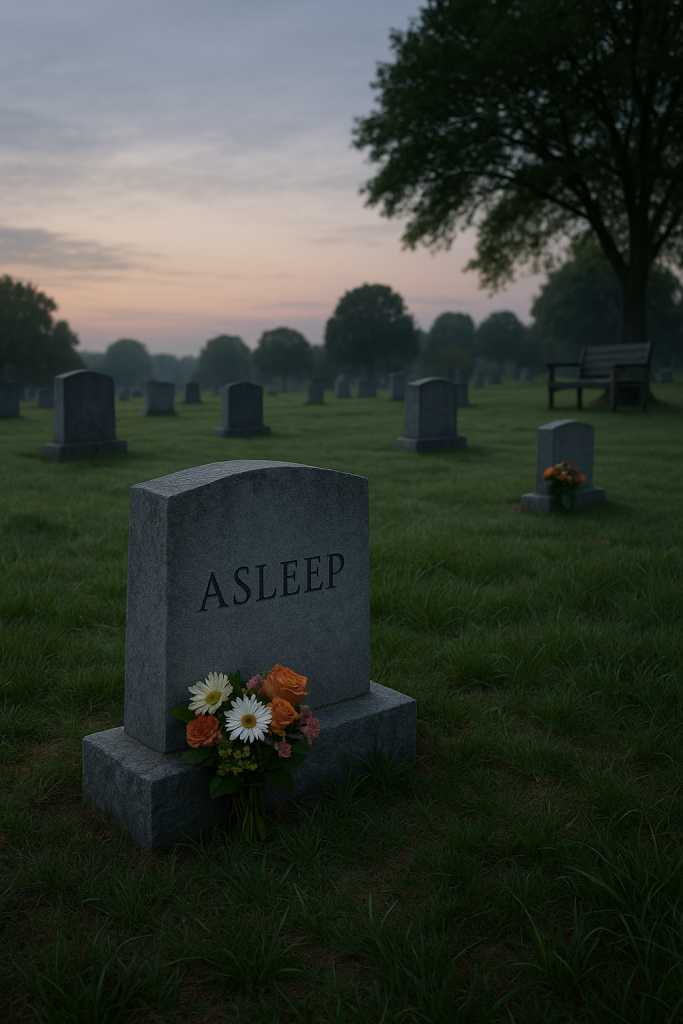
“Before They Could See Corruption”
(An Undiluted Teaching on Death, Breath-Life, and the Hope of Resurrection)
When it comes to understanding death, we’re walking through centuries of fog. Fear and superstition, mixed with sentimental tradition, have clouded the truth. Even among sincere believers, there’s confusion. People say, “They’re watching over us,” or “They gained their wings,” or “Heaven gained another angel.” But none of that comes from God’s Word. It comes from fantasy and folklore, mistranslations, and wishful thinking. The truth is both simpler and deeper. The truth is far more human, and infinitely more divine.
So let’s clear the fog and go straight to the ancient manuscripts, the Torah, the Prophets, and the Writings, the very foundation of what Yeshua came to fulfill. Let’s begin at the beginning.
Genesis 2:7 says, “And YHWH Elohim formed the man from the dust of the ground and breathed into his nostrils the breath of life; and the man became a living soul.” The Hebrew gives us a clear breakdown:
- afar – dust, dry earth, the substance of the ground
- ruach – breath, divine wind, the life-force that comes directly from God
- nephesh – living being, not a ghost or an eternal spirit, but a person who is breathing and alive.
God didn’t just give Adam a soul. He made Adam a nephesh, a living soul, after breathing into him. It’s the ruach, the divine breath, that gave Adam animation. Without the breath the ruach,, Adam’s body was just shaped dust. This tells us: the soul is not something floating around inside the body. The soul is the union of body and breath. When the ruach, the spirit or breath life, returns to God, which it does when the person dies, the person is no longer a living nephesh.
Ecclesiastes 12:7 puts it so clearly: “Then the dust returns to the earth as it was, and the ruach returns to God who gave it.” That word ruach means wind, breath, spirit, it’s what God breathed into Adam. It is not a conscious soul floating around in limbo. It is the breath of life, and only God holds the right to give it or take it.
That’s why the Bible calls death “sleep.” In Psalm 146:4: “His breath goes forth, he returns to his earth; in that very day his thoughts perish.” The Hebrew for “thoughts” there is eshtonot, meaning his plans, intentions, dreams, they all stop. Ecclesiastes 9:5 drives it home: “For the living know that they shall die: but the dead know not anything.” The Hebrew phrase lo yed’u me’umah literally means: “they know absolutely nothing.” No awareness. No watching. No interceding. No floating in glory. No up in the stars “looking down on us”. Just silence. Sleep. Stillness.
The Hebrew word sheol means the grave, the place of the dead. Not a place of torment, not a holding cell, and not a magical realm of spirits. It is the grave, still, silent, unconscious. Job cried out in Job 14:12, “So man lies down and rises not: till the heavens be no more, they shall not awake, nor be raised out of their sleep.”
It is no accident that Yeshua also used the word “sleep” when speaking of death. In John 11, He told His disciples, “Our friend Lazarus sleeps; but I go that I may awaken him.” The disciples misunderstood, thinking Lazarus was just napping. But Yeshua had to clarify: “Lazarus is dead.” He called death what it truly is: temporary unconsciousness, waiting for the voice of the Son of God.
And why does this matter so much? Because our hope is not in a floating soul. It’s in a resurrection.
Yeshua’s resurrection was not just a miracle, it was a model. He showed us what’s coming. Paul wrote in 1 Corinthians 15:52, “The dead shall be raised incorruptible.” The Greek word there is aphthartos, meaning imperishable, unable to decay. Just like Yeshua’s body didn’t see corruption (Acts 2:27), so we too, when resurrected, will be raised new, never again to rot or age or perish.
And here’s where it gets personal. Between September of 2016 and march 2021, I “lost” a daughter-in-law, a grandson, and two granddaughters. When my daughter-in-law passed away from leukemia, just two years after moving to Nevada, the grief to me was so overwhelming that I ended up in the ER with Broken Heart Syndrome, yes, it is a real thing. A medically recognized condition where grief literally “breaks” your heart. Then, it seemed to get easier when the other three passed away. My grandson died from a double hit and run as he was crossing a main thoroughfare, one granddaughter, her heart just stopped, the other died in a fatal car accident. My whole body responded to the sorrow. For over four years, I mourned, I cried, and I wondered.
And then one day, after I had calmed a bit from it all, God spoke to me. Not softly. Not symbolically. But loud and clear, He said: “I took them before they could see corruption.” That wasn’t poetic. It was truth. He took them, before their little bodies could suffer in this broken world, before decay or disease or despair could touch them. They were my babies, but moreso, they belonged to God.
Two of the grandchildren died exactly one month apart. It was more than coincidence. It was orchestration. God’s timing. And when my beloved husband, died and was brought back – four times(!), he said it felt like waking up from a deep, peaceful nap. No pain. No light tunnels or conversations. Just rest. And then breath again. God still had some work for him to do.
Paul wrote in 2 Corinthians 1:10, “Who delivered us from so great a death (Greek: telikoutou thanatou) and does deliver: in whom we trust that He will yet deliver us.” The Greek implies an extreme, final death, an irreversible one. But Paul says God did, does, and will deliver. Not by stopping us from dying, but by overcoming death altogether. By reversing it. By calling us back to breath and life and joy.
Yeshua didn’t just defeat death for Himself. He broke it for all of us. In 2 Timothy 1:10, it says He abolished death, Greek: katargeō, meaning to make powerless, to nullify. And He brought to light zōēn (true life) and aphtharsian (immortality) through the euangelion, the Gospel. That word aphtharsia means a state beyond decay. A life that doesn’t fade. That’s not a floating soul, that’s a fully reanimated person.
So when we die, our ruach, our breath life, goes back to God. Our bodies return to dust. We do not become angels. We do not hover. We do not haunt or help. We sleep. We rest. And the next thing we’ll know is the voice of God calling us by name, breathing into us again the ruach, and raising us as new nepheshim, living souls, eternal and incorruptible.
And so, beloved of God, if you have mourned, if you’ve lost someone, if you wonder what’s really happening beyond the veil, know this: They are not suffering. They are not lost. They are not watching. They are sleeping. And if they are in Messiah, they will be raised in Messiah.
Grieve. Mourn. But not as those without hope. Hold tightly to the promises. The resurrection isn’t a metaphor. It’s your future.
✝️ ✝️ ✝️ ✝️ ✝️
A Prayer
Abba, You are the One who gave us breath. You formed us from the dust and called us alive when You breathed into us. And when we die, You receive our ruach back into Your hands. Thank You for taking my loved one(s) before they could see corruption. Thank You for the promise that they are not lost, they are Yours, resting in Your care until the trumpet sounds. Strengthen me with this truth. Help me trust You more than tradition. Fill my heart with peace, and anchor my hope in the resurrection through Yeshua, who conquered death once and for all. Amen.
image done by chatgpt at my direction