his Sin and his rebellion
The question is a fair one, and it deserves a careful answer that stays fully inside the text of Scripture, not later theology, folklore, or poetic interpretation taken beyond its intent. Scripture never provides a single sentence stating, “Satan sinned on such and such a day.” Instead, it reveals his character, his actions, his origin, and his fall through multiple witnesses across Torah, Prophets, and the Apostolic Scriptures. When all of these are allowed to speak together, the picture is clear, consistent, and grounded in the original languages and the worldview of the biblical writers.
The first thing Scripture does is define the being. The Hebrew word שָׂטָן satan means adversary, accuser, one who opposes. It is not initially a personal name but a functional role. The Greek word used in the Apostolic Scriptures is διάβολος diabolos, meaning slanderer, false accuser. From the beginning, Scripture identifies this being by what he does, not by mythology or legend.
Satan was created good. As Ezekiel describes, he was “perfect in your ways from the day you were created, until iniquity was found in you” (Ezekiel 28:15). His evil did not originate with God. It arose from his own choice to rebel, to exalt himself, and to abandon truth. Moral evil is the result of created beings choosing to reject God, not something God planted in them at creation. This is a crucial distinction: God permits rebellion for His purposes, but He does not create moral corruption.
The Torah hints at Satan’s rebellion in Genesis 3, when the serpent deceives Eve. Later Scripture explicitly identifies the serpent as Satan: “the great dragon… the Devil, and Satan, who deceives the whole world” (Revelation 12:9). Deception is rebellion against God’s truth. The serpent’s lie, “You will not surely die… you will be like God, knowing good and evil,” directly contradicts God’s command. Jesus clarifies the nature of this rebellion: “He was a murderer from the beginning, and does not stand in the truth, because there is no truth in him. When he lies, he speaks from his own nature; he is a liar and the father of lies” (John 8:44). Abandoning truth is sin.
Isaiah 14 describes a being who exalted himself: “How you have fallen from heaven, shining one, son of the dawn! You said, ‘I will ascend to heaven, raise my throne above the stars of God… I will be like the Most High.’ But you are brought down to Sheol, to the depths of the pit” (Isaiah 14:12–15). Pride and rebellion are recorded here as his sin.
Ezekiel expands on this further: “By your trading and corruption you became filled with violence; you sinned” (Ezekiel 28:16–17). The Hebrew חָטָא chata means to miss the mark, to transgress. Scripture plainly states that he sinned, by his own choice, not as a necessity of his creation.
God’s sovereignty is absolute over all things. As He declares in Isaiah 45:7, “I form light and create darkness; I make peace and create evil (calamity).” The Hebrew רַע ra here refers to calamity, disaster, or adversity. This does not mean God creates moral rebellion. He ordains circumstances, trials, or judgment, while moral evil comes from the choices of created beings like Satan. God can use Satan’s rebellion to accomplish His purposes, such as testing the believer, executing judgment, or revealing His power. The plagues of Egypt, the oppression of the unrighteous, and even affliction allowed in the believer’s life are all under His sovereign control. Satan is permitted to act within strict limits, but he cannot thwart God’s plan.
The Apostolic Scriptures confirm this. John writes, “Anyone who sins is of the devil; the devil has been sinning from the beginning” (1 John 3:8). Jesus himself confronts him directly in the wilderness, rebuking his lies and temptations, and demonstrating that all authority and truth belong to the Father (Matthew 4:1–11). Peter and Jude speak of angels who sinned and were cast into chains (2 Peter 2:4; Jude 6), leaving their assigned place in rebellion against God’s order.
Jesus also testifies to Satan’s fall and defeat: “I saw Satan fall like lightning from heaven” (Luke 10:18). This emphasizes both the reality of Satan’s rebellion and the supreme authority of Messiah over him. Revelation further confirms it: “War broke out in heaven. Michael and his angels fought against the dragon, and the dragon and his angels fought back. But the dragon was not strong enough, and he and his angels were expelled from heaven. The great dragon, the ancient serpent, called the Devil and Satan, the deceiver of the whole world, was hurled down” (Revelation 12:7–9). His defining crime is deception.
Scripture does not leave us guessing. Through prophets, apostles, and the words of Jesus, we see a created being who abandoned truth, pursued pride and self-exaltation, deceived, accused, and brought death into God’s creation. His evil is revealed through his actions and God’s judgment, not inferred. Satan sinned. Satan rebelled. Satan is the deceiver and accuser, and his fate is already sealed by the One who does not lie.
Because of this witness, Scripture calls each of us to careful vigilance. God permits Satan to act within limits, to test, to refine, to execute judgment, but moral evil is never from God’s hand. Turning away from Yeshua, ignoring His truth, or harboring rebellion in our hearts opens the door for the same kind of deception and pride that corrupted Satan. Those who embrace lies, refuse God’s authority, or harden their hearts toward Messiah risk allowing evil to take root within themselves. Instead, Scripture urges faithfulness, humility, and obedience to the Living Word. Receiving the Spirit as the heart’s guard protects believers from the adversary, allowing life, wisdom, and truth to flow through the soul. Yeshua, who has authority over all creation, is the believer’s refuge, and staying in Him ensures that tests and trials become instruments for growth rather than corruption.
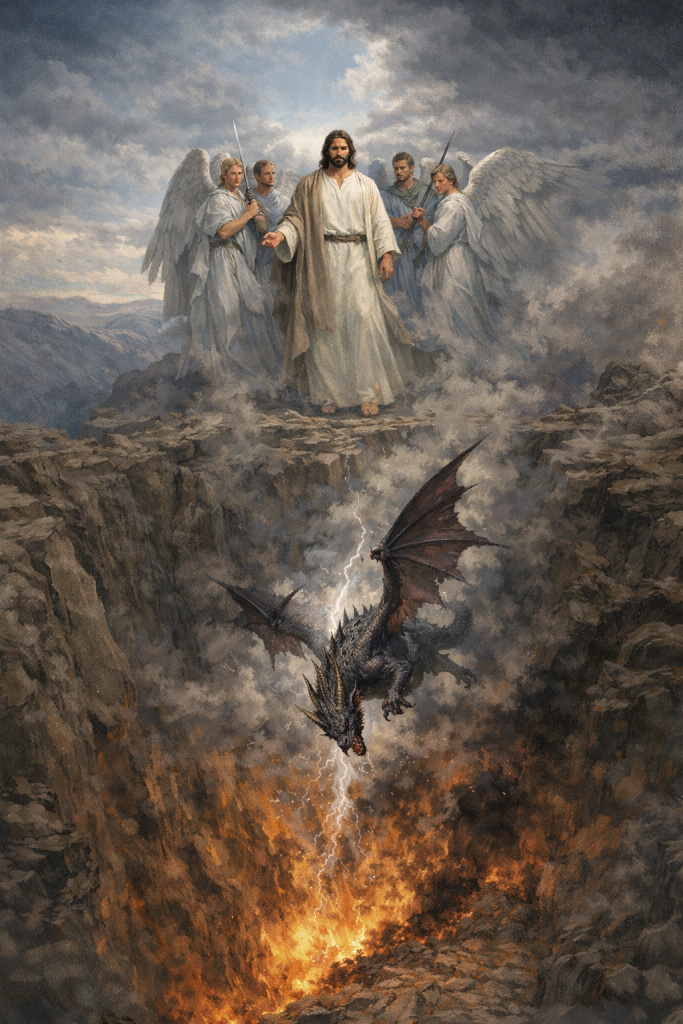
Please leave a comment if you were blessed by this message. Thanks!
image done by chatgpt at my direction
.
.