Nations Born of Sin, Instruments of God’s Grace
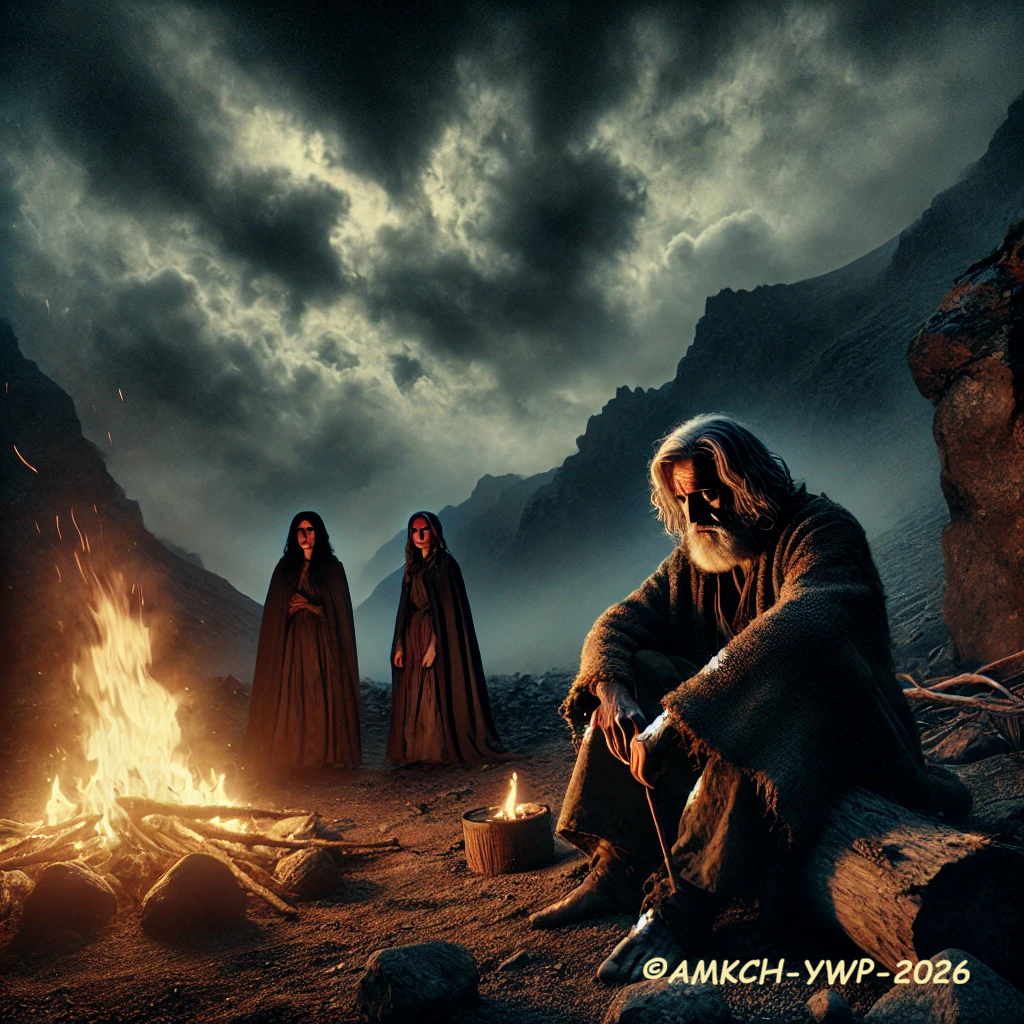
Moab and Ammon were not abstract nations, nor were they created as enemies by accident. They emerged from a specific moment in history, recorded plainly in Scripture, and their later behavior cannot be understood apart from their beginning. To today’s reader, God’s Word must be shown, anchored, and demonstrated, not assumed. Scripture itself invites this kind of examination.
The story begins with Lot, the nephew of Abraham. Genesis 13:8–13 tells us about the separation between Abraham and Lot when their herds became too large for the land to be shared. Abraham trusted God and allowed Lot to choose first. Lot lifted up his eyes and chose the Jordan Valley because it looked well watered, like the garden of the Lord. Scripture notes that this land lay near Sodom. Lot chose by sight, not by promise.
Later, when judgment came upon Sodom and Gomorrah, Lot was still there. Genesis 19:1–16 shows angels urging him to leave, yet he lingered, making excuses. The Hebrew idea here reflects delay under pressure, hesitation when urgency was required. Lot was spared, but only because of God’s mercy, not because of decisive faith. When they finally did leave, his wife looked back, and Genesis 19:26 records that she became a pillar of salt, a physical sign of a divided heart.
After their escape, Lot and his two daughters settled in the hills. Genesis 19:30 explains that they were afraid to live in Zoar and withdrew into isolation. Fear now governs their thinking. The daughters believed there was no future left, no husbands, no continuation of family. They did not trust that the God who rescued them could still provide. Scripture shows what happens when fear replaces faith.
On two consecutive nights, they caused their father to drink wine until he was “out of it”, and each daughter lay with him. Genesis 19:31–36 records this without commentary or defense.Scripture does not excuse sin, even when it arises from fear. From these unions, two sons were born.
The firstborn daughter named her son Moab. The name comes from the Hebrew words מוֹאָב, meaning from father,me-av. The younger daughter named her son Ben-Ammi, בֶּן־עַמִּי, meaning son of my people, ben-ammi. Names in Scripture are never casual. Moab’s name permanently marked his origin: he came from his father. Ben-Ammi’s name emphasized survival and group identity. From the beginning, these two lines, though related, developed differently.
As generations passed, these families grew into nations. Moab settled east of the Dead Sea on a fertile plateau. Numbers 21:13 and Deuteronomy 2:9 locate Moab’s territory clearly. The land supported sheep, grain, and vineyards. Moab became economically comfortable. Ammon settled farther north and east, around Rabbah. Deuteronomy 2:19 places Ammon’s territory in harsher terrain, requiring defense and strength. Geography shaped culture.
Both nations knew of the God of Abraham through family memory, but knowledge is not covenant. Covenant requires submission and obedience. Moab worshiped Chemosh, כְּמוֹשׁ, associated with domination and sacrifice. Ammon worshiped Milkom, מִלְכֹּם, also identified with Molech, מֹלֶךְ, a god demanding child sacrifice. 1 Kings 11:7 confirms these practices. These gods reflected the fears embedded in each culture.
When Israel came out of Egypt, Moab and Ammon were watching. These were not strangers. These were relatives. God explicitly commanded Israel not to harass them. Deuteronomy 2:9 states, “Do not harass Moab or provoke them to war.” Deuteronomy 2:19 gives the same instruction regarding Ammon. God honored lineage even when obedience was lacking.
Despite this restraint, neither nation responded with hospitality. Ammon refused Israel passage. Moab sought spiritual interference. Numbers 22–24 records King Balak hiring Balaam to curse Israel. The attempt failed. God turned every curse into blessing, demonstrating that no spoken word overrides divine promise. Balaam himself declared, “God is not a man, that He should lie” Numbers 23:19.
Moab later attacked Israel through seduction rather than war. Numbers 25:1–9 records Moabite women drawing Israel into idolatry and sexual immorality. This resulted in judgment within Israel’s camp. The Hebrew concept here reveals mixture, a blending that corrodes covenant. Compromise did more damage than battle.
Ammon’s hostility was direct and prolonged. During the period of the judges, Ammon oppressed Israel. Judges 11 records Jephthah’s confrontation with Ammon. Jephthah carefully recounts Israel’s history, proving that Ammon’s land claim was false. God granted victory, yet the narrative also exposes Israel’s spiritual instability during this era.
Redemption, however, did not stop moving. From Moab came Ruth. Ruth 1:16–17 records her declaration to Naomi. Ruth abandoned Moab, its gods, and its identity. Her words reflect covenant language, not sentiment. She chose the God of Israel.
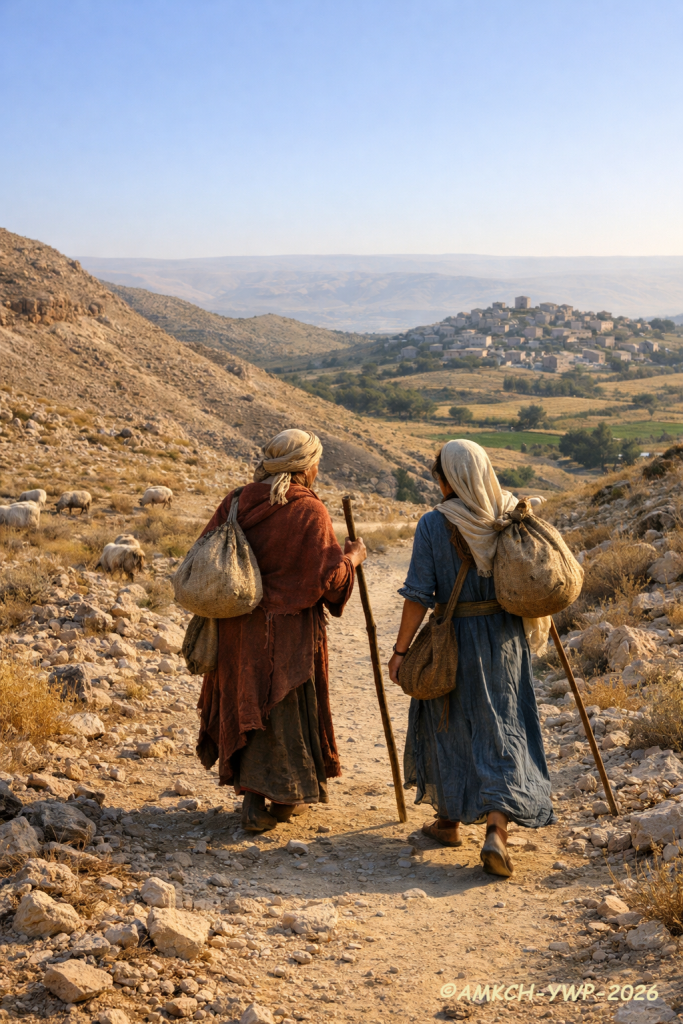
Ruth married Boaz, a kinsman-redeemer. The Hebrew term is גֹּאֵל, goel, meaning redeemer. Ruth 4:13–22 traces their lineage to David. Israel’s greatest king carried Moabite blood.God did not erase Ruth’s past. He redeemed her future.
Ammon also appears in Israel’s royal line through Naamah the Ammonite. 1 Kings 14:21 identifies her as the mother of Rehoboam. Through this line came division in the kingdom. Redemption does not cancel consequence. Scripture never pretends otherwise.
When the genealogies of Yeshua are recorded, Ruth’s name stands. Matthew 1:5 includes her openly. A Moabite woman appears in the lineage of Messiah. This is not about ethnicity. It is about covenant faith. God redeems those who turn toward Him, Jew or Gentile.
Moab and Ammon testify that fear shapes generations, but faith can redirect them. Modern science speaks of inherited trauma. Scripture has always declared the same truth. Yet Scripture also declares that repentance changes direction. These nations began in fear and sin, yet God used their history to point toward the true King, the One who restores what fear destroys and establishes peace rooted in truth.
This is where the story must slow down and sink in.
Moab and Ammon were born from a moment when people believed God had no future left for them. Fear said survival depended on human action. Faith would have waited. That choice shaped generations. Scripture shows us, again and again, that what is born in fear carries fear forward. Patterns repeat. Worship reflects wounds. Nations inherit unresolved trust issues with God.
Yet Scripture also shows something equally important. God does not abandon history once sin enters it. He works within it. He allows consequences, but He also plants redemption inside the very lines that look broken beyond use. Ruth did not erase Moab’s past. She stepped out of and away from it. She chose covenant, not comfort. Her faith broke a generational pattern that fear had started centuries earlier.
Ammon’s story warns us just as clearly. Power without trust in God hardens rather than heals. Strength without obedience fractures leadership and divides kingdoms. Human solutions never fully repair what fear has damaged. The repeated conflicts with Ammon exposed Israel’s need for a king whose heart would not be divided, whose rule would not depend on force, and whose authority would not be corrupted by fear.
Both nations, though very different, point to the same truth. Humanity cannot rescue itself from what fear creates. Only God can redirect a story once it has gone wrong.
This is why the genealogies matter. When Matthew 1:1–17 traces the line of Yeshua, it is not listing names for tradition’s sake. It is proving something. God entered human history fully, carrying its scars, its failures, and its complicated bloodlines. Ruth’s name stands there as evidence that faith, not origin, defines belonging.
Yeshua did not come from a polished lineage. He came from a real one. A line marked by fear, compromise, obedience, repentance, and grace. His life, death, and resurrection answer what Moab and Ammon could not. He rules without cruelty. He redeems without denial. He restores without pretending the past never happened.
For today’s believers, this matters. These are not distant ancient nations. They are mirrors. Fear still drives decisions. Compromise still looks practical. Power still pretends to offer safety. God’s Word does not hide the cost of those choices, but it also does not close the door on redemption.
Moab shows us that no background is too broken for faith to change direction. Ammon reminds us that strength without submission always fails. Together, they testify that God’s purposes are not stopped by human sin, but neither are they fulfilled without human trust.
This is not simply history. It is warning and hope woven together. And it ends where all Scripture ultimately points, not to nations, not to kings, not to human effort, but to Messiah, the true King, who turns fear into faith and broken beginnings into redeemed futures.
Note: ✝️✝️✝️✝️✝️
It’s important to note that not all Israel’s enemies were from Lot’s line. For example, Agag, king of the Amalekites (1 Samuel 15:8–9), came from a completely different lineage, descending from Eliphaz, son of Esau (Genesis 36:12). While the Ammonites descended from Lot’s younger daughter through Ben‑Ammi, the Amalekites were a separate nation. Both opposed Israel, but their origins and roles in God’s plan were distinct.
PRAYER
Heavenly Father, Creator of all nations, we come before You with hearts humbled by Your sovereignty and mercy. You have shown us through the histories of Moab and Ammon that even in the midst of human sin and opposition, Your plans are perfect and Your grace reaches all who seek You.
Lord, help us to see that no heritage, no past, no mistake is beyond Your redemptive power. Like Ruth, may we choose loyalty to You above all else, and may our lives reflect faithfulness that draws others into Your kingdom. Teach us to trust Your guidance even when surrounded by conflict, and remind us that every challenge and adversary can serve to reveal Your glory and deepen our dependence on You.
Father, grant us hearts that are inclusive and merciful, that we may extend Your grace to others as freely as You have extended it to us. Let the stories of Moab and Ammon remind us of Your perfect justice, Your sovereign wisdom, and Your unending love. May our lives be instruments of Your redemption, pointing all people toward Jesus, the true King, in whose name we pray, Amen.
I hope this message blessed you. If so, please leave a comment. I look forward to hearing from you.
Image done by my ChatGPT at my direction
Both teaching and image are © AMKCH YWP 2026
If you liked this message, please leave a positive comment. I would love to hear from you!
image done by my chatgpt at my direction. If any of these people looks like you or someone you know, that is purely coincidental. They are not.
©️AMKCH-YWP-2026
Image done by my ChatGPT at my direction
Both teaching and image are © AMKCH YWP 2026