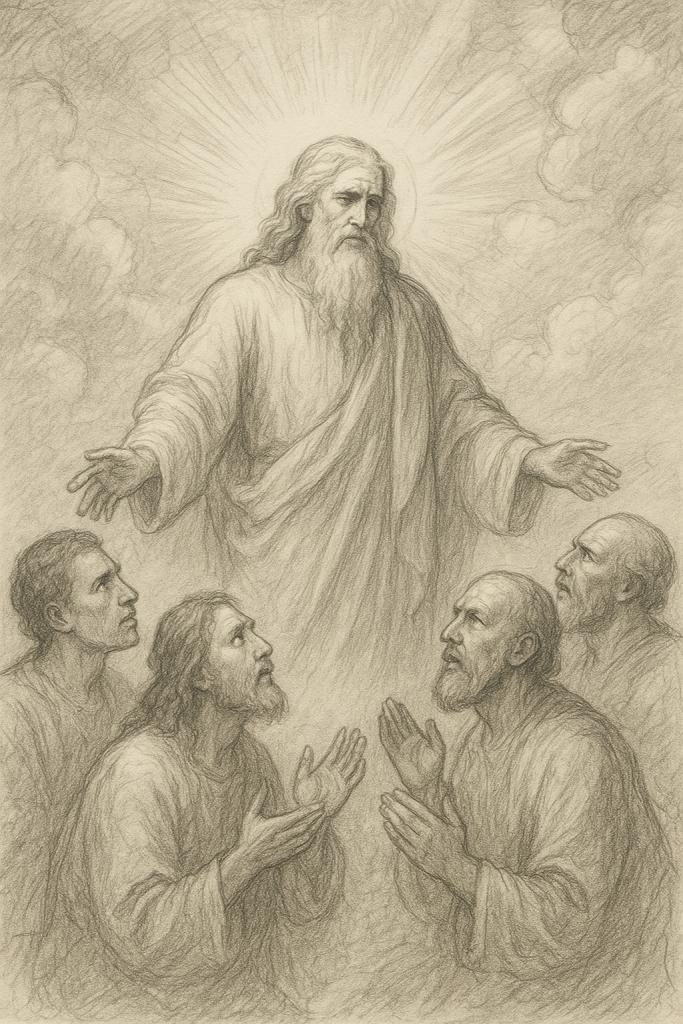
Psalm 82 is one of those passages that opens a curtain. You read it once and think, “Alright, judges.” Then you look again in the Hebrew and realize something far bigger is happening. The psalm is not quiet. You are walking into a courtroom. A real one. Not metaphorical. Not poetic fluff. This is God confronting beings who were supposed to uphold His justice in the world.
The first words are the giveaway:
אֱלֹהִים נִצָּב בַּעֲדַת אֵל
“God stands in the council of El.”
He is not sitting on a throne here. He is standing. In Hebrew, that is posture for testimony, confrontation, and judgment.
The term adat el is the divine assembly. The ancient readers knew exactly what that meant. It appears in Job 1:6, 1 Kings 22, Daniel 7:10, and in Ugaritic texts where El, the council head, presides over a gathered host. Scripture borrows the concept but corrects it by placing YHWH as the only true God among lesser beings who serve Him.
Those lesser beings are called elohim in verse one. That word simply means “spiritual beings,” a category label, not a claim of divinity equal to God. The Hebrews used elohim for YHWH, angels (Psalm 8), departed spirits (1 Samuel 28), and false “gods”. The category is broad. There is only one capital G God, but many spiritual beings.
God is addressing them because He entrusted regions, peoples, and responsibilities to them. You see this in Deuteronomy 32:8, which in the Dead Sea Scrolls and Septuagint reads that God divided the nations according to the “sons of God.” Israel was His own portion. The others were placed under the oversight of divine beings. This fits perfectly with Daniel 10, where the angel speaks of the “Prince of Persia” and “Prince of Greece.” These were spiritual rulers over nations.
Back to Psalm 82. God calls these beings to account. Why? Because injustice in the world is ultimately traced back to those governing it, both human and spiritual. The commands in verses two through four are very human sounding because human rulers mirror their spiritual counterparts. In the ancient world, the behavior of the people was the shadow cast by the heavenly rulers over them.
And here’s the key: that principle is still true today. Even though we don’t usually see divine rulers openly assigned over nations, the spiritual reality has not changed. Psalm 82 shows that evil or injustice at the top, whether human leaders who misuse power, ideologies that corrupt, or spiritual forces influencing the world, casts a shadow down to ordinary people. Societies still experience collapse, inequality, oppression, and moral drift when authority fails. And conversely, when leadership seeks justice, mercy, and God’s ways, it lifts the whole culture. The shadow principle is the same. God is the same, yesterday, today, and forever. His concern for justice has not changed, and His order in creation still reflects that moral structure.
The indictment is sharp. God tells them that they have ruled wickedly, withheld justice, favored the oppressor, and allowed cruelty against the weakest. These failures are not small. They allow evil systems to flourish. That is why verse five says the foundations of the earth shake. When injustice becomes normal, the world becomes unstable. That is both theological and observable. Societies with corrupt leadership eventually collapse. God built moral cause and effect into creation itself.
Then God says something shocking:
“You are “gods”, sons of the Most High, all of you.”
He affirms their status. But then He strips the illusion of invincibility:
“Nevertheless, you will die like men, and fall like any prince.”
This is judgment on spiritual beings who abused stewardship. Death and fall are terminology for downfall, removal from position, and destruction. These beings are not immortal in the sense God is. Ezekiel uses similar language against the spiritual power behind the king of Tyre, calling him a guardian cherub who fell because of pride.
What God is doing in Psalm 82 is announcing the end of their authority. This is the background to the New Testament theme of “principalities and powers.” Paul uses those terms for rebellious spiritual rulers who were disarmed by Messiah. He did not invent that idea. It came from passages like this one.
By the time Yeshua comes, these beings have held nations in darkness for millennia. When He sends the disciples to the nations, He is reasserting divine claim over territory once ruled by corrupt powers. That is why He quotes Psalm 82:6 in John 10:34, not to flatter the Pharisees, but to remind them that authority comes with responsibility, and even spiritual beings are judged for misuse.
And the psalm ends with a cry:
“Arise, O God, judge the earth; for You shall inherit all nations” (Psalm 82:8).
This is where the connection to Yeshua becomes clear. The call is addressed to YHWH, the supreme God. He is the one who will intervene and judge the corrupt rulers, both human and spiritual. But the promise that follows, inheriting all nations, is messianic. This is exactly the language we see in Psalm 2:8, where the Son receives the nations as an inheritance, a theme picked up in Acts 13:33 and Hebrews 1:5.
So what happens here? I’ll show you in layered action:
- God judges, He confronts the corrupt authorities, executes justice, and removes their failed governance.
- Messiah inherits, Yeshua receives the authority and inheritance over the nations, establishing God’s kingdom on earth.
The psalm is cosmic, earthly, and messianic all at once. God acts; Yeshua executes. That is the fulfillment.
Observation from Hebrew and science:
- Elohim (plural) reminds us that authority is always delegated. Even divine authority has accountability.
- The verbs describing corruption, judgment, and collapse reflect real-world societal patterns: instability follows injustice. Creation itself reflects God’s moral order.
- The shadow principle, the behavior of people reflecting the rulers, is timeless. God’s order and His concern for justice are constant. Psalm 82 connects heavenly and earthly realms with historical reality: God’s judgment is ultimate, Yeshua’s inheritance is certain, and human and spiritual leaders are held accountable.
The Shadow Principle – Then and Now
In Psalm 82, we saw that in the ancient world, the behavior of the people was the shadow cast by the heavenly rulers over them. When spiritual authorities or human leaders failed, injustice rippled down into society, shaking the foundations of the earth.
The remarkable truth is that this principle has not changed. Today, even if we don’t/can’t see divine rulers openly assigned to nations, the spiritual reality is the same: corruption, oppression, or moral failure at the top, whether in leadership, ideologies, or spiritual forces, casts a shadow over ordinary people. Societies can still experience collapse, injustice, and moral drift when authority fails, and conversely, cultures flourish when leaders pursue God’s justice and mercy.
This shows us that God’s moral order is unchanging. His concern for justice, His judgment of abuse, and His plan for the Messiah to inherit and restore the nations demonstrate that God is the same yesterday, today, and forever (Hebrews 13:8).
Psalm 82 is not small. It is God calling a cosmic courtroom, charging both the spiritual realm and the earthly realm with injustice, declaring judgment, and announcing that He will personally take back the nations. And through that judgment, the Messiah inherits authority and brings God’s kingdom into reality, showing that God is the same, yesterday, today, and forever.
image sketch by chatgpt at my direction – I tried to match the scripture, but AI will be AI and not pay attention. (So, until I do the painting myself…)