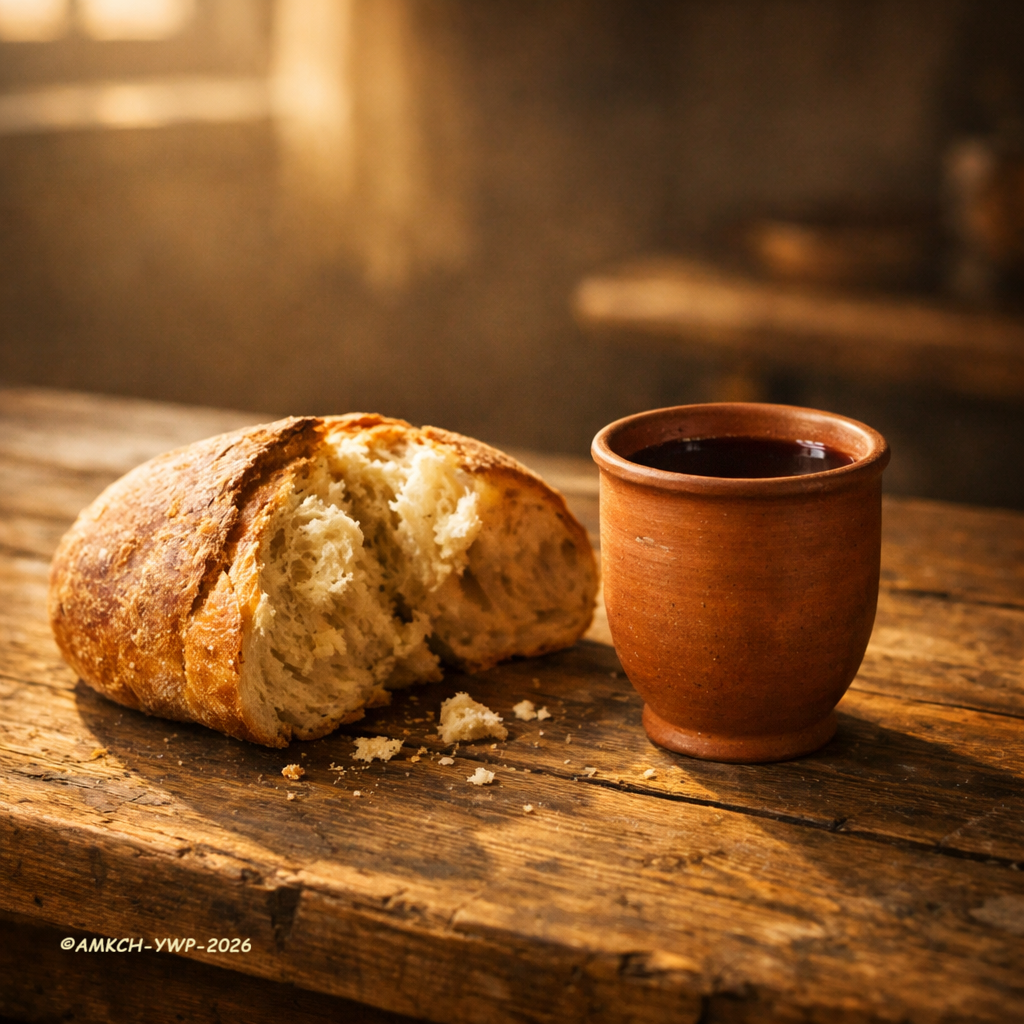
Whether you believe it or not, God, YHWH, is eternal and self-existent. He is the source and Creator of all that is. He did not come into being, nor was He formed. He simply IS, without beginning or end. From Him, and by His word, all things came into being, visible and invisible, ordered, purposeful, and good (Genesis 1:1–3; Psalm 33:6; John 1:3). Every star, every creature, every human heartbeat, and every blade of grass IS because He willed it, spoke it, and breathed it into being. Even in the vastness of His eternity, He delights in the smallest details of our lives. Creation was not an accident, and life itself is a reflection of His wisdom and glory.
Mankind was formed in His image, male and female, bearing His likeness, we ARE just like Him, we were created to walk with Him in love, in trust, and in obedience (Genesis 1:26–27; Genesis 2:7). God breathed into man HIS breath of life, and man became a living being, a nephesh (living being, life of a creature). Life was never meant to be solitary; it was relational, meant to reflect God’s glory, His wisdom, and His love. We were created for fellowship, with God, with each another, and with all creation. THAT’S the way it was supposed to go.
Yet, rebellion entered. Some may ask, “How did sin begin? Did Satan sin first?” Scripture shows us that rebellion did not start with humanity. The adversary, called Satan, chose to turn away from God’s perfect goodness, desiring independence and pride instead (Isaiah 14:12–15; Ezekiel 28:12–17). Some may think, “But shouldn’t every creature have independence, even Satan?” Scripture shows that true freedom is not mere self-will or rebellion. Real freedom exists only in harmony with God, who is the source of life, love, and truth. Independence severed from God’s goodness doesn’t lead to doing well or prospering spiritually and physically, but to corruption and destruction to ourselves and others. In choosing pride over love, Satan embraced a freedom that is ultimately slavery to sin and death (Romans 6:16–18; James 1:14–15). God’s design allows real choice, but choices outside of His goodness cannot produce true life, joy, or peace (Psalm 36:9; John 15:5).
Mankind followed the same path of rebellion, being influenced by Satan and his minions. The Hebrew word חַטָּאת (hata’t, “sin,”) literally meaning “missing the mark”, entered the world (Genesis 3:6–7; Romans 5:12), bringing corruption and death. Death spread to all because all have sinned. This death was not merely physical but spiritual separation from God (Isaiah 59:2). Scripture declares there is no one that is righteous, no, not one (Psalm 14:3; Romans 3:10), and all have fallen short of the glory of God (Romans 3:23). The pain of separation is not an illusion. It is real. Many people have experienced a love so deep that its loss cuts like a wound, leaving a heart broken and raw. It really hurts. When my daughter-in-law passed away, I was so hurt from this loss, I actually had a heart attack.
Scripture shows us that God created us for love and relationship with Him, and with each other; relationships that are real, meaningful with real connections. In that design, separation hurts. Imagine the grief of a long-term loving relationship broken, where the one who loved the most feels the deepest loss. That is what humanity’s rebellion looks like in a deeper way: we chose independence from God, and it broke the fellowship we were created for.
Though God is eternal, unbroken, and holy, He allows us to feel the consequences of love betrayed. Not because He delights in pain, but because real love must be voluntary. He invites us back, patiently and with mercy, into relationship with Himself, showing that His heart longs for ours, and that true reconciliation is a gift freely received, not something forced or earned.
In human relationships, this can be seen in a marriage like mine with Mr. H.. Love there is not something either of us is made to give, it is something we choose. We listen to each another, we help and encourage each another, we serve each another, and we make daily decisions to stay attentive and kind, even when it would be easier not to. None of that is compelled; it is freely given… simply because we love each other.
Because of that, the relationship has real weight. When one of us is discouraged or withdrawn, the other feels it, not as punishment, but as the absence of fellowship and closeness that we were created to share. And yet love keeps moving. We turn back toward each other, we forgive, we reconnect, and what was strained is made whole again, not by force, but by choice.
In that way, the pain of separation teaches us the weight of sin, the preciousness of restoration, and the beauty of loving freely, not under compulsion.
Though God is eternal, unbroken, and holy, He allows us to feel the consequences of love betrayed. Not because He delights in pain, but because real love must be voluntary. He invites us back, patiently and with mercy, into relationship with Himself, showing that His heart longs for ours, and that true reconciliation is a gift freely received, not something forced or earned. In this way, the pain of separation teaches us the weight of sin, the preciousness of restoration, and the beauty of loving freely, not under compulsion.
God is holy and just. Sin cannot be ignored (Habakkuk 1:13). Yet He is merciful and faithful, showing His covenant love, חֶסֶד (ḥesed, steadfast lovingkindness). (Exodus 34:6–7). From the beginning, God promised redemption. The seed of the woman would crush the serpent’s head (Genesis 3:15). Through Abraham, all nations would be blessed (Genesis 12:3). Through Moses, blood was given for atonement (Leviticus 17:11). Through the prophets, a suffering Servant was foretold (Isaiah 53:3–12).
That promise was fulfilled in Yeshua HaMashiach. His name, Yēshua (YHWH saves), reveals His purpose, and His title, Mashiach (Anointed One), identifies Him as God’s chosen King and Redeemer (Matthew 1:21; Daniel 9:25). He is the eternal Word, the Logos (Word, divine self-expression of God) (John 1:1).
John 1:14 And the Word became flesh and dwelt among us, and we have seen His glory, glory as of the only Son from the Father, full of grace and truth.
God did not remain distant from the brokenness of humanity. Instead, He stepped right into our human story. Through the Holy Spirit, Mary conceived Yeshua, the Messiah, so that He entered the world fully human but without inheriting the corruption of Adam’s sin (Isaiah 7:14; Luke 1:35). This was not merely a physical miracle, it was a divine act that preserved His sinless nature, ensuring that He could live a life perfectly obedient to the Father. Fully God and fully man, Yeshua experienced hunger, thirst, fatigue, sorrow, and joy, and at every turn He resisted temptation and lived without sin (Hebrews 4:15; 1 Peter 2:22). Where mankind had failed and fell short of God’s standard, Yeshua remained faithful. By taking on humanity Himself, in His Son, God provided the perfect bridge between the divine and the fallen human race. His life is an example of what we were meant to be, His obedience covers what we cannot achieve, and His sacrifice opens the door for reconciliation, proving that God is not distant or passive but active in redeeming His creation.
Yeshua proclaimed the Kingdom of God (Mark 1:14–15), not as an abstract idea, but as a living reality of God’s rule. He taught with authority, in contrast to the scribes’ teaching, showing that obedience to God’s heart brings life. (Matthew 7:28–29). He healed the sick (Matthew 8:16–17), cleansed lepers (Luke 17:14), opened blind eyes (John 9:35–38), cast out demons (Luke 4:41), forgave sins (Mark 2:5–7), and raised the dead (John 11:43–44). These were signs, sēmeion (sign, proof of divine power) (John 20:30–31), showing who He is and revealing the power of God available to those who believe.
Yet His mission was not earthly power but eternal redemption. Many may ask, “How could Yeshua do this willingly? How could He choose to endure betrayal, suffering, and death?” The answer is right there in who He is. Yeshua is fully God and fully man (Hebrews 4:15; 1 Peter 2:22). In His divine nature, He perfectly knew the Father’s plan and the eternal consequences of sin. In His human nature, He felt the full weight of sorrow, fear, and temptation. His love for humanity was greater than any suffering. He obeyed the Father completely because His heart was united with God’s will, and because He saw the redemption of countless souls as worth every moment of pain (John 10:17–18; Philippians 2:8).
Just as some children, especially twins, can look like their parents or siblings, even moving or acting in ways that echo them so closely it seems one could easily step into the other’s place, Yeshua reflects His Father in every thought, word, and action. He is truly human, sharing in our experiences and limitations, and completely God, sharing in the essence and perfect character of YHWH. Everything He does, He does as the Father would, not by imitation but by nature, because His life is the perfect expression of God entering humanity. In Yeshua, the human and the divine are inseparable, and the likeness is complete, what we see in Him is the Father living among us.
He willingly went to the cross, totally knowing what awaited Him. He was betrayed by one He loved, mocked by those He came to save, beaten and crucified by the world He came to redeem, and rejected by the very world He created. On that cross, He bore the sin of all humanity. Our sin, was laid upon Him, even though He Himself never sinned (2 Corinthians 5:21). He became the sacrificial amnos, the Lamb of God, offered not for His own sake, but for ours (John 1:29). Through His blood, God established a new covenant (Luke 22:20), fulfilling the meaning of kippūr, the covering or reconciliation that makes humanity right with God (Hebrews 9:12). With every act of suffering, every wound, and every drop of blood, Yeshua carried the weight of humanity’s failure so that we could be restored, showing that God’s justice and mercy meet perfectly in the cross.
Yeshua HaMashiach really did die. His human body was wrapped carefully in linen and herbs and spices (Matthew 27:59–60). Then, real and human, It was placed in a borrowed tomb. The weight of death seemed final, and the grave appeared to have claimed Him. But death could not hold the One who is Life itself. On the third day, God raised Him from the dead. The Greek word anastasis (resurrection, standing up again) does not speak of a spirit hovering somewhere, but of a bodily rising, a tangible, physical victory over death (Matthew 28:5–6; Acts 2:24). Yeshua appeared alive to many witnesses (1 Corinthians 15:5–8), showing that His resurrection was real, not a vision or metaphor. By rising from the dead, He proved that death had been defeated, that sin no longer had ultimate power, and that He holds the keys over life and death (Revelation 1:18). His resurrection is both the guarantee and the pattern for all who trust in Him, showing that what was broken by sin can be fully restored in God’s timing.
After His resurrection, Yeshua did not stay on earth. He went back to the Father (Acts 1:9–11), to the place of honor He had before, and now He reigns as Lord over all creation. He sits at God’s right hand, the place of authority spoken of in Psalm 110:1 and Hebrews 1:3, and He rules with real justice and wisdom.
Because of Yeshua’s complete obedience to His Father, God lifted Him up above everything else and gave Him the name above every name (Philippians 2:9–11). And one day, every single knee will bow to Him and every single tongue will confess who He is. They won’t NOT want to!!! He has proven Himself! He is the mediator between God and people (1 Timothy 2:5), the One who stands for us before the Father and speaks on our behalf.
He is also our eternal High Priest (Hebrews 7:25), always there, always able to help those who come to Him. And He will return one day in glory to judge everyone, living and dead (Acts 17:31; Revelation 19:11–16). That judgment will be right, and it will be true. Everyone WILL get the judgment they rightfully deserve.
Yeshua is not distant or inactive. He is alive in those who have truly receive Him. He is reigning right now, holding everything together, and making sure that what began at the cross will be completed.
His Gospel calls for a response. It’s not just information; it asks something of us. It calls us to turn our hearts and our lives toward God in Yeshua.
Repentance means that turning. The Greek word metanoia means a complete change of mind, but it is not only about thinking differently. It is a change in direction. It’s “doing a 180°” in your life. You stop going one way in life, and you turn toward God instead, leaving behind the path of sin (Acts 3:19; Luke 13:3).
Faith is trusting Yeshua. The Greek word pistis means trust, reliance, confidence. It is not trying to earn God’s approval by doing better or proving yourself. It is placing the weight of your life on Him, trusting that what He has done is enough, and resting your hope in that (John 6:29; Ephesians 2:8–9).
Salvation is a gift. The Greek word charis means grace, God’s undeserved kindness and favor toward us. It is something He gives freely, not something we earn or achieve through our effort. And because it is given, not earned, no one can take credit for it or boast about it (Romans 6:23; Titus 3:5).
Whoever calls upon the name of the Lord will be saved (Joel 2:32; Romans 10:9–13). THAT is the most wonderful miracle of all! Those who believe and receive Him, are justified, made right with God (Romans 5:1), forgiven of sins that once separated them from the Creator (Colossians 2:13), and made new in their innermost being (2 Corinthians 5:17). God gives a new heart, lēv, (the inner man, the seat of desire and thought) (Ezekiel 36:26), and places His Spirit within. The Holy Spirit, Ruach HaQodesh, seals believers; that is, He marks them as God’s own and secures them in that belonging. (Ephesians 1:13–14), teaches truth (John 16:13), empowers obedience (Romans 8:11), and produces fruit in the life of the believer (Galatians 5:22–23).
This Gospel is not behavior modification, nor is it religion. It is the reality of new birth (John 3:3–7), the reconciliation of humanity to God (Romans 5:10). To reject the Son is to remain in death (John 3:36), separated from the life He offers. To receive the Son is to receive eternal life (1 John 5:11–12), a life restored, healed, and empowered by His Spirit. When we truly understand the depth of His sacrifice, the love that kept Him on the cross, the pain of separation that sin brings when it breaks relationship, and the power of His resurrection, our hearts respond not with just acceptance, but with fully receiving Messiah into our lives. Yeshua declared, “It is finished” (John 19:30), and the empty tomb stands as God’s eternal witness that redemption is complete.
This is the Gospel of Yeshua HaMashiach. You CAN believe it!
God with us (Matthew 1:23).
God for us (Romans 8:31).
God saving us, to the uttermost (Hebrews 7:25).
Turn from your sins. Receive into your heart the Lord Yeshua HaMashiach and be saved.
✝️✝️✝️✝️✝️
Prayer:
Father YHWH, I come before You with awe and humility. You are eternal, without beginning or end, the One who alone is God. Everything that exists is because You spoke it, willed it, and hold it together, and I acknowledge that my very breath is dependent on You.
You created mankind in Your image for fellowship with You, for love, for walking with You in trust and obedience, and I see that this is what I was made for. But I also see the truth of sin, that humanity has turned away from You, and I have not always walked rightly before You. I cannot undo that separation on my own, and I cannot make myself clean in my own strength.
But You are merciful, and from the beginning You promised redemption, and You fulfilled that promise in Yeshua HaMashiach. I believe He is Your Son, the Word made flesh, who lived without sin and perfectly revealed Your heart. I believe He carried the weight of our sin though He Himself was innocent, that He suffered, died, and was buried, and that You raised Him from the dead in victory over death. I believe He is alive now and reigns with You.
So I turn my heart toward You and ask that You help me turn away from sin and from anything that pulls me away from You. I ask You to forgive me, not because I deserve it, but because of Your mercy through Yeshua. I place my trust in Him alone, not in my works or my efforts, but in what He has already done.
I receive Your grace as a gift I could never earn, and I ask You, Lord Yeshua, to be my Savior and my Lord. Lead my life in Your ways and shape my heart so that it reflects Yours. Holy Spirit, Ruach HaQodesh, I ask You to dwell within me, to guide me into truth, to strengthen me where I am weak, and to help me walk in obedience and love before God.
Father, please restore me to the fellowship I was created for. Draw me close to You and keep me there. Thank You for Your patience with me, for Your mercy, and for the life I have in Yeshua. I place myself in Your hands.
In the name of Yeshua HaMashiach… Amen and Amen.
✝️✝️✝️✝️✝️
If you liked this message, please leave a positive comment. I would love to hear from you!
image done by my perchance ai at my direction.
©️AMKCH 2025