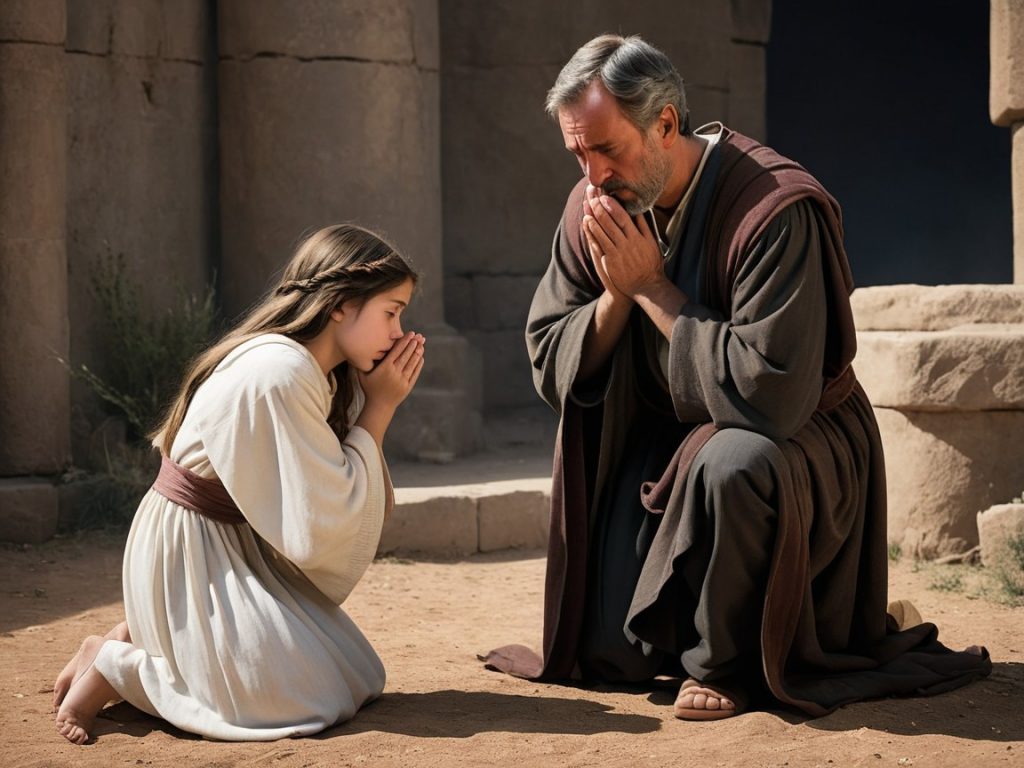
There was a time when servants knew what it meant to wait by the door.
Not lounging. Not halfway dressed. Not forgetting the assignment. They stood watching, belt tight, lamps burning, ears turned for the faintest sound. Because the Master, in Greek, ho kyrios (ὁ κύριος), was away at a wedding feast, and they didn’t know when He’d return. But return He would.
And when He did, He wouldn’t break the door down. He’d knock. And the faithful ones, those watching, would be the ones to open immediately. Not scramble to get ready. Not fumble to light the lamp. Not try to hide. They’d been waiting. Preparing. Longing.
Yeshua told this parable in Luke 12:36 because He wanted His people (he called them children) to understand what it means to live in the in-between. The already, just not yet. Between His first coming and His return. It’s not a time for fear, but it’s not for sleep, either.
It’s the time for faithful readiness.
He said we should be like those servants, men and women waiting for their Lord. The Greek here says:
καὶ ὑμεῖς ὅμοιοι ἀνθρώποις προσδεχομένοις τὸν κύριον ἑαυτῶν…
“You also be like men who are expecting their own Lord…”
And the picture is so rich. The word for “waiting” or “expecting” is prosdechomenois (προσδεχομένοις), which means more than just “wait.” It’s welcoming anticipation. Like someone standing on tiptoe at the window.
The ones who do that, they get called blessed. Happy. Rewarded. Because when the Master comes and finds them faithful, He does something unthinkable:
“He will gird Himself and serve them.”
He puts on the apron, and He serves them at the table.
Now stop. Let that hit.
The Master becomes the Servant, to honor the servants who waited faithfully.
This is who He is. This is our Lord.
But not everyone waits. And that’s where the warning comes in.
Yeshua goes on to say: if a servant knew what the Master wanted, and still chose to ignore it? Still chose to live however they pleased? That servant will be beaten with many stripes. The Greek word here is dero (δέρειν), to flog, to scourge.
That judgment is severe. Not because God is cruel. But because truth demands accountability.
If you knew what was right, if you were taught, warned, filled, called, and you still turned away, there are consequences. That’s not legalism. That’s justice.
But then He says something merciful. “The one who didn’t know, who honestly didn’t understand, and still did things worthy of punishment? He’ll be beaten with few stripes.”
Why? Because God is fair. Because He weighs the heart. Because He sees what people really knew, not what they claimed.
Then comes the line that defines the whole passage:
“Unto whom much is given, of him shall be much required.”
In Hebrew thought, this would carry the weight of mishpat (מִשְׁפָּט), justice, and emunah (אֱמוּנָה), faithfulness. If you’ve been given light, you’re responsible to walk in it. If you’ve been entrusted with truth, you’re expected to guard it. It’s not about being better, it’s about being trusted.
And some of you, yes, you reading this, have been trusted with much. You’ve seen things. You’ve heard things. You’ve been pulled out of the fire. You’ve had encounters. Dreams. Convictions. Wake-up calls. You know what time it is.
So you can’t pretend anymore. You can’t live halfway. You can’t say, “Well, nobody else is doing it.” Because much has been given to you, and now much is required of you.
But what if your kids won’t listen? What if your spouse mocks you? What if your own family calls you crazy?
Then you join the long line of saints who walked alone. Noah, building an ark with no audience but his own house. Jeremiah, weeping while no one listened. Ezekiel, lying on his side in the dirt just to make a point. Yeshua, crying over Jerusalem while the city plotted His death.
Being faithful does not always mean being followed. Sometimes it just means standing in faith.
And let me say this gently: Your children may not listen now, but that doesn’t mean the seeds you planted are dead. Sometimes they’re just deep in the soil. Sometimes they don’t crack open until the storm. But, if you’ve been a Godly parent, when they grow up, they will come to you and say, “thank you!”
Your job isn’t to force them. It’s to stay faithful to Yeshua. Stay prayerful. Stay loving. Keep your lamp burning.
Speaking of which, the word for lamp in Greek is lampas (λαμπάς). It means a torch or oil lamp. It needs fuel. You can’t just light it once and forget it. You have to trim the wick, keep the oil filled (elaion – ἔλαιον, olive oil), and keep it burning through the night.
Your lamp is your faith. Your readiness. Your obedience. And your oil? That’s the presence of the Spirit in your life. Prayer. Scripture. Surrender.
And when the knock comes, He won’t be looking at your popularity, your success, your perfect household. He’ll be looking for light. Will your lamp be burning?
Because He is coming back. Not as a broken man on a cross, but as the Master of the house. The Bridegroom returning from the wedding. The One who will knock.
And for the faithful? Oh… for the faithful who stayed awake, kept watch, held the line?
He will serve them. Yes, the King of all glory will serve those who waited.
So come.
Wake up.
Light your lamp.
Tie your belt.
Stay by the door.
Because even if you feel forgotten… He hasn’t forgotten you.
Even if your voice shakes… He still hears it.
And when He comes, it will be suddenly.
And it will be forever.
Stay ready. He IS coming soon! Ready or not.
✝️ ✝️ ✝️ ✝️ ✝️